PMMVY age limit 2026: Under the current Pradhan Mantri Matru Vandana Yojana (PMMVY) rules, the eligible beneficiary must be 18 years and 7 months old to under 55 years of age at the time of childbirth. Age is only one part of eligibility: the woman must also satisfy the applicable PMMVY 2.0 beneficiary conditions, pregnancy/childbirth requirements and documentation rules. The official government FAQ confirms the age requirement, while 2026 Ministry updates show that PMMVY continues under Mission Shakti with benefits for the first living child and, where applicable, the second living child if that child is a girl.
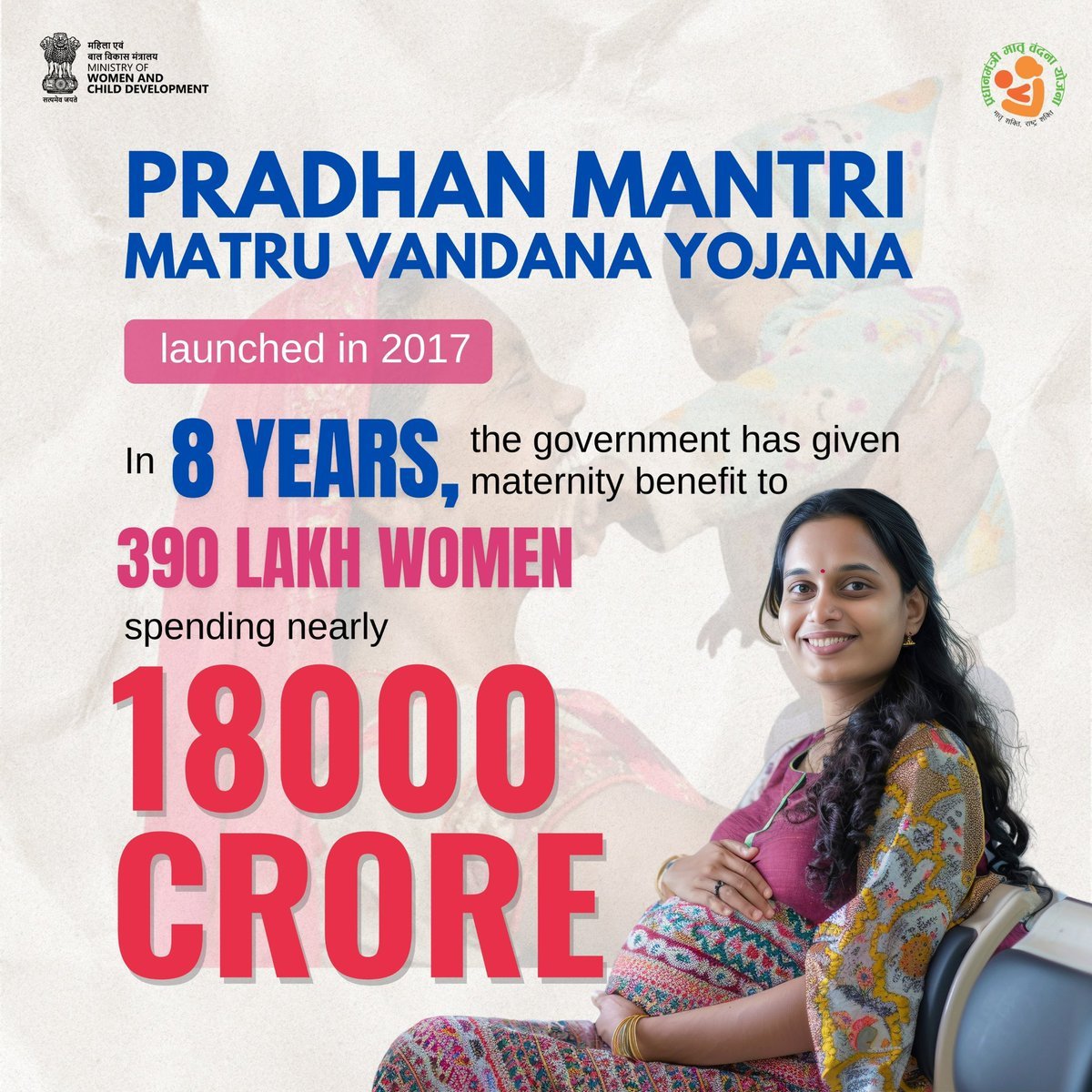
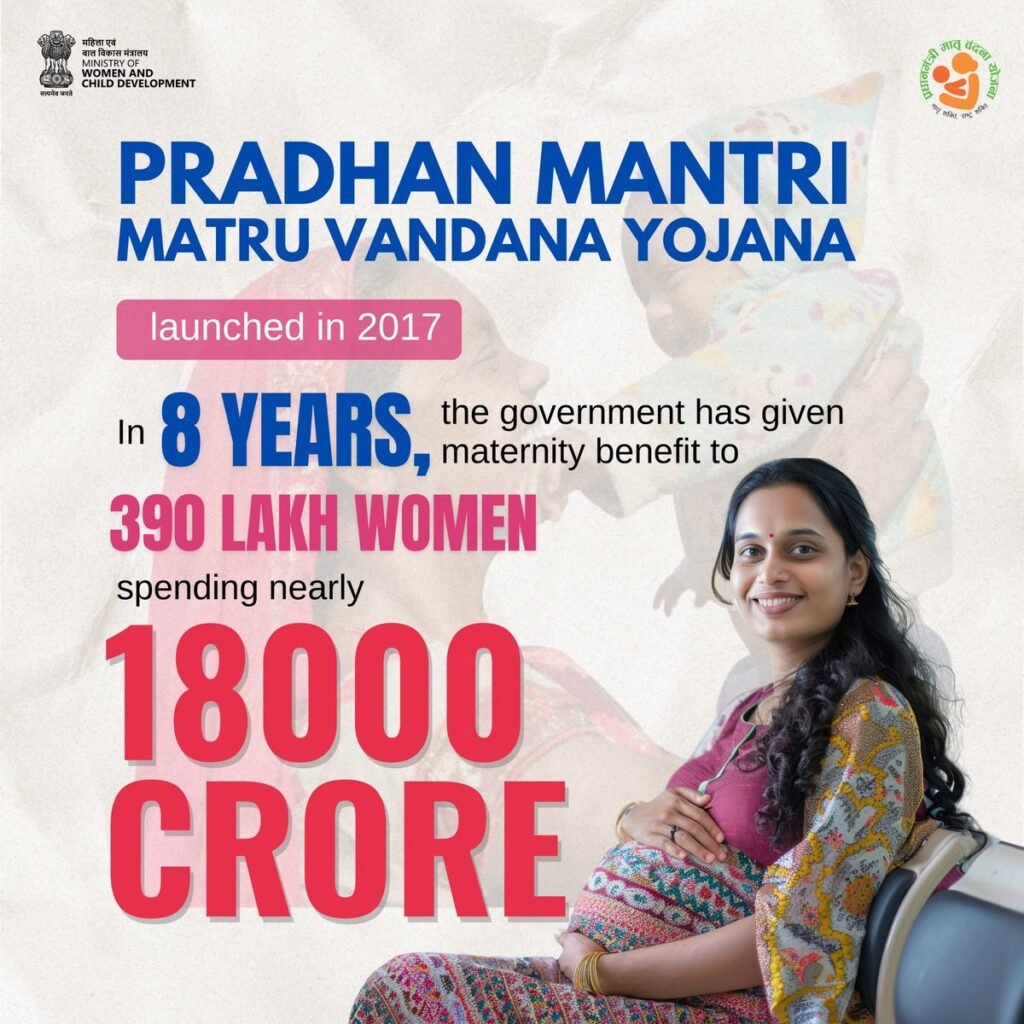
Pradhan Mantri Matru Vandana Yojana is a maternity benefit scheme of the Ministry of Women and Child Development. It was launched nationwide in 2017 and was brought under Mission Shakti in its PMMVY 2.0 form from 1 April 2022. The current framework provides ₹5,000 in two instalments for the first living child and ₹6,000 in a single instalment for the second living child when the second child is a girl, subject to the scheme conditions. In June 2026, the Ministry reported that 4.27 crore beneficiaries had been paid ₹20,150 crore as of 30 April 2026.
PMMVY Age Limit 2026 at a Glance
| Requirement | Current PMMVY position |
|---|---|
| Minimum age | 18 years and 7 months |
| Upper age | Under 55 years |
| When age is checked | At the time of childbirth |
| First living child | ₹5,000 in two instalments, subject to conditions |
| Second living child | ₹6,000 if the second child is a girl, subject to conditions |
| Payment mode | Direct Benefit Transfer to the beneficiary’s Aadhaar-linked account |
| Application | PMMVY portal or assistance through Anganwadi/ASHA workers |
What Is the PMMVY Age Limit in 2026?
The current official PMMVY FAQ states that the eligible age of the beneficiary is between 18 years 7 months and 55 years at the time of childbirth. The detailed FAQ also expresses the upper condition as being less than 55 years at childbirth. Therefore, for practical age-limit checking, the rule should be read as 18 years and 7 months completed, but not yet 55 years old, at the time of childbirth.
This is different from schemes where age is checked on the application date. For PMMVY, the official FAQ specifically connects the age requirement with the time of childbirth. That distinction matters when a beneficiary is close to either age boundary.
Why Is the PMMVY Minimum Age 18 Years 7 Months?
The PMMVY age rule is not simply an “18 years or older” condition. The official scheme FAQ specifies 18 years and 7 months as the lower age point for an eligible beneficiary. Someone who has completed 18 years but has not yet reached 18 years and 7 months should not assume that the ordinary 18+ rule is sufficient for PMMVY.
Age also has to be considered alongside the pregnancy and childbirth timeline, the applicable beneficiary category and the scheme’s other conditions. When a case is close to the minimum age, use the date of birth recorded in the relevant official documents and verify the case through the PMMVY portal or implementing functionary.
Is There a PMMVY Maximum Age?
Yes. The current PMMVY framework places the beneficiary below 55 years at the time of childbirth. The official FAQ states that the age should be 18 years and 7 months and less than 55 years at childbirth. A woman who has already reached 55 should therefore not treat the scheme as having an unrestricted upper age.
The important point is that this upper age condition does not mean every woman under 55 automatically qualifies. PMMVY has separate eligibility, pregnancy, benefit and documentation requirements. Age is a gateway condition, not the entire eligibility test.
How PMMVY Age Is Checked
For PMMVY, the official FAQ identifies childbirth as the relevant point for the age-limit test. In addition, the scheme uses pregnancy information recorded through the Mother and Child Protection (MCP) card and related records. The date and stage of pregnancy are counted with reference to the Last Menstrual Period (LMP) date recorded in the MCP card.
- Check the beneficiary’s date of birth from the accepted identity record.
- Calculate the beneficiary’s age in years and months rather than using only the birth year.
- Compare the completed age with the PMMVY range of 18 years 7 months to under 55 years.
- Use the childbirth date as the relevant age-check point stated by the official PMMVY FAQ.
- For a borderline case, confirm the record with the PMMVY portal or the implementing Anganwadi/ASHA functionary.
Who Is Eligible for PMMVY 2.0?
PMMVY 2.0 is designed to support pregnant women and lactating mothers from specified socially and economically disadvantaged or marginalised categories. The official PMMVY FAQ lists several routes through which a woman may satisfy the eligibility criteria. These include membership of certain social categories, specified welfare-card or livelihood programmes, and the income-based route described by the current FAQ.
- Women belonging to Scheduled Castes or Scheduled Tribes.
- Women who are partially (40%) or fully disabled.
- Women holding a BPL ration card.
- Women who are beneficiaries under PM-JAY/Ayushman Bharat.
- Women holding an e-Shram card.
- Women farmers who are beneficiaries under PM-Kisan Samman Nidhi.
- Women holding an MGNREGA Job Card.
- Women whose net family income is less than ₹8 lakh per year.
- Pregnant and lactating Anganwadi Workers, Anganwadi Helpers and ASHAs.
- Women holding a ration card under the National Food Security Act, 2013.
- Any additional category prescribed by the Central Government under the scheme.
PMMVY Benefits in 2026
The benefit structure changed when PMMVY was integrated into Mission Shakti as PMMVY 2.0. According to the Ministry’s current FAQ and 2026 updates, the first living child attracts ₹5,000 in two instalments, subject to the required conditions. The second living child can attract ₹6,000 in one instalment if the second child is a girl.
- First living child: ₹5,000 through two instalments linked to maternal and child health conditions.
- Second living child: ₹6,000 in a single instalment when the second child is a girl and the PMMVY 2.0 conditions are fulfilled.
- Payment: benefits are transferred through DBT to the beneficiary’s Aadhaar-linked bank or post-office account.
The Ministry’s June 2026 update reported that PMMVY had paid benefits to 4.27 crore beneficiaries and disbursed ₹20,150 crore as of 30 April 2026. A later PIB factsheet reported 5.13 crore beneficiaries enrolled, 4.37 crore beneficiaries paid and ₹20,571 crore disbursed as of 31 July 2026, showing continued implementation during 2026.
PMMVY First Child Benefit: Main Conditions
For the first living child, the current FAQ describes a two-instalment structure. The first instalment is ₹3,000 after pregnancy registration and completion of the required antenatal-care conditions. The second is ₹2,000 after childbirth and completion of 14 weeks of universal immunisation, subject to the applicable scheme conditions.
The exact claim workflow is handled through the PMMVY system and implementing functionaries. Applicants should keep pregnancy registration, ANC, childbirth and immunisation records consistent because these records are used to establish eligibility for the respective instalments.
PMMVY Second Child Girl Benefit
PMMVY 2.0 introduced a benefit for the second child when the second child is a girl. The current official FAQ states that the benefit is ₹6,000 in a single instalment after childbirth and completion of the applicable 14-week universal-immunisation requirement.
The second-child provision is important because older PMMVY information often describes support only for the first child. For 2026, readers should use the PMMVY 2.0 framework rather than relying on pre-April-2022 descriptions.
Who Is Not Covered by PMMVY?
The scheme does not operate as a universal payment for every pregnant woman. The official framework excludes pregnant women and lactating mothers who are in regular employment with the Central Government, State Governments or public-sector undertakings, as well as women who are receiving similar maternity benefits under a law currently in force. The applicable eligibility category and documentary verification still need to be checked.
This means that meeting the 18 years 7 months to under-55 age range is not enough by itself. Employment status, receipt of similar benefits and the specified beneficiary-category criteria can affect eligibility.
Documents Required for PMMVY
The current official FAQ lists documentation related to identity, payment, eligibility and maternal/child health records. The exact documents can vary with the case and implementing process, so applicants should follow the current portal instructions.
- Aadhaar card or required Aadhaar details.
- Aadhaar-mapped bank or post-office account details.
- Mobile number.
- Proof of the applicable PMMVY eligibility category.
- Mother and Child Protection (MCP)/RCHI card details.
- Last Menstrual Period (LMP) information.
- ANC details.
- Child birth certificate where required.
- Child immunisation details for the relevant benefit stage.
The mandatory husband-Aadhaar requirement was removed under PMMVY 2.0. The Ministry has specifically stated that a husband’s Aadhaar is not mandatory for receiving PMMVY benefits.
How to Apply for PMMVY in 2026
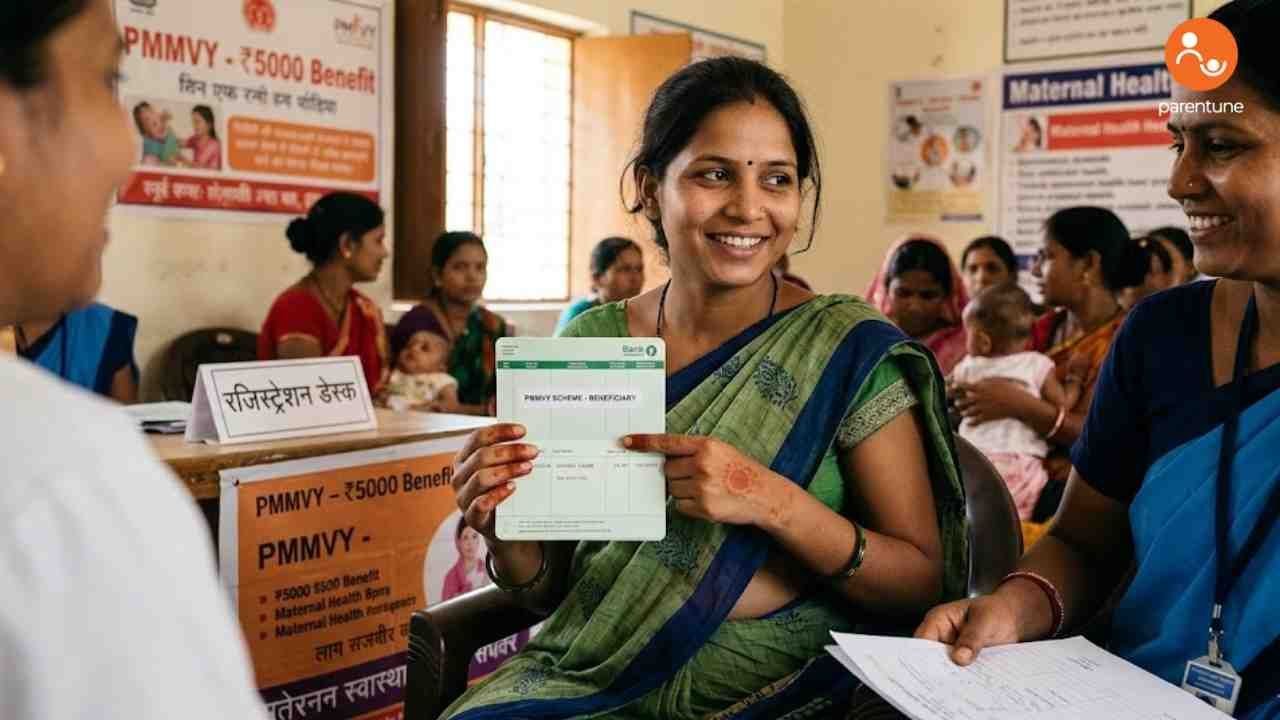
Eligible women can use the PMMVY portal, while Anganwadi Workers and ASHA workers can assist eligible beneficiaries with online registration. The official PMMVY FAQ says that citizen self-registration is available and that field functionaries can fill the application online for beneficiaries in their jurisdiction.
- Keep Aadhaar and the Aadhaar-linked bank or post-office account details ready.
- Confirm that you fall within the applicable PMMVY beneficiary category.
- Check your age at the time of childbirth against the 18 years 7 months to under-55 rule.
- Keep the MCP/RCHI card, LMP and ANC details available.
- Register through the official PMMVY portal or seek help from an Anganwadi/ASHA worker.
- Submit the required documents and declarations.
- Track the application and DBT status through the official system.
PMMVY Registration Timeline and the 270-Day Rule
The official FAQ states that a beneficiary can register in the PMMVY portal up to 270 days from childbirth. This registration window should not be confused with the separate age rule, which is checked at the time of childbirth. The pregnancy timeline is also linked to the LMP date recorded in the MCP card.
Because the scheme has time-sensitive maternal and child health conditions, applicants should avoid waiting until the end of the available registration period. Early registration makes it easier to complete the required pregnancy, ANC, birth and immunisation records within the relevant benefit timelines.
PMMVY Age Limit Examples
- 18 years 5 months at childbirth: below the stated minimum age of 18 years 7 months, so the age condition is not satisfied.
- 18 years 7 months at childbirth: reaches the stated minimum age; the other PMMVY eligibility conditions still have to be met.
- 30 years at childbirth: within the stated age range, subject to all other eligibility requirements.
- 54 years 10 months at childbirth: below 55 and within the stated age range, subject to all other conditions.
- 55 years at childbirth: does not satisfy the stated “less than 55 years” condition.
PMMVY Age Calculation by Date of Birth
Because the minimum is expressed in years and months, a birth-year-only check can be misleading. For example, a beneficiary born on 10 January 2008 reaches 18 years 7 months on 10 August 2026. If childbirth occurs on or after that date and before the beneficiary reaches 55, the age condition can be satisfied, subject to the other PMMVY rules. A person born on 20 February 2008 would reach 18 years 7 months on 20 September 2026, so a childbirth before that date would fall below the stated minimum.
At the upper boundary, a beneficiary born on 1 October 1971 reaches 55 on 1 October 2026. Under the official wording that the beneficiary must be less than 55 at childbirth, the age condition is different immediately before and on the 55th birthday. These examples show why the complete date of birth and childbirth date should be checked instead of comparing only the calendar year.
Common PMMVY Age-Limit Mistakes
- Using 18 years as the minimum: the official rule is 18 years and 7 months.
- Assuming 55 is included: the FAQ describes the beneficiary as less than 55 years at childbirth.
- Checking age only on application date: the official age condition refers to the time of childbirth.
- Ignoring beneficiary categories: age alone does not establish PMMVY eligibility.
- Using old three-instalment information: PMMVY 2.0 uses two instalments for the first living child.
- Missing the second-child rule: since April 2022, the scheme can provide ₹6,000 when the second child is a girl and the conditions are fulfilled.
- Assuming husband’s Aadhaar is mandatory: PMMVY 2.0 removed that mandatory requirement.
PMMVY 2.0 vs Older PMMVY Rules
| Feature | Older PMMVY framework | PMMVY 2.0 |
|---|---|---|
| Effective framework | Before Mission Shakti changes | From 1 April 2022 |
| First child | Benefit for first living child | ₹5,000 in two instalments, subject to conditions |
| Second child | No general PMMVY second-child benefit | ₹6,000 if the second child is a girl, subject to conditions |
| Husband’s Aadhaar | Older procedures could refer to husband-related documentation | Mandatory husband Aadhaar requirement removed |
| Application | Earlier PMMVY-CAS processes | Current PMMVY portal and field-functionary support |
PMMVY in 2026: Current Scheme Status
PMMVY remains an active national maternity benefit programme in 2026. The Ministry of Women and Child Development reported in June 2026 that the scheme had paid 4.27 crore beneficiaries ₹20,150 crore as of 30 April 2026. A PIB factsheet later reported 5.13 crore beneficiaries enrolled, 4.37 crore beneficiaries paid and ₹20,571 crore paid as of 31 July 2026.
2026 also marks ten years of PMMVY’s journey toward the programme’s first decade milestone. The Ministry’s September 2026 Poshan Maah communications identify PMMVY as one of the campaign’s themes and emphasise reaching eligible beneficiaries and strengthening awareness and DBT delivery.
PMMVY vs Other Government Benefit Schemes
Age rules should not be transferred from one government scheme to another. For example, PMUY age limit 2026 concerns an LPG connection scheme with a different eligibility structure, while PMMVY is a maternity benefit scheme with a specific childbirth-age condition. Likewise, PM Surya Ghar age limit 2026 does not use the PMMVY age test.
When checking any government benefit, use the scheme-specific notification, FAQ or operational guidelines rather than assuming that a common age such as 18, 21, 40 or 60 applies everywhere.
Frequently Asked Questions
What is the PMMVY age limit in 2026?
The official PMMVY FAQ states that the beneficiary should be 18 years and 7 months to less than 55 years old at the time of childbirth.
Can an 18-year-old woman get PMMVY?
Not automatically. The stated minimum is 18 years and 7 months, so an 18-year-old who has not reached 18 years 7 months does not satisfy the age condition. Other eligibility requirements also apply.
Can a 54-year-old woman get PMMVY?
A woman under 55 at childbirth can satisfy the age condition, but she must also meet the applicable PMMVY beneficiary and pregnancy-related requirements.
Can a 55-year-old woman get PMMVY?
The current FAQ states that the beneficiary must be less than 55 years at childbirth, so reaching 55 does not satisfy the stated age condition.
Is PMMVY available for the second child?
Yes, PMMVY 2.0 provides ₹6,000 for the second living child when the second child is a girl and the applicable conditions are fulfilled.
Is husband’s Aadhaar mandatory for PMMVY?
No. The mandatory requirement for the husband’s Aadhaar was removed under PMMVY 2.0.
Where can I apply for PMMVY?
Eligible women can use the official PMMVY portal, and Anganwadi Workers or ASHA workers can assist with online registration.
Final Answer: PMMVY Age Limit 2026
The PMMVY age limit in 2026 is 18 years and 7 months to under 55 years at the time of childbirth. This age requirement applies within the broader PMMVY 2.0 eligibility framework. Eligible beneficiaries can receive ₹5,000 for the first living child in two instalments, while ₹6,000 can be provided for the second living child if the second child is a girl and the scheme conditions are met. Aadhaar-linked payment, pregnancy and child-health records, the qualifying beneficiary category and the applicable application timeline are also important.
If your age is close to either boundary, calculate the completed years and months using the date of birth and childbirth date, then verify the case through the official PMMVY system before relying on an age-based assumption.