

If you are searching for the FSSAI registration age limit 2026, the most important point is easy to miss: the current FSSAI registration framework does not state one universal minimum applicant age such as 18 years. The rules focus on the food business, its Kind of Business, the applicable registration or licence category, and the information needed to identify the food business operator.
That does not mean every person below 18 can automatically run every type of food business on their own. A minor’s legal capacity, contracts, local permissions, tax requirements and any other business-specific conditions are separate questions. So the safest way to answer an age query is to keep FSSAI eligibility separate from general legal capacity.
This 2026 guide explains what the current FSSAI rules say about age, what they do not say, how the 2026 turnover thresholds work, what a minor should check before applying, and how to use FoSCoS without confusing a food registration with other business permissions.
Quick Answer: What Is the FSSAI Registration Age Limit in 2026?
There is no single universal FSSAI minimum age published in the current registration provisions reviewed for 2026. The Food Safety and Standards (Licensing and Registration of Food Businesses) framework explains which food businesses must be registered or licensed and how registration works, but it does not set out a blanket rule saying that an applicant must be 18 or older.
| Question | 2026 position |
|---|---|
| Does FSSAI publish a universal 18+ applicant rule? | No blanket 18+ minimum appears in the current registration provisions reviewed. |
| Is there a general maximum applicant age? | No universal maximum age is stated in the registration provisions reviewed. |
| Does an FSSAI registration prove that a minor can sign every business contract? | No. Contractual capacity is a separate legal question. |
| Is every food business handled through the same category? | No. The applicable registration or licence depends on the food business and its eligibility criteria. |
| What system is used for online applications? | FoSCoS, the Food Safety Compliance System. |
| Did FSSAI change the turnover thresholds in 2026? | Yes. The revised thresholds took effect from 1 April 2026. |
The practical takeaway is that searching for a single number such as “18 years” can produce the wrong answer. FSSAI registration is a food-regulatory requirement, not a general statement that a person has full legal capacity to operate a business in every situation.

Why FSSAI Does Not Have a Simple 18+ Rule
The relevant FSSAI regulations are written around Food Business Operators (FBOs) and the food activity being carried out. The registration provisions explain that food businesses must be registered or licensed and that petty food businesses submit the prescribed registration application. The legal framework is therefore activity-based rather than built around one nationwide personal age threshold.
This matters because a food business can take many forms: a small food manufacturer, retailer, hawker, temporary stall, food service operation, distributor or another recognised Kind of Business. The requirements can change with the nature and scale of the operation.
In other words, the correct question is usually not just “How old must the applicant be?” It is “What food business is being carried on, what registration or licence applies, and who is legally responsible for that business?” The age issue may still matter, but it is only one part of the wider compliance picture.
Does FSSAI Registration Require the Applicant to Be 18?
The current FSSAI registration provisions reviewed do not state a universal 18-year minimum. That is the narrow answer to the FSSAI age-limit question.
However, it would be equally incorrect to turn that absence into a blanket statement that every minor can independently establish and operate any food business. The FSSAI registration requirement and the underlying civil-law capacity of the person running the business are different layers.
What FSSAI Rules Actually Focus On
- The food business activity or Kind of Business.
- The registration or licence category that applies.
- Business premises and food-safety requirements.
- The identity and information required in the application.
- Applicable turnover, capacity and other eligibility criteria.
- Ongoing compliance with food-safety requirements.
What FSSAI Registration Does Not Decide
- Whether a minor has full contractual capacity.
- Whether a person can independently enter every commercial agreement.
- Whether a bank will approve a business loan.
- Whether a local authority requires another registration or licence.
- Whether a regulated food activity has additional sector-specific conditions.
That distinction is the key to avoiding an inaccurate “FSSAI age limit” answer. An FSSAI registration record should not be treated as a universal certificate of business capacity.
Can a Minor Get FSSAI Registration?
The safest answer is not to infer a universal yes or no from an age number that the FSSAI registration rules do not publish. The FSSAI rules reviewed do not create a simple national table saying “under 18 prohibited” or “under 18 automatically eligible.”
If a minor is involved, the application should be considered together with the proposed business structure and the legal capacity of the people who will own, operate, contract for or represent the business.
Why the Age of Majority Still Matters
India’s Majority Act generally sets the age of majority at 18 years. Separately, Section 11 of the Indian Contract Act says that a person must be of the age of majority under the applicable law to be competent to contract, subject to the other requirements stated in that section.
So if your question is really “Can a 17-year-old independently sign leases, supplier agreements, loan documents or other commercial contracts for the business?”, the answer cannot be taken from the FSSAI registration rules alone. Those are separate legal questions.
FSSAI Registration Age Limit vs Age of Majority
| Issue | What the relevant rule addresses |
|---|---|
| FSSAI registration | Food-business registration or licensing and food-safety compliance. |
| Age of majority | Whether a person has attained legal majority; under the Majority Act this is generally 18. |
| Contractual capacity | Whether the person is competent to contract under the applicable law and other conditions. |
| Business licence | Permissions that may apply to the activity, location or sector outside FSSAI registration. |
| Bank finance | Lender-specific age, credit, income, security and documentation rules. |
This is why a person can encounter an apparently contradictory situation: the FSSAI registration rules may not state a personal minimum age, while another part of the business setup may still require an adult or a legally authorised representative.
What Changed in FSSAI Registration Rules in 2026?
The age question is only one part of the current 2026 picture. FSSAI introduced important licensing and registration reforms, including revised turnover thresholds and perpetual validity of licenses and registrations. These changes are more important for determining the type of FSSAI approval than any supposed universal applicant-age rule.
| Category | Turnover threshold from 1 April 2026 |
|---|---|
| Registration | Up to ₹1.5 crore |
| State License | More than ₹1.5 crore and up to ₹50 crore |
| Central License | More than ₹50 crore |
FSSAI’s 2026 FAQ says these revised thresholds apply from 1 April 2026 to food business operators applying for new licenses or registrations on or after that date. It also says existing businesses are to be given time to migrate through FoSCoS to align with the revised thresholds.
The same 2026 reform introduced perpetual validity for FSSAI licenses and registrations. In practical terms, the approval remains valid unless suspended, cancelled or surrendered, so routine renewal is no longer required under the reform described by FSSAI.
Who Needs FSSAI Registration or a Licence?
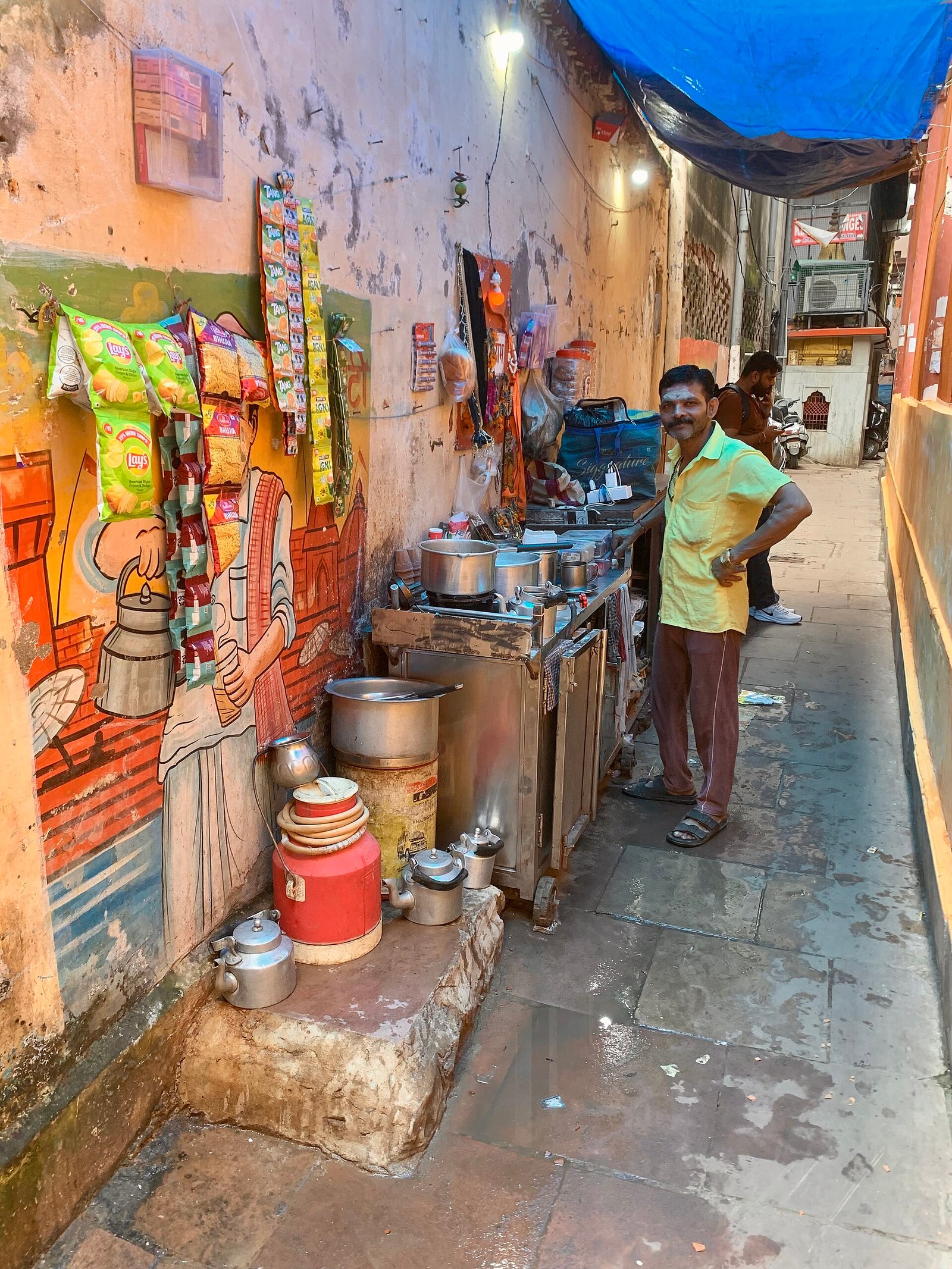
FSSAI’s framework applies to food business operators, with the exact approval depending on the type and scale of the food activity. The current FoSCoS eligibility material includes categories such as petty food businesses, manufacturing and processing, retail, food services, food vending agencies, importers, exporters, e-commerce and other business types.
The word “registration” is therefore narrower than “FSSAI compliance” in general. A small eligible food business may fall into the registration category, while a larger or differently classified activity may require a State or Central licence.
Small Food Businesses
Examples can include eligible petty retailers, hawkers, temporary stalls and other small food operations listed in FoSCoS eligibility criteria. The applicable category still depends on the actual Kind of Business and the current eligibility table.
Businesses Above the Registration Threshold
A food business above the applicable turnover threshold may require a State or Central licence rather than a simple registration. The 2026 threshold changes mean older guides that still use ₹12 lakh as the registration ceiling should not be treated as current for new applications after 1 April 2026.
How to Check the Correct FSSAI Category Before Applying
- Identify exactly what food activity the business carries out.
- Use the current FoSCoS eligibility criteria to find the relevant Kind of Business.
- Check the turnover, production, capacity or other criterion used for that activity.
- Confirm whether the current route is Registration, State License or Central License.
- Review the identity and business details required in the live application.
- Check any separate local, tax, trade, professional or sector-specific approvals.
Doing this first is especially helpful for a young entrepreneur. It prevents the age question from becoming a distraction when the real issue is that the business belongs in a different FSSAI category.
How to Apply Through FoSCoS in 2026
- Open the official FoSCoS portal.
- Choose the option for a new food license or registration.
- Identify the State and the correct Kind of Business.
- Review the eligibility criteria shown for that activity.
- Enter the required business and identity information.
- Complete the application and any required declaration or supporting process.
- Save the application reference information and track the application through FoSCoS.
The live portal should be treated as the final application interface because FSSAI can change field names, document requirements and online workflows. Current government guidance is more reliable than a screenshot from an older guide.
What Documents or Details May Be Relevant?
The exact information depends on the Kind of Business and the applicable approval category. FSSAI’s registration framework and FoSCoS materials use identity, business, premises and activity-related information, while the detailed documentation can vary by food activity.
- Identity details of the relevant person or business.
- Business name and contact information.
- Premises or operating-location details.
- Food activity or Kind of Business.
- Turnover, capacity or other classification information where applicable.
- Any additional documents required by the current eligibility criteria.
Do not assume that the same document list applies to every food business. The current FoSCoS eligibility and document guidance should be checked for the specific activity selected in the application.
Can a Parent or Guardian Simply Use Their Details for a Minor?
Do not assume that a parent’s details can simply replace the legally relevant details for a minor’s business. The correct identity, business structure and authority depend on how the enterprise is actually organised and who is legally responsible for it.
Using another person’s identity merely to bypass an age, KYC or verification issue can create a different compliance problem. The safer approach is to use the person and business structure that genuinely match the enterprise, then check the separate legal and licensing requirements that apply.
FSSAI Registration vs GST, Udyam and Other Registrations
A common source of confusion is treating all business registrations as if they use the same eligibility rules. They do not.
| Registration or requirement | Primary purpose |
|---|---|
| FSSAI Registration / License | Food-safety registration or licensing for the food business. |
| GST registration | Tax registration where the GST law requires it. |
| Udyam Registration | MSME enterprise registration within the Udyam system. |
| Local trade or establishment permission | Local or municipal business compliance where applicable. |
| Sector-specific licence | Additional permissions for regulated activities. |
Our Udyam Registration Age Limit 2026 guide explains a similar distinction: an enterprise-registration portal can have one set of rules while contracts, finance and sector-specific permissions have another.
FSSAI Registration Age Examples
| Age | How to read the FSSAI age question | Separate check needed |
|---|---|---|
| 15 | The FSSAI registration provisions reviewed do not publish a simple 15+ threshold. | Business structure, representation, contracts and local or sector-specific rules. |
| 17 | The FSSAI rules reviewed do not publish a blanket under-18 prohibition. | Legal capacity and who can validly act for the business. |
| 18 | Being an adult does not create a special FSSAI category; normal FSSAI criteria still apply. | Kind of Business, turnover and other requirements. |
| 30 | No special FSSAI age restriction is stated for an ordinary adult applicant. | Normal food-business eligibility and compliance. |
| 60+ | No general maximum applicant age is stated in the registration provisions reviewed. | Normal food-business eligibility and any other legal or commercial requirements. |
Common FSSAI Age-Limit Mistakes
Mistake 1: Assuming FSSAI Means 18+
The current registration provisions reviewed do not state a universal 18-year minimum. Copying an adult-only rule from another scheme or business permission can create an inaccurate FSSAI answer.
Mistake 2: Assuming No Age Threshold Means Every Minor Can Operate Independently
That conclusion is too broad. The absence of a single FSSAI age threshold does not answer questions about contracts, borrowing, leases, representation or other legal capacity.
Mistake 3: Confusing FSSAI Registration With a Business Licence for Everything
Food registration or licensing does not replace every other permission a business may need. Depending on the activity and location, tax, municipal, fire, trade, establishment or sector-specific rules can still apply.
Mistake 4: Using Old 2025 Turnover Limits
FSSAI changed the turnover thresholds from 1 April 2026. An old article using the previous ₹12 lakh registration threshold can therefore be out of date for new applications.
Mistake 5: Treating a Registration Certificate as Proof of Full Legal Capacity
A food-safety registration and a person’s legal capacity are different questions. The certificate does not by itself rewrite the rules on majority or contracts.
What Changed for Street Food Vendors in 2026?
FSSAI’s 2026 reforms also introduced deemed registration for street food vendors who are already registered under the Street Vendors (Protection of Livelihood and Regulation of Street Vending) Act, 2014. This is a specific regulatory reform and should not be turned into a general “street vendor age limit” rule.
For a street food operator, the important question is whether the person and premises fall within the applicable FSSAI and local framework. Where a vendor is already covered by the deemed-registration provision, the separate FSSAI treatment described by the 2026 reform may apply.
How to Verify Your Age-Related Position Before Submission
- Calculate your exact age from your date of birth rather than relying only on your birth year.
- Identify the exact food activity and business structure.
- Read the current FoSCoS eligibility criteria for that activity.
- If you are under 18, separately verify who can legally contract, own, represent or operate the business.
- Check whether the business needs GST, local permissions or another sector-specific approval.
- Use the current government portal before submitting the application.
For the date calculation itself, you can use our Age Calculator by Date of Birth. It can help with the arithmetic, but the calculator cannot determine whether a separate business-law rule applies to you.
Frequently Asked Questions
What is the minimum age for FSSAI registration in 2026?
The current FSSAI registration provisions reviewed do not state a universal minimum applicant age such as 18 years. The food-business activity, applicable approval category and required identity/business information are the main regulatory focus.
Can a 17-year-old get FSSAI registration?
The FSSAI rules reviewed do not publish a blanket under-18 prohibition or a blanket statement that every minor can independently operate a food business. A minor’s legal capacity, business structure and representation should be checked separately.
Does FSSAI require everyone to be 18 or older?
No universal 18+ applicant rule appears in the current registration provisions reviewed. Do not copy an adult-age condition from another scheme into FSSAI without a current FSSAI source.
What is the FSSAI registration turnover limit in 2026?
From 1 April 2026, FSSAI’s revised threshold for the Registration category is up to ₹1.5 crore turnover. Above ₹1.5 crore to ₹50 crore is in the State License band, while turnover above ₹50 crore is in the Central License band, subject to the applicable Kind of Business criteria.
Did FSSAI registration validity change in 2026?
Yes. FSSAI’s 2026 reform introduced perpetual validity for licenses and registrations, meaning they remain valid unless suspended, cancelled or surrendered, rather than requiring routine renewal as described in the reform.
Can a parent use their details for a minor’s food business?
Do not assume that a parent’s identity can simply replace the legally relevant details for the business. The correct approach depends on the actual business structure, responsible person and applicable legal requirements.
Is FSSAI registration the same as Udyam registration?
No. FSSAI registration or licensing is part of food-safety regulation, while Udyam registration is an MSME enterprise-registration system. A business may need to deal with both, depending on its circumstances.
Where should I apply for FSSAI registration?
Use the official FoSCoS portal for the current online application process and eligibility criteria.
Official and Primary Sources for 2026
- FSSAI — Food Laws and Regulations — official regulations and regulatory material.
- FSSAI — FAQs on Licensing and Registration Amendment Regulations, 2026 — revised turnover thresholds, perpetual validity and other 2026 reforms.
- FSSAI — 2026 regulatory reform press release — implementation summary for the 2026 licensing and registration changes.
- FoSCoS — Food Safety Compliance System — current application portal.
- FoSCoS — Revised Kind of Business Eligibility, April 2026 — current business-category and turnover guidance.
- India Code — The Majority Act, 1875 — age of majority provision.
- India Code — The Indian Contract Act, 1872 — Section 11 and contractual competency.
Related Age and Eligibility Guides
- Udyam Registration Age Limit 2026 — how MSME registration, minor questions and legal capacity differ.
- Legal Age to Sign a Contract in India 2026 — majority and contract-capacity basics.
- Date of Birth Proof Guide — why exact DOB records matter for eligibility checks.
- Age Calculator by Date of Birth — calculate exact age for a chosen date.
Final Takeaway
The best-supported answer to FSSAI registration age limit 2026 is that the current FSSAI registration provisions reviewed do not publish a universal personal minimum age such as 18, and they do not state a general maximum applicant age either.
But that does not mean a minor automatically has full legal capacity to run every food business independently. The age of majority, contract competency, business structure, local permissions, tax rules and the exact FSSAI Kind of Business must all be considered separately.
For 2026 applications, also remember the major regulatory update: the revised FSSAI turnover bands took effect from 1 April 2026, with Registration up to ₹1.5 crore, State License above ₹1.5 crore up to ₹50 crore, and Central License above ₹50 crore, subject to the applicable business criteria. FSSAI also introduced perpetual validity for licenses and registrations under the reform.
Last reviewed: 21 September 2026. FSSAI rules, FoSCoS eligibility criteria and other business requirements can change. Check the current official government portal and the rules applicable to your specific food activity before submitting an application.