The minimum age to contest elections in India depends on the office you want to hold. A candidate for the Lok Sabha or a State Legislative Assembly must be at least 25 years old. The minimum is 30 years for the Rajya Sabha or a State Legislative Council, and 35 years for President or Vice-President. For Panchayat and municipal membership, the Constitution sets a 21-year age floor, while state election laws supply further rules.
These are minimum-age requirements, not automatic permission to stand. Citizenship, voter-registration or elector requirements, nomination formalities, reserved-seat rules and statutory disqualifications may also apply. The Election Commission of India (ECI) publishes office-specific guidance, so use the table below as a starting point and then check the notification for the election you intend to contest.
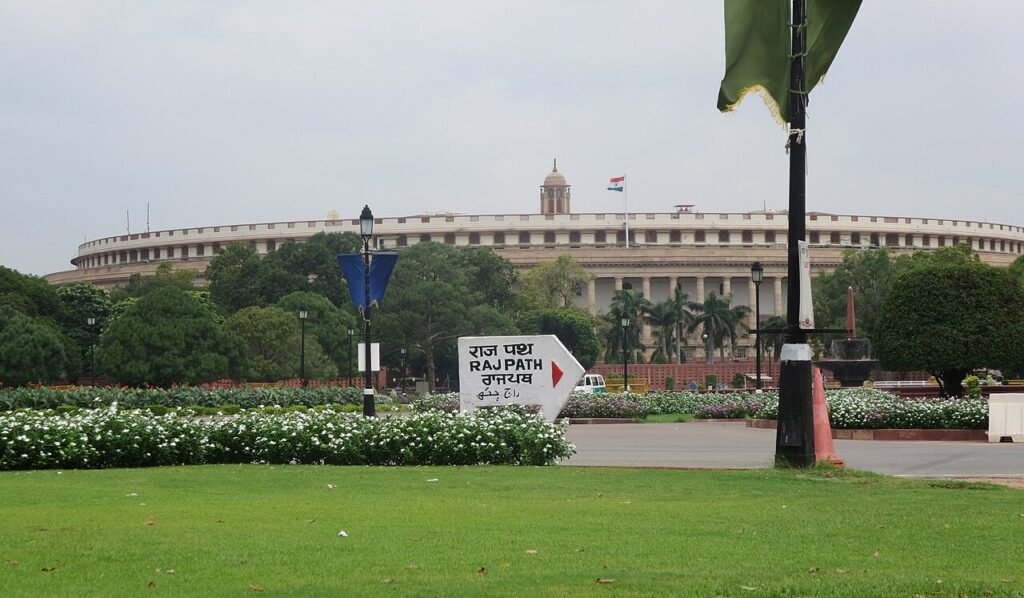
Featured image: Parliament House, Delhi. Photo by Nikhil B (Nikhilb239 via Wikimedia Commons), licensed under CC BY-SA 4.0. No changes made.
On this page
- Minimum age to contest elections in India at a glance
- Why the minimum age changes by office
- Lok Sabha MP: minimum age 25
- State Assembly MLA: minimum age 25
- Rajya Sabha MP: minimum age 30
- State Legislative Council MLC: minimum age 30
- President of India: minimum age 35
- Vice-President of India: minimum age 35
- Panchayat and municipality elections
- When is your age checked?
- Voting age versus candidacy
- Other eligibility checks besides age
- What if the age limit may change?
- Frequently asked questions
- Official sources
Minimum age to contest elections in India at a glance
| Office or election | Minimum age | How the office is filled | Key constitutional provision |
|---|---|---|---|
| Lok Sabha MP | 25 years | Direct election by voters in a parliamentary constituency | Article 84(b) |
| State Assembly MLA (Vidhan Sabha) | 25 years | Direct election by voters in an Assembly constituency | Article 173(b) |
| Rajya Sabha MP | 30 years | Members of State Legislative Assemblies elect members for elected seats; some seats are nominated | Article 84(b) |
| State Legislative Council MLC (Vidhan Parishad) | 30 years | Members are chosen through the categories of election or nomination provided by law | Article 173(b) |
| President of India | 35 years | Elected by a constitutional electoral college, not by a direct public vote | Article 58 |
| Vice-President of India | 35 years | Elected by members of both Houses of Parliament | Article 66 |
| Panchayat membership | 21 years constitutional floor | Local election under the applicable State framework | Article 243F |
| Municipality membership | 21 years constitutional floor | Local election under the applicable State framework | Article 243V |
The parliamentary and state-legislature figures are listed in the ECI’s candidate qualification guidance. The ECI also explains the age and qualification requirements for the President and Vice-President in its official election FAQs. The local-body figures above are constitutional minimum floors: Articles 243F and 243V prevent disqualification solely on the ground that a person is below 25 if they have attained 21; state law may prescribe other conditions.
Why the minimum age changes by office
India does not use a single age threshold for every elected role. The Constitution sets qualifications for membership of Parliament and state legislatures, and separate qualifications for the President and Vice-President. Local government follows a separate constitutional framework. That is why the answer changes depending on whether you mean an MP, MLA, MLC, President, Vice-President or local representative.
Also distinguish an office that is filled by election from a post that is filled by appointment or recruitment. This guide concerns political offices and candidacy. It is not the same as an age limit for a government job, a school admission rule or the minimum age to register as a voter.
1. Lok Sabha MP: minimum age 25
To contest a Lok Sabha election as a candidate, you must have completed 25 years of age. Article 84(b) of the Constitution sets this minimum for the House of the People. The ECI’s FAQ confirms the 25-year threshold and also says a candidate must be registered as a voter to contest a parliamentary constituency, subject to the requirements of the Representation of the People Act.
Lok Sabha MPs are directly elected by voters from parliamentary constituencies. Being 25 is only one part of eligibility. The candidate must also meet the relevant citizenship, elector, nomination and other legal requirements and must not be subject to a disqualification. A person should check the current election notification and the applicable provisions rather than relying on an informal summary or a social-media post.
A candidate’s constituency does not create a different general constitutional age for Lok Sabha membership. However, special seat-related qualifications and reserved-seat rules may affect whether a particular person can contest from a particular constituency. Those questions are separate from the basic minimum age.
2. State Assembly MLA: minimum age 25
The minimum age for a candidate seeking election to a State Legislative Assembly, commonly called a Vidhan Sabha, is also 25. Article 173(b) sets the age qualification for membership of a state legislature: 25 for the Legislative Assembly and 30 for the Legislative Council. The ECI lists the same 25-year minimum for Vidhan Sabha candidates.
An MLA is directly elected by voters in an Assembly constituency. If you are planning to contest a state election, review the relevant State Chief Electoral Officer or ECI notice for the election schedule, nomination dates, scrutiny date, forms, deposits, proposers and any seat-specific conditions. The national age threshold does not remove those other requirements.
Do not confuse the MLA age requirement with the minimum age for voting. A person can become eligible to vote from age 18, but that does not mean they can stand for the Legislative Assembly at 18. The minimum age to be a candidate is higher.
3. Rajya Sabha MP: minimum age 30
The minimum age for membership of the Rajya Sabha, or Council of States, is 30 years under Article 84(b). This is five years higher than the minimum for the Lok Sabha. The ECI notes that elected Rajya Sabha members are chosen by elected members of State Legislative Assemblies using proportional representation by means of the single transferable vote.
The distinction between elected and nominated membership matters when you read about Rajya Sabha seats. Not every member takes part in a public constituency election; the President may nominate members under the Constitution. The 30-year constitutional age requirement is a qualification for membership of the Council of States, while the exact route into a seat and the associated nomination or election procedure depends on the seat involved.
A 25-year-old who meets the age requirement for a Lok Sabha seat is not yet old enough for Rajya Sabha membership. If your goal is a Council of States seat, confirm the 30-year requirement and the additional qualifications and procedures that apply to that election.
4. State Legislative Council MLC: minimum age 30
In a state that has a Legislative Council, a member is commonly called an MLC. Article 173(b) sets the minimum age at 30 for a Council seat, compared with 25 for a Legislative Assembly seat. The ECI’s candidate-information material lists the same age thresholds for Vidhan Parishad and Vidhan Sabha.
Legislative Councils are not present in every state. Their membership is filled through different constitutional categories, which can include election by specified electorates and nomination. The route differs from a direct Assembly constituency contest, so the candidate should check the applicable category and the current rules before filing papers.
If a person is aged 28 or 29, they do not satisfy the general constitutional age qualification for a Legislative Council seat merely because they are old enough to vote or would be old enough to contest an Assembly seat. The age for the particular House matters.
5. President of India: minimum age 35
A candidate for President of India must have completed 35 years of age. Article 58 of the Constitution states this requirement, along with other conditions: the candidate must be an Indian citizen and qualified for election as a member of the Lok Sabha, and the office-of-profit restrictions in the article must be considered.
The President is not elected through a direct vote by the general public. The President is elected by an electoral college made up of elected members of both Houses of Parliament and elected members of the Legislative Assemblies of the States and the Union Territories of Delhi and Puducherry. The ECI explains this process and the qualifications in its President election FAQ.
That means the question “Can a 34-year-old become President?” has a clear age answer: no, not until they have completed 35 years. Reaching 35 still does not remove the need to satisfy the other constitutional qualifications and nomination procedure.
6. Vice-President of India: minimum age 35
The minimum age for election as Vice-President is also 35 years. Article 66 requires the candidate to be an Indian citizen, to have completed 35 years and to be qualified for election as a member of the Rajya Sabha. Other restrictions, including the rule about holding an office of profit, must also be checked under the Constitution.
The Vice-President is elected by the members of both Houses of Parliament, rather than by a constituency-wide popular vote. The process and eligibility requirements are distinct from an ordinary Lok Sabha or Assembly nomination. Anyone considering this office should use the official Presidential and Vice-Presidential election instructions and the constitutional text, not just the age number.
Although both the President and Vice-President have a 35-year minimum, the remaining requirements are not identical in every respect. Article 58 refers to qualification for Lok Sabha membership; Article 66 refers to qualification for Rajya Sabha membership. Those differences are why it is useful to look at the article for the specific office.
7. Panchayat and municipality elections: constitutional age floor 21
Local-body elections have a different framework from elections to Parliament and state legislatures. Under Article 243F, a person cannot be disqualified from Panchayat membership solely because they are below 25 if they have attained 21 years. Article 243V gives the same 21-year floor for municipality membership. These are constitutional provisions, and the relevant State law can provide additional eligibility conditions or disqualifications.
This is best understood as a constitutional minimum age floor, not a complete statement of every local election rule in India. Panchayat and municipality procedures, forms, reservation rules and other conditions are handled under the applicable State framework. Before contesting a local election, read the notification published by the State Election Commission and the relevant state law.
Do not automatically apply the 25-year Lok Sabha or MLA rule to local-body membership. At the same time, do not assume that reaching 21 is enough by itself: other legal conditions can still matter.
When is your age checked?
For Lok Sabha and State Assembly elections, the ECI’s Handbook for Candidates says a candidate must be “not less than” 25 years old on the date of scrutiny of nomination papers. In practical terms, eligibility is not decided by how old you will be on polling day, on counting day or when the result is announced. The relevant legal date and the particular election’s scrutiny schedule matter.
The word “completed” matters. If an eligibility rule requires 25 years, being in your 25th year is not enough; you must have reached the 25th birthday. The same completed-years principle applies when assessing the 30-year or 35-year thresholds. Check the applicable election notification for the relevant date, especially if your birthday falls close to the nomination scrutiny date.
An example using dates
Suppose the nomination scrutiny for an election is scheduled for 15 October 2026. A person born on 15 October 2001 has completed 25 years on that date. A person born on 16 October 2001 is still 24 on 15 October and turns 25 the following day. If the applicable rule requires the person to have reached 25 on the scrutiny date, the second person has not met it on that date. This is an illustration of date arithmetic, not a statement about the timetable of any particular election.
To avoid a mistake, calculate age against the official eligibility date, not today’s date by default. You can use the Age Calculator to calculate completed years from your date of birth and the step-by-step guide to calculating age from date of birth to understand the calculation. The election notification and law remain authoritative if a close birthday raises a question.
Minimum voting age versus minimum age to stand for election
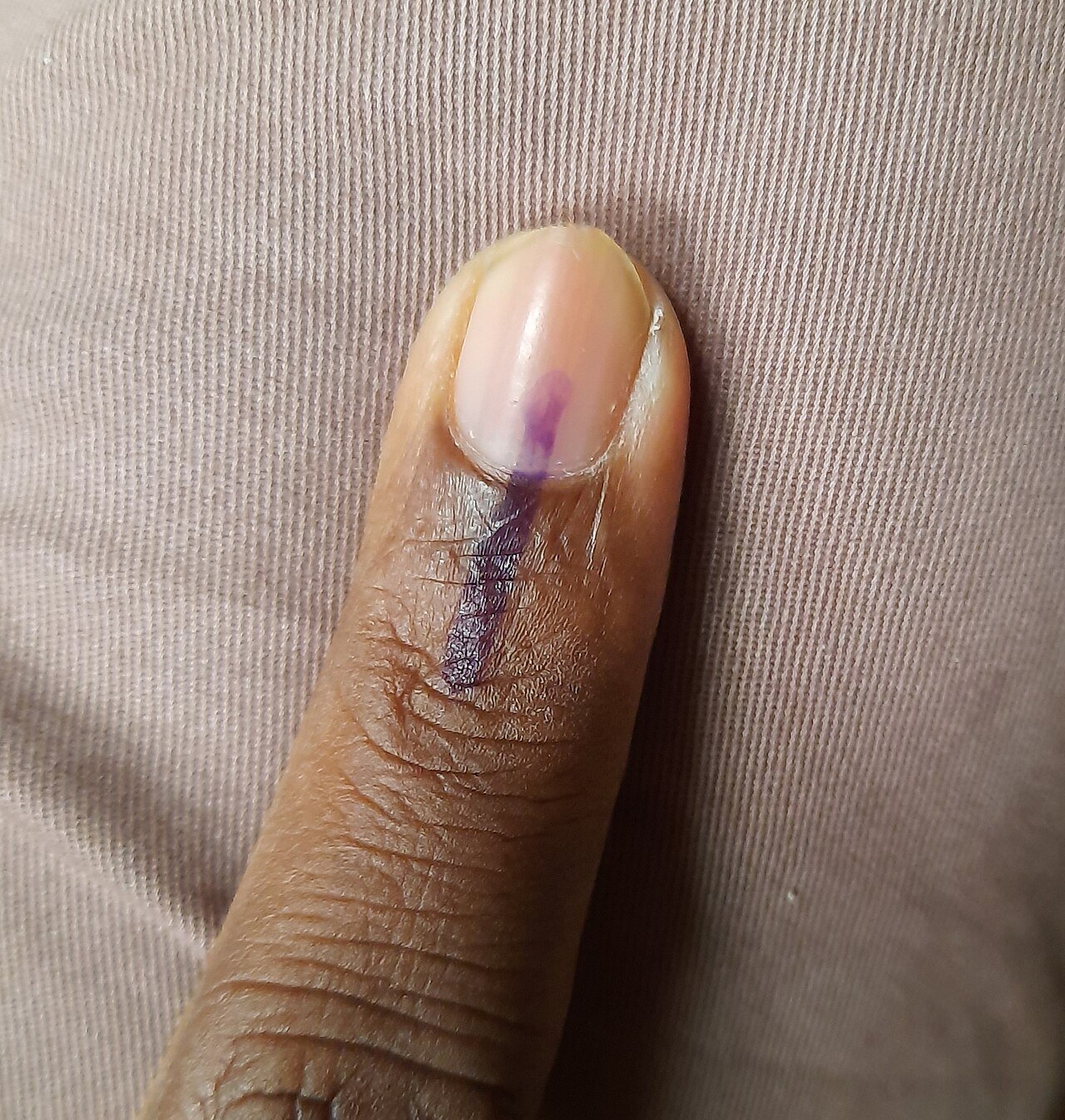
The minimum age to register as a voter is generally 18, subject to the qualifying-date and electoral-roll rules. The minimum age to contest an election is a separate rule. For example, a person may be eligible to vote at 18 but must wait until 25 to meet the constitutional age requirement for a Lok Sabha or Assembly seat.
| Question | General rule | What it means |
|---|---|---|
| How old must I be to vote? | 18 years, subject to electoral-roll rules | Eligibility to be registered as an elector |
| How old must I be to contest Lok Sabha or MLA election? | 25 years | Minimum age qualification for the candidacy |
| How old must I be for Rajya Sabha or MLC membership? | 30 years | Higher age threshold for the Council of States or a State Legislative Council |
| How old must I be for President or Vice-President? | 35 years | Separate constitutional qualifications for those offices |
Voting rights and candidature are related, but neither replaces the other’s requirements. A voter registration record does not prove that the candidate meets the age requirement for the office, and reaching the minimum age does not automatically prove that the person is on the relevant electoral roll or is free from legal disqualification.
Other eligibility checks besides age
Age is often the first thing people look up, but it is only one part of the eligibility test. The detailed conditions depend on the office and the law governing the election. Before deciding that you are eligible, check the current official instructions for all of the following:
- Citizenship and constitutional qualifications. The ECI says a non-citizen cannot be a candidate for Parliament or a State Legislative Assembly; the President and Vice-President also have specific citizenship requirements.
- Voter registration or elector status. The ECI’s guidance for parliamentary and Assembly candidature requires the relevant voter/elector qualifications under the applicable law.
- Disqualification rules. Constitutional and statutory provisions can disqualify a person for reasons separate from age, including specific legal circumstances listed in the applicable provisions.
- Seat and office-specific conditions. Reserved constituencies, category-specific qualifications, nomination requirements and the way a particular seat is filled can affect eligibility.
- Nomination procedure and deadlines. A candidate must submit the correct papers in the prescribed manner and comply with requirements such as proposers, deposits and scrutiny. A person who meets the age requirement can still have a nomination rejected for a separate legal defect.
For Parliament and State Legislatures, the ECI’s published material refers candidates to Articles 84, 102, 173 and 191 of the Constitution and the Representation of the People Act, 1951. Read the detailed requirements for the particular House and election. For local-body races, use the appropriate State Election Commission material because the governing framework differs.
What if a news report says the age limit may change?
A proposed change, a recommendation or a political statement is not itself an amended eligibility rule. The ECI’s current public guidance continues to list 25 years for Lok Sabha and State Assembly candidates, 30 years for Rajya Sabha and State Legislative Council membership, and 35 years for President and Vice-President. Treat the relevant constitutional provision and official election notification as controlling unless a legally effective amendment changes the rule.
This distinction is especially important when an online article discusses lowering an age threshold. Before acting on such a report, check whether Parliament has enacted a change and whether it has come into force. Do not rely on an opinion paper, recommendation or social-media graphic as proof that a candidate-age rule has changed.
Frequently asked questions
What is the minimum age to contest elections in India?
It depends on the office: 25 for Lok Sabha and State Assembly candidates, 30 for Rajya Sabha and State Legislative Council membership, and 35 for President or Vice-President. For Panchayat and municipality membership, the Constitution protects people who have attained 21 from being disqualified solely because they are below 25; check the applicable State law for other conditions.
Can a 24-year-old contest an MLA or Lok Sabha election?
No. The constitutional minimum for a Lok Sabha or State Legislative Assembly candidate is 25 years. For the relevant elections, the ECI Handbook says the candidate must have reached that age on the date of scrutiny of nominations.
Can a 25-year-old contest a Rajya Sabha election?
No. The minimum age for Rajya Sabha membership is 30 years under Article 84(b). The 25-year threshold applies to a Lok Sabha seat, not to every House of Parliament.
Is the minimum age for MLA and MLC the same?
No. The minimum is 25 for a Legislative Assembly (MLA) seat and 30 for a Legislative Council (MLC) seat. The Constitution sets these separately in Article 173(b). Not every state has a Legislative Council.
Can someone under 25 contest a Panchayat or municipal election?
The Constitution sets a 21-year minimum floor for Panchayat and municipality membership: a person who has attained 21 cannot be disqualified solely because they are below 25. However, other conditions under the applicable State law still need to be checked.
What is the minimum age to become President or Vice-President of India?
The minimum age is 35 for both offices. The President’s qualifications are in Article 58 and the Vice-President’s in Article 66. Both offices have additional requirements and are filled through an electoral college, not by a direct public constituency vote.
Is there an upper age limit for contesting elections?
The constitutional provisions listed in this guide set minimum ages. That does not remove other eligibility or disqualification rules, and the requirements should always be checked for the specific office. Consult the relevant election notification and law before filing a nomination.
Where can I verify the rule for a particular election?
Start with the Election Commission of India’s candidate and election FAQs and its qualifications and disqualifications guidance. For Panchayat and municipality elections, check the State Election Commission and the state’s governing law. For the President and Vice-President, use the official election instructions and Articles 58 or 66 as applicable.
Official sources
- Election Commission of India: minimum age for Lok Sabha and Assembly candidates
- Election Commission of India: President, Vice-President and Rajya Sabha qualifications
- ECI Handbook for Candidates: age and scrutiny of nomination papers
- ECI: qualifications and disqualifications for Parliament and State Legislature candidates
- Constitution of India (India Code PDF): Articles 243F and 243V for local bodies
Last reviewed: 15 October 2026. This article is a practical summary, not a substitute for the applicable law or the official notification for a specific election.