
Why Date of Birth Proof Matters in Government Job Applications
For a government job, your date of birth is not just a number that you type into an online form. It can determine whether you fall within the minimum or maximum age, whether you qualify for an age relaxation, and whether your application survives document verification. The date entered in the form therefore needs to agree with the documentary record that the recruiting authority accepts.
This is especially important when you are close to an age cutoff. A candidate can calculate an age such as 27 years, 29 years or 30 years correctly and still face a problem if the date of birth used in the application does not match the permitted record. Different recruiting bodies also use different instructions. There is no single document rule that automatically applies to every recruitment.
For practical age calculation, you can use the Age Calculators website to calculate your exact age on a notification’s cutoff date. For recruitment-specific rules, however, the official notification remains the controlling source.

What Counts as Date of Birth Proof?
Date of birth proof is a document that records your day, month and year of birth in a form that the relevant authority can use for eligibility or verification. The important point is not simply whether a document contains a birthday. The recruiting body may specify which document or combination of documents it will accept.
For many Indian government recruitments, educational records are particularly important. The Department of Personnel and Training’s handbook for personnel officers states that, at appointment, a government employee declares the date of birth with documentary evidence such as a Matriculation Certificate where the prescribed qualification is Matriculation or above. The same handbook also discusses a High School, Higher Secondary or Secondary School Certificate, or extracts from the Birth Register, for determining date of birth in government service records.
Recruitment notices can be more specific. UPSC instructions for the CAPF examination state that the Matriculation/Higher Secondary Examination Certificate, or an accepted equivalent, is used for proof of age. The instructions also explain what to do when that certificate does not show the date of birth and warn that incomplete proof of age can lead to rejection of candidature. Read the relevant UPSC instructions.
Common Documents Used for DOB Verification
| Document | What It Can Show | Important Caution |
|---|---|---|
| Matriculation/secondary school certificate | Name and date of birth in an educational record | Often important in recruitment, but the exact notice must be checked |
| Birth certificate | Recorded date of birth from a civil registration record | Use the issuing authority’s valid record and follow the recruiting body’s instructions |
| School leaving or equivalent certificate | Date of birth recorded by a school or board | Acceptance depends on the particular authority |
| Government photo ID with DOB | Identity plus date of birth where printed | A photo ID may be acceptable for examination-day identity checks without being the main recruitment age record |
| Other certificate specifically listed by the notification | May satisfy a special documentary requirement | Do not substitute a different document merely because it contains the same date |
The table above is a practical guide, not a universal acceptance list. The correct question is always: “What does this particular recruitment notice say?”
Why Your Matriculation Certificate Often Becomes Important
One of the most useful rules for applicants to understand is the difference between a general identity document and the age record used by a recruiting authority. Your Aadhaar, PAN, passport, driving licence or voter ID can be valuable identity documents, but a recruitment notice may rely on the date of birth recorded in your matriculation or equivalent examination certificate for age determination.
SSC provides a good current example. Its 2026 notices instruct candidates who could not complete Aadhaar-based authentication to carry an original valid photo ID with the date of birth printed on it. The SSC Combined Hindi Translators Examination 2026 notice further says that where the photo ID does not contain the date of birth, the candidate must carry an additional original document such as a Matriculation Certificate, board-issued marks sheet or Birth Certificate as proof of date of birth. The same notice warns that a mismatch between the date of birth in the admission certificate and the supporting identity or DOB document can prevent the candidate from being allowed to appear.
SSC’s 2026 recruitment instructions also tell applicants to enter their name and date of birth strictly as given in the matriculation certificate and warn that incorrect particulars can create problems at document verification. See SSC CHT 2026 official notice and see SSC Selection Post Phase XIV 2026 notice.
Application Form DOB vs Examination-Day DOB Proof
These are related but not always identical stages. When you submit an online application, you may simply enter the date of birth and other personal particulars. At a later stage, the authority can ask you to demonstrate that those details are supported by the prescribed documents.
That is why an application should never be treated as the place where you “choose” a convenient date. Your date of birth should come from the record that the recruiting authority recognizes. A later document that has a different date does not automatically override the earlier record.
Examination-day identity verification can have its own requirements. SSC’s current instructions, for example, distinguish the photo ID used for identity from an additional document needed when the ID does not display the date of birth. This is one reason candidates should read the admission certificate instructions as carefully as the recruitment notice.
What Happens If Your Documents Show Different Dates of Birth?
A DOB mismatch is one of the situations where candidates should stop and resolve the issue before document verification rather than assuming the discrepancy will be ignored.
Example 1: Application says 15 August 1999, certificate says 15 August 1998
This is not a harmless one-digit error. It changes the candidate’s age by one year and can affect an upper-age limit. The correct action is to identify which record is legally and procedurally relevant for the recruitment and follow the correction process, if one is available.
Example 2: Aadhaar and school certificate differ
Do not automatically decide that Aadhaar must be correct because it is a government-issued ID. The recruiting authority’s prescribed age document controls for that recruitment. In some recruitments a matriculation record is central to DOB determination; in others, the notice may prescribe a broader list.
Example 3: The certificate shows only age or does not show DOB
UPSC’s CAPF instructions provide a useful illustration. Where a Matriculation/Higher Secondary certificate does not show the date of birth, or only shows age in completed years or years and months, the instructions require additional documentary evidence from the educational institution in the circumstances described by the Commission.
The lesson is simple: never invent a conversion or submit an unofficial explanation where the authority has prescribed a particular proof route.
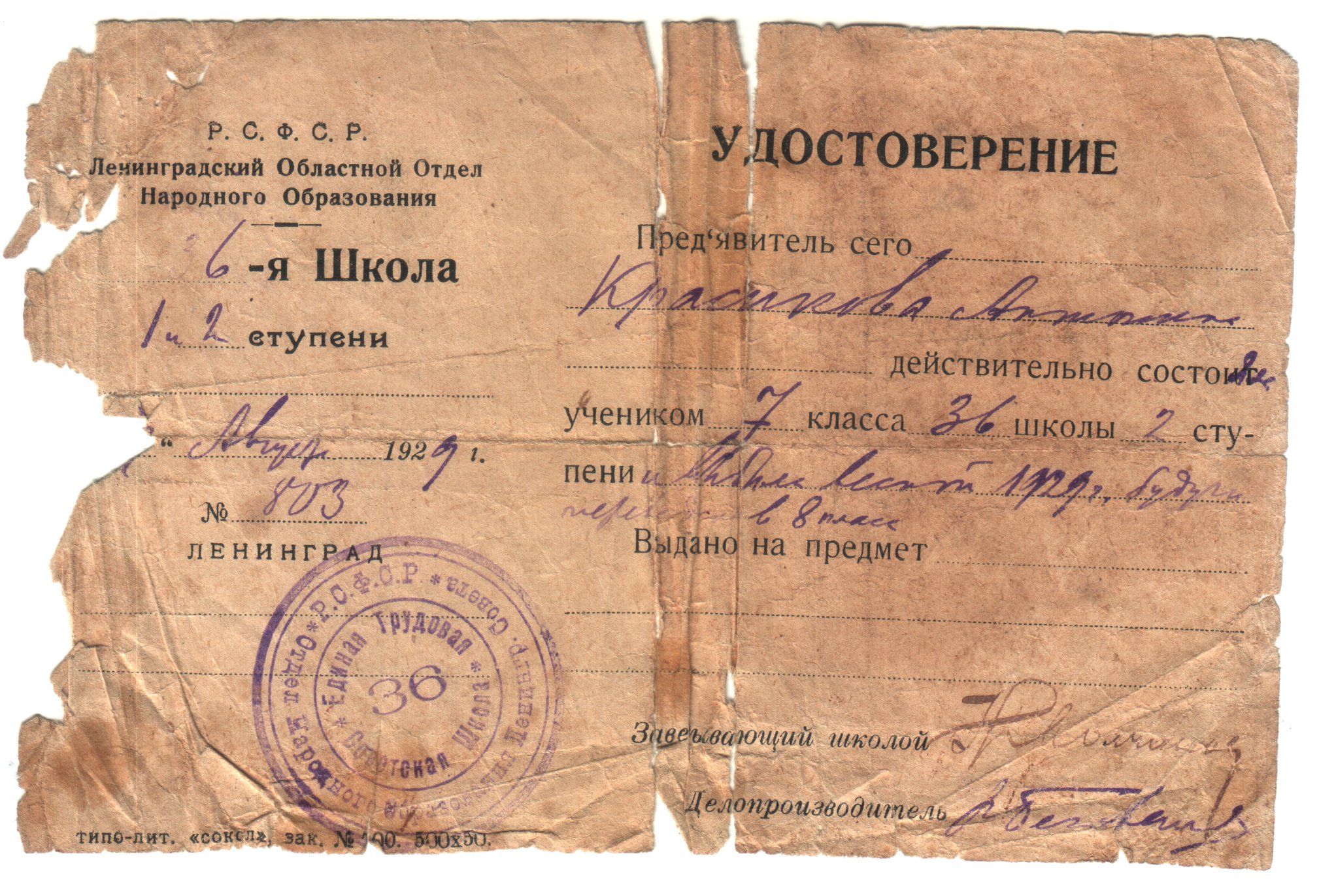
How to Check Your DOB Before Applying for a Government Job
- Read the age clause first. Note the minimum age, maximum age and the exact date on which age is reckoned.
- Locate the DOB instruction. Look for phrases such as Matriculation Certificate, Secondary School Certificate, Birth Certificate, or “proof of age”.
- Write down the DOB from the prescribed record. Do not rely on memory or on a different ID card simply because it is convenient.
- Calculate your age on the cutoff date. Use an exact date-to-date calculation rather than subtracting only the birth years.
- Check the original document. Confirm day, month and year, name spelling and other personal details.
- Compare the application preview with the document. This is especially important before final submission.
- Keep the original and clear copies ready. Document verification normally requires the candidate to establish the claims made in the application.
How Exact Age Calculation Helps
Government recruitment age rules are generally tested against a specified reference or cutoff date. Suppose a post has a maximum age of 30 years as on 1 August 2026. A candidate born on 2 August 1996 is not yet 30 on that date, while a candidate born on 1 August 1996 has completed 30 years exactly. Looking only at the birth year would not show that difference.
This is where an exact age calculation is useful. You can use the main Age Calculators site to work out years, months and days between the DOB and the recruitment cutoff date. The calculator helps with the arithmetic; the notification tells you which date and age rule to use.
For a second practical check, candidates can also review the site’s UPSC Age Calculator when preparing for UPSC-related recruitment, or the School Admission Age Calculator when the question concerns educational admission rather than employment. These tools serve different use cases, but the underlying idea is the same: compare a date of birth with a clearly defined reference date.
DOB Proof and Document Verification: What Recruiters Look For
Document verification is not just a formality. The recruiting authority may compare the details in the application with originals and may cancel candidature where an eligibility claim cannot be substantiated.
SSC’s current recruitment instructions make this practical risk clear. The Commission states that applications can be provisionally accepted while supporting documents are checked later, and that if claims made in the application are not supported by the required documents, candidature can be cancelled. This is why “I entered the date correctly from memory” is not a safe standard.
The Department of Personnel and Training’s personnel handbook also illustrates why date of birth becomes an important long-term service record. The handbook explains that the DOB declared at appointment and accepted by the competent authority is used in determining the date on which a government servant attains the prescribed retirement age.
Can Aadhaar Be Used as Proof of Date of Birth?
Sometimes a government photo ID showing your date of birth can be used for a particular examination-day or identity-checking purpose, but that does not mean it replaces the document named in the recruitment’s age-verification clause.
For example, SSC’s 2026 CHT instructions allow several photo IDs that display the date of birth for candidates who did not undergo Aadhaar-based authentication. But if the photo ID does not display the date of birth, an additional original document such as a matriculation certificate, board marks sheet or birth certificate is required.
The safest approach is therefore to distinguish three questions: what document proves identity, what document proves date of birth, and what document the recruiting authority specifically requires at that stage.
What If You Need to Correct a Wrong Date of Birth?
Do not wait until document verification to discover the problem. First identify where the wrong DOB appears: school board record, birth registration record, Aadhaar, PAN, passport, or recruitment application.
The correction mechanism depends on the record’s issuing authority. More importantly, a recruiting authority may not allow you to change the DOB merely because another document contains a different date. UPSC’s instructions, for example, state that the date of birth recorded in the matriculation or higher secondary certificate (or an equivalent accepted certificate) is the date accepted by the Commission for the relevant purpose, and subsequent requests for change are not considered under the stated instructions.
So, before applying, resolve genuine discrepancies through the appropriate issuing authority wherever possible. Keep documentary evidence of any correction, and never assume that a self-written affidavit will automatically override the recruitment rules.
Practical DOB Verification Checklist
| Check | What to Verify |
|---|---|
| Age cutoff | Exact date used for age calculation in the official notification |
| Primary DOB record | The document specifically accepted by the recruiting authority |
| DOB format | Day, month and year entered correctly |
| Name spelling | Name matches the prescribed record where the notice requires it |
| Other IDs | No unexplained DOB mismatch across important documents |
| Originals | Original document available for later verification |
| Correction window | Any application-correction period has been used before it closes |
| Official notice | Latest recruitment instructions checked rather than relying on a generic list |
Common Mistakes Candidates Should Avoid
Using only the birth year
A candidate born late in a year can be below the required age on the cutoff date even though the birth year appears to fit.
Assuming every government ID is interchangeable
Aadhaar, PAN, passport, voter ID and driving licence can have different functions. The recruitment notice decides what it will accept for a particular purpose.
Entering a DOB from memory
Application forms should be completed from the prescribed document, not from a remembered date.
Ignoring name and DOB consistency
SSC’s current instructions show that mismatched personal particulars can create problems at document verification. A correct DOB paired with an inconsistent name can still cause trouble.
Waiting until the final stage
If you discover a mismatch after an application-correction window has closed, the available remedies can be limited. Check your records before the application is finally submitted.
Frequently Asked Questions
Which document is usually important for government job age proof?
For many recruitments, a Matriculation or secondary school certificate is an important age record. However, the exact requirement depends on the recruiting authority and the particular notification.
Is a birth certificate accepted for government job age verification?
It can be accepted where the notification lists it as an eligible proof of date of birth. Do not assume that it is always the primary document for every recruitment.
What should I do if Aadhaar and my matriculation certificate have different DOBs?
Check the recruitment notice to identify the controlling DOB record, then resolve the underlying document discrepancy through the appropriate issuing authority. Do not simply choose whichever date makes you eligible.
Does an exact age calculator replace the official age rule?
No. An age calculator helps perform the date calculation accurately. The official notification decides the cutoff date, age limit and documentary proof.
Can I change my date of birth after submitting a government job form?
Only where the recruiting authority provides a correction mechanism and permits the change. Some notices expressly restrict later changes, so the application should be checked carefully before final submission.
What if my old school certificate does not show my full date of birth?
Follow the recruitment authority’s alternative-proof instructions. UPSC’s CAPF instructions, for example, specify additional institutional evidence in certain cases where the certificate does not contain the date of birth.
Final Takeaway
Date of birth proof is one of the most important document checks in government recruitment because age eligibility is tied to a specific date and a specific documentary record. The safest workflow is to read the official notification, identify the prescribed DOB document, calculate your exact age on the stated cutoff date, and compare every relevant personal detail before submitting the application.
Do not treat a calculator result, an Aadhaar entry, or a remembered birthday as a substitute for the recruiting authority’s rules. Use the calculator for the mathematics and the official notification for the legal and procedural requirement.
Official references: SSC CHT 2026 Notice; SSC Selection Post Phase XIV 2026 Notice; UPSC CAPF Examination Instructions; DoPT Handbook for Personnel Officers.