
OCI card age limit in India 2026 is easier to understand when you separate two different questions: who can register for OCI status, and what age-related updates are required after the card has been issued. The current official OCI portal expressly allows eligible minor children to apply, while the adult eligibility route is framed around the categories listed in Section 7A of the Citizenship Act, 1955. The official material does not set a single general upper age limit for all OCI applicants.
For a child or adult who is eligible on family or Indian-origin grounds, the important age milestones are not a simple “18 to 50” entry window. Instead, 18 is the general majority milestone, 20 is important for OCI card re-issuance where registration happened before adulthood, and 50 is an OCI document-update milestone for certain passport changes. These are document and status rules, not a blanket age limit for OCI registration.
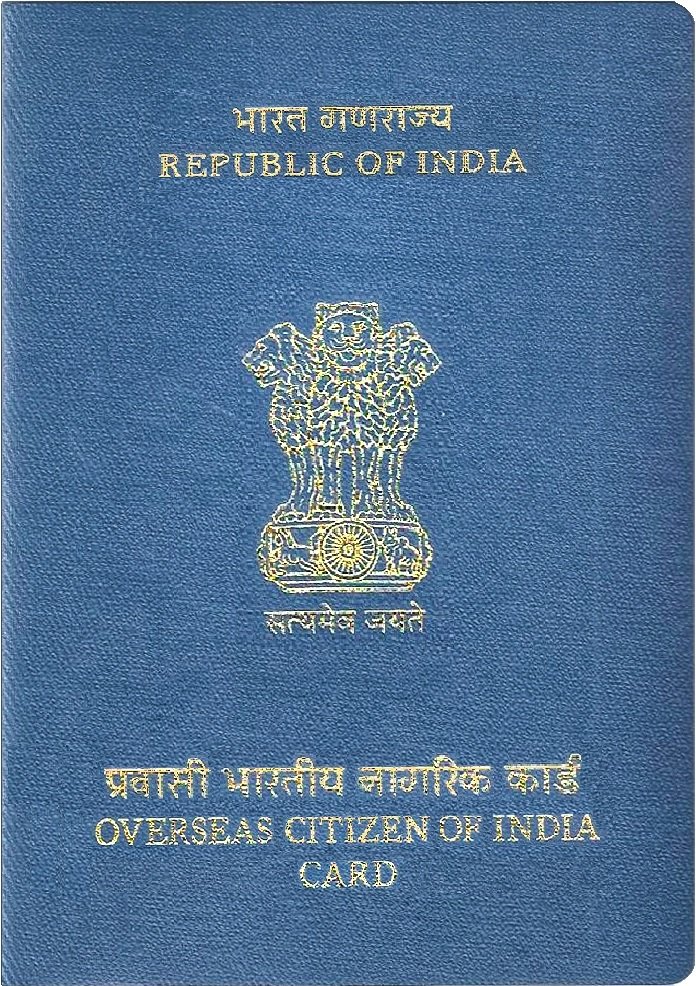
Table of Contents
Table of Contents
OCI Card Age Limit in India 2026: Quick Answer
There is no standalone minimum or maximum age limit that applies to every eligible OCI applicant. The official OCI FAQ specifically says that minor children can apply for registration, and the OCI portal lists both adult and minor eligibility categories. In other words, being under 18 does not by itself prevent an otherwise eligible child from getting an OCI card.
| Age / stage | What the current OCI rules mean | What to check |
|---|---|---|
| Below 18 | Eligible minor children can apply if they fall within an eligible OCI category. | Parent/guardian eligibility, minor’s DOB, passport and supporting documents. |
| 18 and above | Adults can apply when they satisfy an eligible category under Section 7A. | Indian-origin eligibility, documents and current OCI application requirements. |
| After completing 20 | If OCI registration was obtained before age 20, the card is re-issued once when a new passport is issued after completing 20. | New passport, OCI card, latest photograph and the current miscellaneous-service procedure. |
| After completing 50 | Certain OCI cardholders are expected to upload a new passport copy and latest photograph once after completing 50 when the passport is renewed. | Passport update within the prescribed period and current portal instructions. |
This distinction is important because a web search for “OCI age limit” can otherwise produce a misleading single number. The official framework is category-based. Age is mainly relevant to whether the person is a minor or adult, and to later passport/photo update requirements.
Is There a Minimum or Maximum Age for an OCI Card?
The official OCI portal does not describe OCI registration as an adult-only benefit. Its eligibility rules expressly include a person who is a minor child of an eligible person and a minor child where both parents are Indian citizens or one parent is an Indian citizen. The separate FAQ also answers the question directly: minor children can apply, subject to the stated eligibility restrictions.
At the other end of the age range, the official material does not establish a general maximum age for an otherwise eligible applicant. The adult category is described as a person of full age and capacity who falls within one of the qualifying Indian-origin or former-Indian-citizen categories. That means an older eligible person is not excluded simply for being older.
So the practical answer is: OCI has eligibility categories, not a universal age ceiling. A person’s date of birth still matters because it can determine whether the applicant is treated as a minor and whether later passport-update or card re-issuance requirements apply.
Can a Minor Get an OCI Card?
Yes. This is one of the clearest age-related points in the current official OCI guidance. The OCI FAQ states that minor children can apply. The online OCI portal also lists a minor child of an eligible person and a minor child with one or both parents being Indian citizens among the eligibility routes.
Minor eligibility is still not automatic
Being below 18 does not itself create OCI eligibility. The child must also fit an eligible category and satisfy the documentation requirements. The official FAQ contains a specific restriction for certain children with a parent, grandparent or great-grandparent who is or was a citizen of Pakistan, Bangladesh or another country notified by the Central Government.
Who handles the application for a child?
The online system requires the applicant’s details, passport information and date of birth. For a minor, the application is made within the legal and documentary framework applicable to the child, with the parent or guardian providing the required supporting information. The exact document set can depend on the eligibility category and the applicant’s family history, so parents should use the current OCI document checklist rather than an older checklist copied from another website.
OCI Eligibility for Adults
For adults, the central question is not “How old are you?” but “Which OCI eligibility category do you fall into?” The current OCI portal lists categories including former Indian citizens, people who were eligible to become Indian citizens at the commencement of the Constitution, people connected to territories that became part of India after 15 August 1947, children/grandchildren/great-grandchildren of qualifying persons, and certain foreign-origin spouses who satisfy the statutory conditions.
The law therefore treats age and ancestry as different tests. Turning 18 does not create OCI eligibility by itself, and being 70 or 80 does not remove eligibility when the person otherwise falls within a permitted category.
When writing or reading an age-based eligibility guide, this is the most useful rule to remember: age can tell you which procedural track applies, but it cannot substitute for the substantive OCI eligibility category.
Date of Birth and Age Rules for OCI Applications
The OCI registration system itself asks for the applicant’s date of birth, and the current registration page instructs applicants to enter details as per the current passport. That makes the DOB field more than a formality: it is part of the identity record used to process the application or subsequent document update.
Use the DOB in the current passport
The official OCI registration page says applicants should enter details according to the current passport and specifically asks for the date of birth in day/month/year format. Before submitting an application, compare the DOB in the passport with the supporting civil or family documents being used to establish eligibility.
Why DOB matters for children
A child can be eligible before age 18, but the exact DOB still matters because the person eventually moves from minor status to adult status and may later enter the age-based OCI re-issuance process. A one-day difference in a recorded birthday can also change whether a document was issued before or after a specific milestone.
For an arithmetic check, an age calculator can help you compute completed years from the exact DOB. It should be treated as a calculation aid only. The official OCI portal, passport record and current Ministry of Home Affairs instructions remain the authority for the actual application.
What Changes When an OCI Cardholder Turns 18?
Turning 18 is an important life milestone, but it should not be confused with an automatic expiry of OCI status. The official OCI miscellaneous-service rules make 20, rather than 18, the key age at which an OCI card obtained before adulthood may require re-issuance when a new passport is issued.
In practical terms, a child who already holds an OCI card does not need to apply for a completely new OCI registration simply because the child has turned 18. Instead, keep the passport and OCI records accurate and pay attention to the next passport event and the rule that applies after completing 20 years.
This is one reason parents of minor OCI cardholders should keep a clean record of the child’s birth date, passport history and OCI registration details. The future document update is much easier when the identity records match.
What Happens After Completing 20 Years?
The current official OCI miscellaneous FAQ provides a specific age-20 rule. An OCI cardholder who was registered before attaining 20 years of age must get the OCI card re-issued once when a new passport is issued after completing 20 years of age. The purpose stated by the government is to capture facial features after the holder reaches adulthood.
| Situation | Current official treatment |
|---|---|
| OCI registered before 20 | Re-issue the OCI card once when a new passport is issued after completing 20. |
| New passport before 20 | Upload a copy of the new passport containing the photo and a latest photo through OCI Miscellaneous Services within the prescribed period. |
| OCI registered after 20 | The official guidance says there is no requirement for re-issue of the OCI card merely on the basis of reaching this milestone. |
The official FAQ also states that the passport and latest-photo update service is provided without charge in the routine cases described by the government, while re-issuance after a new passport issued after completing 20 carries the fee specified in the current schedule. Always confirm the live fee and portal instructions before submitting a paid miscellaneous service.
What Happens After Completing 50 Years?
Age 50 has a different role. The official OCI miscellaneous FAQ says that an OCI cardholder may upload a copy of the new passport containing the holder’s photograph and a latest photograph once after completing 50 years of age when a new passport is issued. This is an update of passport/photo information, not a general instruction to obtain a new OCI registration.
The same official guidance says these documents should be uploaded within three months of receiving the new passport. The purpose is to keep the OCI record current. The old assumption that every OCI card had to be re-issued after age 50 has been changed; current guidance distinguishes between updating the passport/photo information and actually re-issuing the card.
This is a useful example of why old OCI articles can be misleading. A page written under the earlier re-issuance framework may say that the card must be replaced at both 20 and 50. The current government guidance is more specific: the age-20 milestone can trigger one re-issuance in the circumstances described above, while the post-50 milestone is handled through the passport/photo update process for the relevant cardholders.
New Passport and OCI Update Rules by Age
| Cardholder situation | What to do under current guidance |
|---|---|
| OCI holder under 20 with a new passport | Upload the new passport copy with photo and a latest photo on the OCI portal under Miscellaneous Services within 3 months. |
| OCI holder over 20 but not a pre-20 registrant reaching the age-20 re-issue point | Follow the current passport-update instructions; no general re-issue is required solely because a new passport was issued. |
| OCI registered before 20, then receives a new passport after completing 20 | Get the OCI card re-issued once, using the current miscellaneous-service process. |
| OCI holder receives a new passport after completing 50 | Upload the new passport photo page and latest photo once after 50, within 3 months, as required by the current guidance. |
| Foreign-origin spouse registered under the spouse route | Follow the special spouse-based document-update rule, which requires passport/photo updates each time a new passport is issued and additional relationship documentation where applicable. |
The table is deliberately more detailed than a simple “OCI age limit” answer because it separates entry eligibility from post-registration document maintenance. Those are different questions with different age triggers.
Special Rule for Foreign Spouses
The official miscellaneous FAQ identifies a separate rule for OCI cardholders who were registered as foreign-origin spouses of Indian citizens or OCI cardholders under the relevant statutory route. In that case, the passport and latest-photo upload is required each time a new passport is issued, along with the relationship documentation specified in the current guidance.
The spouse route also has a separate eligibility condition: the marriage must have been registered and must have subsisted continuously for the required statutory period immediately before the application. Because this is a family-law and immigration-status issue, applicants should read the current OCI portal wording rather than assume that the ordinary ancestry-based rules apply.
Documents and Information to Keep Ready
The exact OCI document list varies by the eligibility category, but age-related accuracy is easier when the applicant keeps the core identity records consistent. The online registration page specifically asks for the date of birth and current passport details.
- Current foreign passport and the exact name/DOB details shown on it.
- Existing OCI card or registration record, where the application is for a miscellaneous service.
- Documents establishing the Indian-origin or parent/child relationship relied on for OCI eligibility.
- Recent photograph and signature files meeting the current OCI technical specifications.
- Parent or guardian documents and relationship proof for a minor applicant, where required.
- Marriage and spouse documents for an application based on the foreign-origin-spouse route.
- Copies of previous passports or OCI documents when the current miscellaneous-service process asks for them.
Do not create a document based only on an approximate age. If the passport says one date of birth and another document says a different date, resolve the discrepancy through the competent authority or the current OCI documentation process rather than changing dates informally.
How to Apply for an OCI Card
OCI applications are submitted through the Ministry of Home Affairs’ online OCI portal. The official portal asks the applicant to first ensure eligibility and then enter details according to the current passport. The general workflow is more reliable when the applicant starts from the official portal rather than from a third-party form or social-media post.
- Check the current OCI eligibility category and confirm that the applicant is eligible on Indian-origin, parentage, former-citizen or spouse grounds as applicable.
- Check the applicant’s exact date of birth and confirm that the passport and supporting documents agree.
- Create or continue the online OCI application on the official portal and enter the passport details exactly as requested.
- Upload the photograph, signature and supporting documents in the file formats and technical standards required by the portal.
- Pay the applicable fee when the current application route requires a fee and keep the payment/reference record.
- Present original supporting documents to the Indian Mission, Post or FRRO when the current process requires prior verification.
- After approval, keep both the OCI record and the valid foreign passport available for future travel and document-update requirements.
The current official system also provides OCI Miscellaneous Services for registered cardholders. These services are used for items such as new-passport updates, loss or damage, change of personal particulars, and other record changes.
For the live application system, use the official OCI portal. For the Ministry of Home Affairs overview, see its OCI Cardholder page.
OCI Age and DOB Examples
| Example | Age situation | Practical OCI point |
|---|---|---|
| Child aged 7 | Minor | May apply if the child falls within an eligible OCI category; minor status does not itself block registration. |
| Child aged 17 years 11 months | Still a minor | Use the exact DOB in the current passport and supporting records; do not round the age to 18. |
| Applicant turns 18 | Majority reached | OCI status does not automatically expire just because the holder turns 18; watch the later passport and age-20 rule. |
| OCI holder was registered at age 16 and gets a new passport after completing 20 | Pre-20 registrant reaches the re-issue milestone | The current miscellaneous FAQ requires one OCI card re-issuance in this situation. |
| OCI holder aged 52 gets a new passport | Post-50 document update | The current guidance calls for the new passport copy and latest photo to be uploaded once after completing 50. |
| Applicant aged 78 with qualifying Indian-origin eligibility | Older adult | There is no general upper age limit in the official OCI eligibility description merely because the applicant is elderly. |
These examples are designed to show the structure of the rule, not to decide an individual application. The applicant’s actual eligibility category and the documents accepted for that category must still be checked on the current OCI portal.
Common OCI Age-Limit Mistakes
- Mistaking age 18 for the maximum age to obtain OCI. Minor children can apply when eligible, and the adult framework does not impose a general upper age ceiling.
- Treating 20 and 50 as OCI entry ages. They are important post-registration document-update milestones, not general registration-age bands.
- Assuming that an OCI card automatically expires at age 18. The current guidance instead focuses on later passport and re-issuance events.
- Using a birth year without checking the full date of birth. The OCI portal asks for the actual DOB in the specified format.
- Relying on an old article that still says every OCI card must be re-issued at age 50. Current guidance distinguishes the post-50 passport/photo upload requirement from the earlier re-issuance framework.
- Assuming that a child is eligible only because one parent is Indian without checking the full Section 7A eligibility and exclusion rules.
- Using a passport, OCI card or family document with inconsistent spellings or dates and expecting the online system to correct the mismatch automatically.
- Forgetting that foreign-origin spouse applicants follow a different passport/photo update rule.
2026 Note: e-OCI and the Physical Card
The Ministry of Home Affairs also introduced the e-OCI Card in 2026. The official OCI services portal says the e-OCI is an electronic version of the OCI card that can be downloaded through the OCI portal. A July 2026 official consular notice explains that, from 8 July 2026, only digital OCI cards are being issued to new applicants, while existing physical OCI cards continue to remain valid.
This does not change the age eligibility framework described above. The useful takeaway is that the document format can change while the underlying age-related rules, eligibility categories and passport-update requirements still need to be checked against current Ministry of Home Affairs instructions.
For the latest operational details, use the official OCI portal rather than a screenshot or old PDF circulating online. Readers who need a broader explanation of identity documents can also review the site’s PAN Card Age Limit in India 2026 guide and Aadhaar Age Limit in India 2026 guide.
Frequently Asked Questions
Is there an OCI card age limit in India in 2026?
There is no general minimum or maximum age that applies to every eligible OCI applicant. The official OCI portal expressly allows eligible minor children to apply, while adult applicants must fall within a permitted Section 7A category. Age mainly affects minor/adult status and later passport/photo update rules.
Can a child below 18 get an OCI card?
Yes. The current official OCI FAQ says minor children can apply, provided they meet an eligible category and the applicable documentation and exclusion rules.
Does an OCI card expire when the holder turns 18?
No automatic expiry is created simply by turning 18. For an OCI holder who was registered before age 20, the key document rule is the one-time re-issuance when a new passport is issued after completing 20.
What is the OCI age-20 rule?
An OCI cardholder who was registered before attaining 20 years must get the OCI card re-issued once when a new passport is issued after completing 20 years, according to the current official OCI miscellaneous FAQ.
What is the OCI age-50 rule?
After completing 50 years, the current guidance requires the relevant OCI cardholder to upload the new passport copy containing the holder’s photo and a latest photo once when a new passport is issued, within the stated three-month period. This is not the same as a new OCI registration.
Can an elderly person apply for OCI?
Yes, when the person satisfies an eligible OCI category. The official framework does not set a universal maximum age merely because the applicant is older.
What DOB should I enter in the OCI application?
Use the date of birth shown in the current passport and make sure it is consistent with the supporting documents. The official registration page specifically instructs applicants to enter details according to the current passport.
Can an OCI holder get a new passport without getting a new OCI card every time?
The answer depends on age and registration history. Current guidance requires passport/photo uploads in several situations, while a pre-20 OCI holder needs one re-issuance when a new passport is issued after completing 20. Foreign-origin spouse-based OCI holders follow a separate update rule.
Where can I apply for or update OCI?
Use the official OCI portal at ociservices.gov.in. The Ministry of Home Affairs also maintains the main OCI Cardholder information page and links to the current forms, FAQs and miscellaneous services.
Official Sources
- OCI Services — Official FAQ
- OCI Services — Miscellaneous FAQs
- OCI Services — Official Portal
- Ministry of Home Affairs — Overseas Citizen of India Cardholder
- Consulate General of India, Chicago — OCI application and e-OCI notice
Conclusion
The safest way to answer “What is the OCI card age limit in India in 2026?” is not to give one age number. The current official framework allows eligible minor children to apply and does not set a general maximum age for adult applicants who meet a valid OCI category.
The more useful age map is: under 18 means minor-application rules; 18 marks the general move into adulthood; completing 20 can trigger one OCI card re-issuance when a new passport is issued if the person was registered before 20; and completing 50 creates a passport/photo update milestone for the relevant OCI cardholders.
When checking a real case, start with the applicant’s exact date of birth, current passport, OCI registration history and eligibility category. Then use the current Ministry of Home Affairs and OCI Services instructions for the document step that applies. An age calculator can help with the arithmetic, but it cannot decide OCI eligibility on its own. For another date-based eligibility workflow, see the site’s Government Job Age Calculator.
Note: OCI rules and administrative procedures can change. This article is an informational 2026 guide and should not replace the current official OCI portal, Ministry of Home Affairs instructions or the advice of the competent Indian Mission, Post or FRRO for a specific case.


