
If you are checking the PM VIKAS age limit 2026, the answer depends on the component you want to join. The official PM VIKAS eligibility page says beneficiaries in the 14–45 years age group are targeted for the Traditional Training, Non-traditional Skilling and Education components, while the Women Leadership and Entrepreneurship Component is for beneficiaries aged 18–45 years. The scheme is implemented by the Ministry of Minority Affairs and is designed around skilling, entrepreneurship, leadership and education support for minority communities.
PM VIKAS Age Limit 2026: Quick Answer
| PM VIKAS component | Age group stated on official eligibility page |
|---|---|
| Traditional Training | 14–45 years targeted |
| Non-traditional Skilling | 14–45 years targeted |
| Education | 14–45 years targeted |
| Women Leadership & Entrepreneurship | 18–45 years eligible |
The age ranges above come from the current PM VIKAS beneficiary eligibility page. The wording matters: the 14–45 range is described as a target for Traditional Training, Non-traditional Skilling and Education, while 18–45 is stated as the eligibility range for the Women Leadership and Entrepreneurship Component. Age is only one part of eligibility; nationality, minority-community status, Aadhaar-linked banking details and the qualification requirements of the relevant training or job role also matter.
Who Can Apply for PM VIKAS in 2026?
The official PM VIKAS eligibility page says an Indian national belonging to a notified minority community can apply. The six communities named on the page are Buddhists, Christians, Muslims, Jains, Parsis and Sikhs. In states or Union Territories where additional minority communities have been notified by the respective government, those communities may also be considered within the scheme’s stated limits.
Applicants are also expected to have an Aadhaar card and an Aadhaar-linked bank account at registration. If a beneficiary does not yet have an Aadhaar card or an Aadhaar-linked bank account, the official page says the Project Implementing Agency can make arrangements for these before the training programme starts.
PM VIKAS Age Limit by Component
1. Traditional Training: 14–45 Years Target Group
The Traditional Training sub-component focuses on minority artisans and traditional craft communities. The official scheme describes NSQF-aligned training in need-based arts and craft job roles, customized workshops, cultural-heritage preservation and support for improving livelihoods and market connections. The beneficiary eligibility page identifies the 14–45 years age group as a target for Traditional Training.
2. Non-traditional Skilling: 14–45 Years Target Group
Non-traditional Skilling is intended primarily for youth from minority communities. The official scheme says it focuses on placement-linked, NSQF-aligned training across sectors such as handicrafts, tourism, hospitality, agriculture, handlooms, food processing and allied areas. The beneficiary page places this component in the 14–45 years target group, subject to the education and experience requirements applicable to the selected job role.
3. Education Component: 14–45 Years Target Group
The Education component provides bridge and open-schooling support for eligible school dropouts from minority and artisan communities. The scheme overview says education bridge programmes can support certification through NIOS or approved institutions. The official beneficiary eligibility page places the Education component within the 14–45 years target group.
4. Women Leadership and Entrepreneurship: 18–45 Years
The Women Leadership and Entrepreneurship Component has a separate age range. The official eligibility page states that beneficiaries aged 18–45 years are eligible for this component. It is intended for minority women and covers leadership development, basic entrepreneurship, career counselling and enterprise-support linkages.
Is There a PM VIKAS Maximum Age?
The current beneficiary eligibility page does not describe a separate general maximum-age rule beyond the component age ranges. For Traditional Training, Non-traditional Skilling and Education, the stated target range is 14–45 years. For Women Leadership and Entrepreneurship, the stated eligibility range is 18–45 years.
Therefore, someone should not assume that every PM VIKAS activity has one universal age rule. The correct approach is to identify the component, training opportunity and job role first, then apply the age and qualification conditions stated for that opportunity.
PM VIKAS Eligibility Rules in 2026
- Nationality: the beneficiary eligibility page requires Indian nationality.
- Community: the scheme is intended for notified minority communities, with provisions for certain additional state/UT-notified communities.
- Age: 14–45 years is the stated target range for Traditional Training, Non-traditional Skilling and Education; 18–45 years is stated for Women Leadership and Entrepreneurship.
- Aadhaar: an Aadhaar card is required at registration, subject to the implementation support described by the scheme.
- Bank account: an Aadhaar-linked bank account is required at registration.
- Qualification: candidates in Skilling and Training and Women Leadership and Entrepreneurship must satisfy the minimum education and experience requirements for the relevant job role under applicable NSQF norms.
- Women-focused component: the Women Leadership and Entrepreneurship Component is specifically for minority women.
- Other inclusion provisions: the official page includes provisions for women, persons with disabilities and certain EWS/non-minority participation within the scheme’s component-specific limits.
What Training Does PM VIKAS Provide?
PM VIKAS is broader than a single vocational course. The scheme overview describes an integrated approach covering traditional training, non-traditional skilling, women’s leadership and entrepreneurship, and education support. Traditional Training is aimed at preserving and developing traditional arts and crafts, while Non-traditional Skilling focuses on NSQF-compliant job roles and employment linkages.
The official skilling page lists sectors including handicrafts, tourism, hospitality, agriculture, handlooms and food processing, while training may also include soft skills such as digital and financial literacy, communication, storytelling and English language. The exact course and qualification requirements can vary by job role.
PM VIKAS and Minority Women Entrepreneurship
The women-focused component is designed to support leadership development, entrepreneurship and career counselling among minority women. The official scheme page describes assistance in interacting with government systems, banks and other institutions, as well as support for setting up individual or group enterprises.
The scheme also provides for enterprise-support linkages with financial institutions such as the National Minorities Development & Finance Corporation, banks and NBFCs. The official component page says that a portion of women trained through the entrepreneurship-development module is intended to receive support for establishing enterprises or self-employment ventures.
PM VIKAS Education Support and NIOS
PM VIKAS also has an education-support role for school dropouts from minority and artisan communities. The scheme overview says bridge programmes can support certification through NIOS or approved institutions. This makes the education component different from a conventional skill-training course: the focus can include helping eligible learners return to formal certification pathways.
For a separate explanation of NIOS age rules, see our NIOS Age Limit 2026 guide. NIOS eligibility and PM VIKAS eligibility are separate rules and should not be combined.
How to Check Your PM VIKAS Age From Date of Birth
For an age range such as 14–45 or 18–45, calculate the candidate’s completed age using the date of birth and then compare it with the eligibility conditions for the selected component. For example, a person born on 20 September 1981 turns 45 on 20 September 2026. A person born on 20 September 2008 turns 18 on 20 September 2026.
These examples illustrate completed age only. If a particular training notice specifies a registration cutoff, that notice should be used to determine whether the applicant falls within the required range on the relevant date. For formal applications, the date-of-birth document accepted by the implementing agency should be treated as the controlling evidence.
How to Apply for PM VIKAS
- Identify the PM VIKAS component you want to join.
- Check that you fall within the applicable age range.
- Confirm that you belong to an eligible minority community under the scheme.
- Keep your Aadhaar card and Aadhaar-linked bank-account details ready.
- Check the education, experience and NSQF requirements for the specific training or job role.
- Use the current PM VIKAS portal or instructions issued by the Project Implementing Agency for registration and participation.
- Follow any additional document or verification requirements communicated for the particular programme.
The PM VIKAS portal publishes programme information, updates and scheme components. The current portal also lists training centres, training partners, batches and job roles, although availability can change as projects are implemented.
PM VIKAS Benefits and Support
The exact benefit depends on the component and approved project. PM VIKAS is designed to combine training with pathways to employment, self-employment, entrepreneurship, education and market or credit linkages. The official scheme overview describes support for traditional artisans, modern job-role training, women leadership and entrepreneurship, and education bridge programmes.
- Skill development: training can cover traditional arts and crafts as well as NSQF-aligned modern job roles.
- Employment linkages: the Non-traditional Skilling component is designed around placement-linked training.
- Entrepreneurship support: women participating in the leadership and entrepreneurship component can receive career and enterprise-support assistance.
- Education support: bridge programmes can help eligible school dropouts work toward formal certification.
- Market and credit linkages: the scheme provides for connections with relevant financial institutions and market-support mechanisms.
Documents and Details to Keep Ready
The exact document list can differ by Project Implementing Agency and training opportunity, so applicants should follow the current instructions issued for their programme. In general, it is useful to keep the following information ready:
- Aadhaar card or the identification details required for registration.
- Details of an Aadhaar-linked bank account.
- Date-of-birth proof where the implementing agency asks for it.
- Educational certificates or marksheets relevant to the selected job role.
- Experience or technical qualification documents where the role requires them.
- Community or other certificates where specifically required under the applicable eligibility rules.
- Any additional documents requested by the current Project Implementing Agency.
Having these documents ready can help avoid delays, but applicants should not submit documents to unofficial websites merely because they advertise PM VIKAS registration. Use the current official portal or the instructions of the authorised implementing agency.
How the 14–45 Age Range Works
The phrase “14–45 years” should be read as an age range attached to the specified PM VIKAS components, not as a universal rule for every activity under the scheme. A person aged 16 may fall within the stated target range for a relevant training or education component, while a person aged 20 can potentially fall within either the general 14–45 component range or the 18–45 women-focused component if the other conditions are met.
Similarly, a person approaching the upper end of the range should check the date used by the programme. If a notice says eligibility is assessed on the registration date, calculate the completed age on that date. If a programme specifies another cutoff, follow that wording instead. The general age range on the scheme page should not be treated as a replacement for an individual programme notice.
PM VIKAS Training Is Not One Single Course
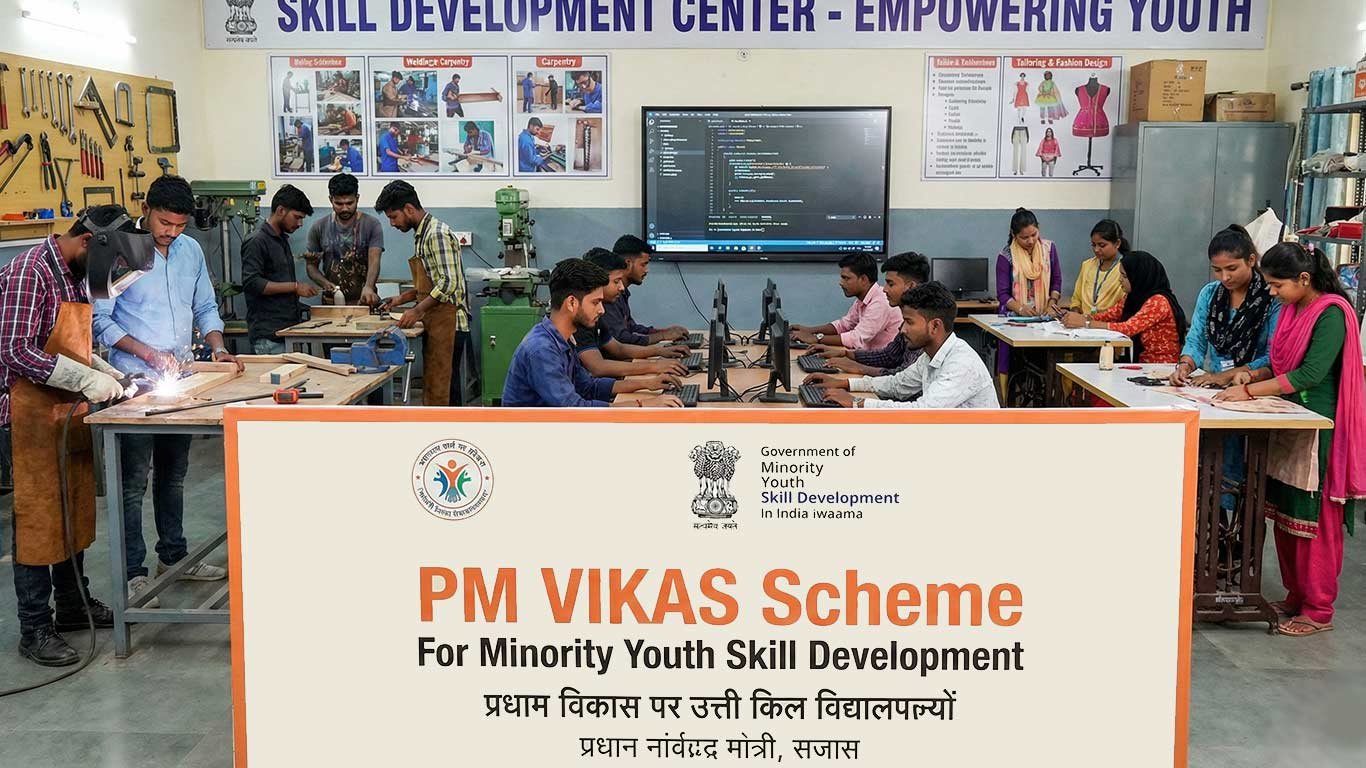
Another common source of confusion is treating PM VIKAS as though it were one fixed course with one qualification requirement. The scheme is an umbrella-style programme with multiple components. Traditional Training can involve artisan and craft-focused roles; Non-traditional Skilling can involve modern NSQF-compliant job roles; the women’s component focuses on leadership and entrepreneurship; and Education Support can involve bridge programmes for school dropouts.
As a result, the same applicant may see different education or experience requirements in different PM VIKAS opportunities. The official beneficiary page expressly says candidates under Skilling and Training and Women Leadership and Entrepreneurship must fulfil the minimum education and experience qualifications for the respective job role under applicable NSQF norms.
PM VIKAS vs Other Skill Schemes
PM VIKAS should not be confused with every other government skilling programme. Different schemes have different target groups, age conditions, qualifications and implementation structures. For example, our site separately covers DDU-GKY age limits, while the apprenticeship framework has its own age and trade rules.
Keeping these schemes separate is important because an age range that applies to one programme does not automatically apply to another. Always check the official eligibility page and the specific training notice before applying.
What Changed or Matters in 2026?
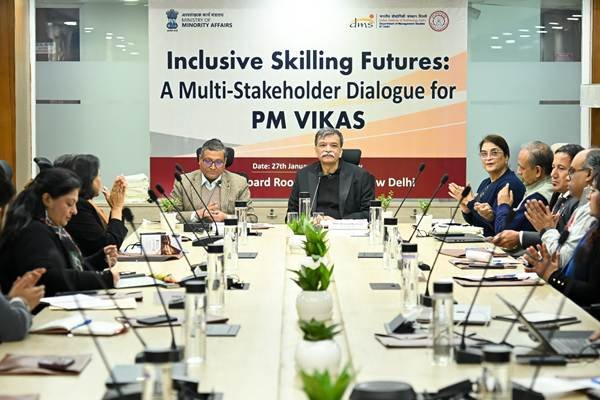
The Ministry of Minority Affairs approved PM VIKAS guidelines in January 2025, and the scheme is being implemented through Project Implementing Agencies. The official PM VIKAS portal shows 2026 updates, including notices concerning Lok Samvardhan Parv and implementation requirements. A July 2026 PIB update reported ongoing review of implementation and enrolment across states and Union Territories.
The official portal currently reports multiple training partners, centres, states, batches and job roles. Because programme availability is implementation-dependent, applicants should check the live portal rather than relying on an old course list or a previous year’s notice.
Common PM VIKAS Age-Limit Mistakes
- Using one age range for every component: the 14–45 and 18–45 ranges apply to different components.
- Ignoring the qualification requirement: age alone does not establish eligibility for a job role.
- Confusing the scheme with NIOS: PM VIKAS education support and NIOS admission have separate eligibility rules.
- Assuming every course is continuously available: implementation and training availability can vary.
- Relying on an old notification: check the current PM VIKAS portal and the relevant implementing agency.
- Checking age without the registration date: where a programme sets a cutoff, compare the completed age on that relevant date.
Frequently Asked Questions
What is the PM VIKAS age limit in 2026?
The official beneficiary page targets people aged 14–45 for Traditional Training, Non-traditional Skilling and Education. The Women Leadership and Entrepreneurship Component is for beneficiaries aged 18–45.
Can a 14-year-old join PM VIKAS?
A person aged 14 can fall within the stated target range for Traditional Training, Non-traditional Skilling and Education, but must also satisfy the community, documentation and component-specific qualification requirements.
Can someone above 45 apply for PM VIKAS?
The current beneficiary eligibility page states the relevant target or eligibility ranges as 14–45 and 18–45. It does not provide a general beneficiary age exception that can be applied to all components, so applicants above 45 should check the specific current programme instructions rather than assume eligibility.
What is the age limit for PM VIKAS women entrepreneurship?
The Women Leadership and Entrepreneurship Component states an age range of 18–45 years for beneficiaries.
Who is eligible for PM VIKAS?
Eligible Indian nationals from the notified minority communities can participate subject to the component’s age, qualification, documentation and other conditions. The official page names Buddhists, Christians, Muslims, Jains, Parsis and Sikhs.
Is Aadhaar required for PM VIKAS?
The official beneficiary eligibility page says beneficiaries should possess an Aadhaar card and an Aadhaar-linked bank account at registration, with implementation support described for people who do not yet have these.
Official PM VIKAS Sources
- PM VIKAS official portal
- Official beneficiary eligibility criteria
- Official scheme overview
- Official scheme objectives
- Official skilling component
- Women Leadership and Entrepreneurship component
Final Takeaway
The PM VIKAS age limit 2026 is component-specific. The official beneficiary eligibility page places Traditional Training, Non-traditional Skilling and Education in the 14–45 years target range, while the Women Leadership and Entrepreneurship Component is for beneficiaries aged 18–45 years. Applicants must also meet the scheme’s community, Aadhaar-linked bank-account, education, experience and job-role conditions.
Before applying, identify the exact PM VIKAS component and current training opportunity, calculate your completed age from your date of birth, and verify the latest instructions on the official Ministry of Minority Affairs portal.


