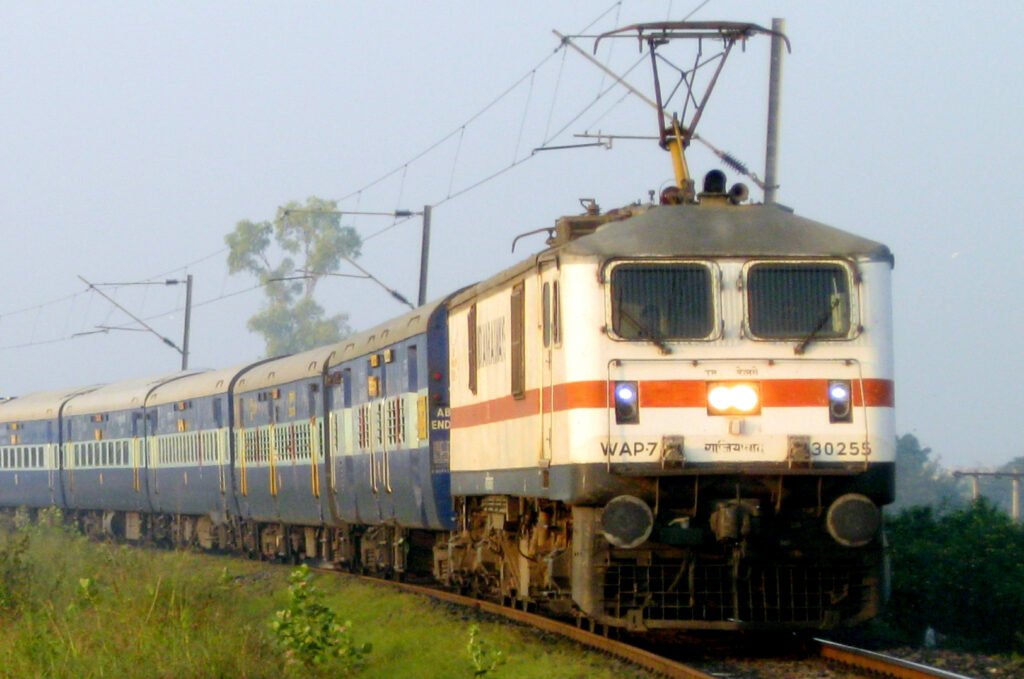
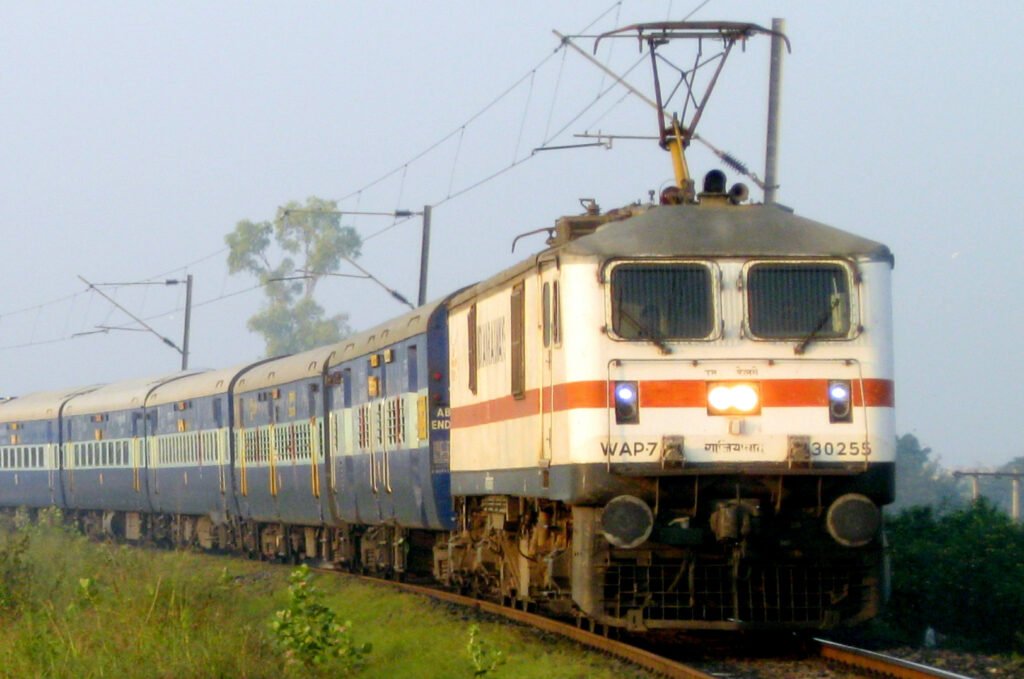
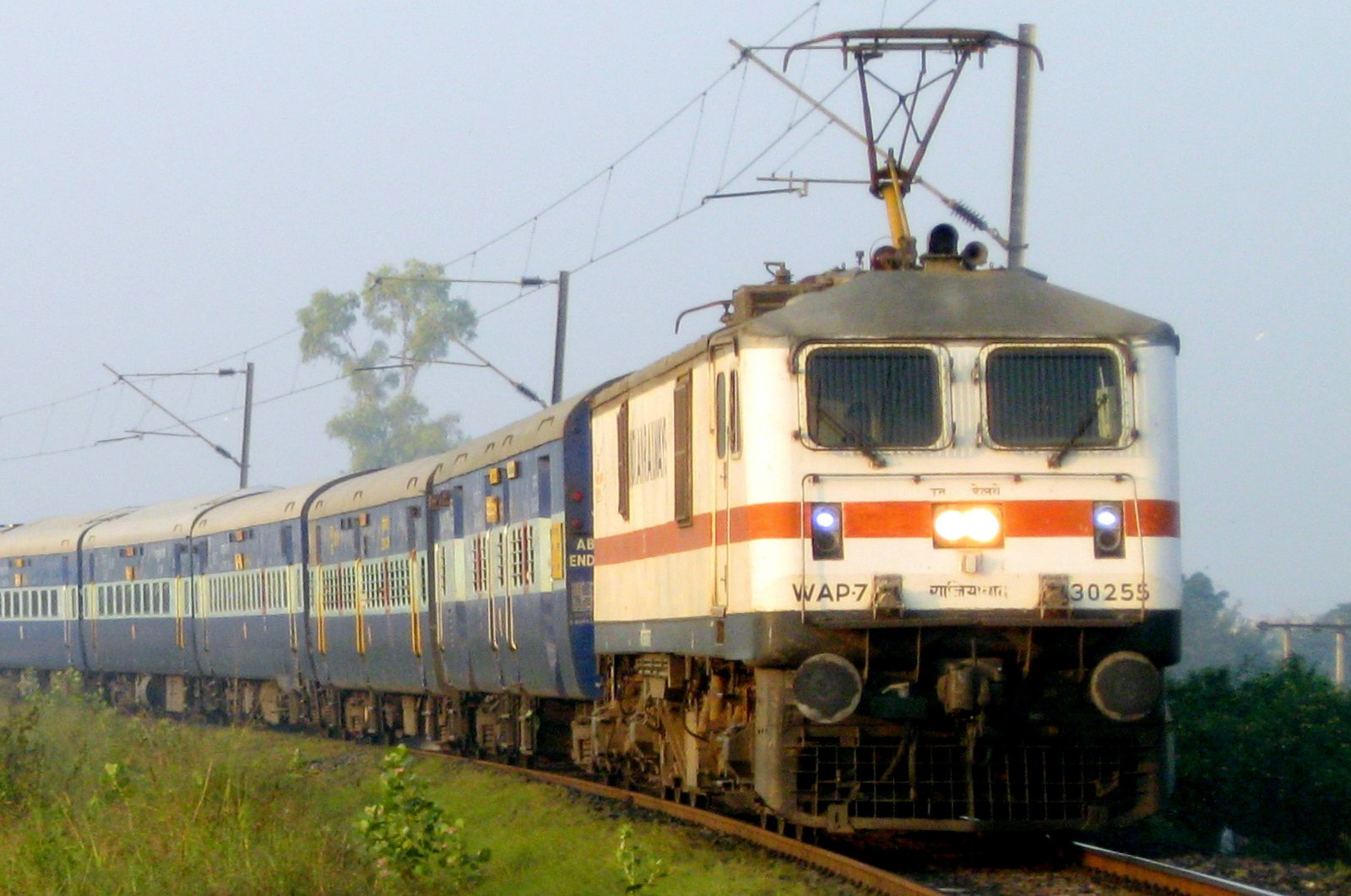
RRB ALP Recruitment 2026 is the Railway Recruitment Boards’ Centralised Employment Notice (CEN) 01/2026 for 11,127 Assistant Loco Pilot (ALP) vacancies. The official notification sets the post at Level-2 of the 7th CPC with an initial pay of ₹19,900, a basic age range of 18–30 years as on 1 July 2026, and a five-stage recruitment process: CBT-1, CBT-2, CBAT, Document Verification and Medical Examination.
The application window for this cycle has already closed: online applications were accepted from 15 May 2026 to 14 June 2026, with fee payment allowed until 16 June and the modification window running from 17 to 26 June 2026. So, this guide is most useful now for applicants who already submitted a form and are preparing for the next stages, while also serving as a clear record of the published eligibility rules.
Table of Contents
RRB ALP Recruitment 2026: At a Glance
| Particular | Details |
|---|---|
| Recruitment body | Railway Recruitment Boards (RRBs) |
| Centralised Employment Notice | CEN No. 01/2026 |
| Post | Assistant Loco Pilot (ALP) |
| Total vacancies | 11,127 |
| Pay level | Level-2 under 7th CPC |
| Initial pay | ₹19,900 |
| Medical standard | A-1 |
| Age as on 01-07-2026 | 18–30 years, before applicable relaxations |
| Application opening | 15 May 2026 |
| Application closing | 14 June 2026, 23:59 hours |
| Fee payment last date | 16 June 2026, 23:59 hours |
| Modification window | 17–26 June 2026 |
| Recruitment stages | CBT-1 → CBT-2 → CBAT → DV → ME |
The detailed CEN makes one practical point especially clear: a candidate can apply to only one RRB, and the chosen RRB cannot later be changed. The final zone/post preference has to be exercised within the selected RRB, so the original application should be treated as a fixed choice for this recruitment cycle.
RRB ALP Vacancy 2026
The vacancy figure for CEN 01/2026 is 11,127 Assistant Loco Pilot posts across all RRBs. The detailed notification provides the RRB-wise and railway-zone-wise distribution in its vacancy annexure. Because the allocation is tied to the selected RRB and available railway zones, applicants should use that official annexure rather than relying on a third-party vacancy list.
The total number is useful for understanding the scale of the recruitment, but it does not mean every RRB has the same number of seats. Your actual opportunity depends on the vacancy distribution attached to the RRB you selected in the application.
Age Limit and DOB Rules
The official CEN fixes the normal age band at 18 to 30 years as on 1 July 2026. The important date is therefore not the day you filled the form and not the CBT date. Eligibility is checked against the notification’s stated age reference date.
Age relaxation is available under the specific categories and service conditions listed in the CEN. These include provisions for SC/ST, OBC-NCL, eligible Ex-Servicemen, qualifying railway employees, certain widowed/divorced/judicially separated women who have not remarried, and eligible apprentices. Relaxation should be read from the exact clause that applies to the candidate; different grounds are not simply added together.
For a quick personal check, use the site’s RRB ALP Age Limit 2026 guide. It covers the age cutoff and DOB logic separately from this recruitment overview.
Important: being inside the age band is only one eligibility condition. Educational qualification, trade or engineering discipline, reservation documents and the post’s medical standard must also be satisfied.
Educational Qualification
For ALP, the CEN allows more than one qualification route. The core options are based on Matriculation/SSLC plus a specified ITI or apprenticeship route, or a three-year diploma in Mechanical, Electrical, Electronics or Automobile Engineering (or the specified combinations). A degree in those engineering disciplines is also accepted in lieu of the diploma route as provided by the notification.
- Matriculation/SSLC + ITI: the ITI trade must be one of the trades prescribed in Annexure A.
- Matriculation/SSLC + Course Completed Act Apprenticeship: the apprenticeship must be in one of the listed relevant trades.
- Three-year engineering diploma: Mechanical, Electrical, Electronics or Automobile Engineering in the disciplines specified by the CEN.
- Engineering degree: a degree in the specified engineering disciplines may be accepted in lieu of the diploma route.
The listed ITI trades include Fitter, Electrician, Instrument Mechanic, Millwright/Maintenance Mechanic, Mechanic (Radio & TV), Electronics Mechanic, Mechanic (Motor Vehicle), Wireman, Tractor Mechanic, Armature & Coil Winder, Mechanic (Diesel), Heat Engine, Turner, Machinist, and Refrigeration & Air-Conditioning Mechanic. The exact trade nomenclature matters, so candidates should compare the certificate wording with Annexure A before assuming that two trades are equivalent.
This is one of the places where a seemingly minor mismatch can create a real problem. A diploma or ITI background may be broadly related to railway work while still failing the specific qualification rule for ALP. The official CEN is the controlling document for equivalence and accepted disciplines.
Selection Process
RRB ALP Recruitment 2026 follows five stages:
- First Stage CBT (CBT-1) – screening examination.
- Second Stage CBT (CBT-2) – Part-A and qualifying Part-B.
- Computer Based Aptitude Test (CBAT) – for candidates who reach this stage under the prescribed rules.
- Document Verification (DV).
- Medical Examination (ME).
CBT-1 is specifically a screening exam. The CEN says its marks are not counted in the final panel. Shortlisting for CBT-2 is RRB-wise and is based on normalized CBT-1 merit among candidates who chose the same RRB.
For CBT-2, the notification says shortlisting is normally limited to 15 times the number of vacancies notified against each RRB. Railways reserve the right to adjust this limit where necessary to maintain enough candidates for the notified posts.
CBT-1 Exam Pattern
CBT-1 is designed as a screening test covering Mathematics, Mental Ability and General Science. The official pattern gives candidates 60 minutes for 75 questions and 75 marks, with a 1/3-mark deduction for each wrong answer.
| CBT-1 feature | Rule |
|---|---|
| Duration | 60 minutes |
| Questions | 75 |
| Maximum marks | 75 |
| Question type | Objective multiple choice |
| Negative marking | 1/3 mark for each wrong answer |
| UR/EWS minimum | 40% |
| OBC (NCL) minimum | 30% |
| SC minimum | 30% |
| ST minimum | 25% |
| Final-merit contribution | CBT-1 marks are not counted in final panel |
The Mathematics portion covers topics such as number systems, BODMAS, decimals, fractions, ratio and proportion, percentages, mensuration, time and work, time and distance, simple and compound interest, profit and loss, algebra, geometry, trigonometry, elementary statistics, square roots, age calculations, calendars and clocks. Mental Ability includes series, coding-decoding, syllogism, Venn diagrams, analytical reasoning, directions and related reasoning areas. General Science is broadly at the 10th-standard level and covers Physics, Chemistry and Life Sciences.
CBT-2 Exam Pattern
CBT-2 is longer and is divided into Part-A and Part-B. The total duration is 2 hours 30 minutes for 175 questions. Part-A is the competitive portion used for further shortlisting, while Part-B is qualifying.
| CBT-2 part | Duration | Questions | Role |
|---|---|---|---|
| Part-A | 90 minutes | 100 | Marks counted for further shortlisting |
| Part-B | 60 minutes | 75 | Qualifying; 35% required |
| Total | 150 minutes | 175 | Negative marking of 1/3 per wrong answer |
Part-A has the same community-wise minimum percentages used in CBT-1: 40% for UR/EWS, 30% for OBC-NCL, 30% for SC and 25% for ST. Part-B requires 35% for all candidates. Only Part-A marks are carried forward for shortlisting, provided the candidate qualifies Part-B.
Part-B is trade-oriented. Candidates with ITI or apprenticeship qualifications use the relevant trade, while candidates coming through the diploma/degree route must choose from the trade options linked to their qualifying discipline as prescribed by the CEN. That makes it sensible to prepare from the exact technical syllabus connected to your qualification rather than from a generic railway question bank alone.
CBAT, Document Verification and Medical Examination
After CBT-2, eligible candidates move to the Computer Based Aptitude Test (CBAT) under the conditions set by the notification. The recruitment then proceeds to Document Verification and Medical Examination for candidates who clear the required earlier stages.
The ALP post is linked to the A-1 medical standard in the vacancy table. Candidates should therefore read the medical requirements and self-screening declaration in the official CEN rather than assuming that general fitness is enough.
Document verification is not a formality. The RRB can check the authenticity and consistency of the information submitted in the application. Keep the original qualification, date-of-birth, category and other applicable certificates ready in the exact form required by the notification.
Exam Date 2026: Latest Update
Current update as of 22 September 2026: recent reports published today say that the tentative CBT-1 schedule for CEN 01/2026 is 3 to 5 November 2026. Because the recruitment is administered through the RRBs and schedules can be updated, candidates should confirm their personal exam date, city and shift on the official RRB channel when the city-intimation and e-call-letter information is issued.
The original detailed CEN stated that examination schedule and venues would be communicated in due course through official RRB websites, SMS and email. That remains the safer rule for checking your own allotment. A date reported by a news outlet is useful as an update, but your official RRB communication is what you should rely on for the actual centre, date and shift.
The RRBs have also moved candidates toward the unified official RRB web presence. The RRB Chandigarh CEN page specifically tells applicants to use official RRB websites for notices and to ignore unofficial messages circulating on social media.
Application Fee and Refund
| Candidate category | Examination fee | Refund after appearing in CBT-1 |
|---|---|---|
| Most candidates | ₹500 | ₹400, after applicable bank charges |
| SC/ST, Ex-Servicemen, Female, Transgender, Minority or EBC candidates | ₹250 | ₹250, after applicable bank charges |
The refund is tied to appearing in CBT-1; paying the fee by itself does not create a right to a refund. The notification also provided a ₹250 modification fee per occasion during the correction window, with additional rules where a candidate changed a community/category that affected the examination fee.
Do not confuse EBC with OBC or EWS. The fee-concession category is specifically defined in the recruitment notice and should not be inferred from a general social-category label.
What Applicants Should Check Now
- Confirm the application status and keep a copy of the submitted form.
- Review the exact RRB you selected; the CEN says the choice cannot be changed later.
- Re-check your qualification route and the technical trade linked to it.
- Keep original certificates and category documents ready for later verification.
- Watch the official RRB website, email and SMS for city-intimation and e-call-letter updates.
- Use the site’s RRB ALP Salary 2026 guide for the pay side of the same CEN.
You can also use the site’s government-job age calculator to understand how age is checked on a specified cutoff date. Remember, though, that the official CEN—not a calculator—decides the legal eligibility rule.
How the RRB ALP Stages Fit Together
It helps to think of the recruitment as a sequence of filters rather than five unrelated tests. CBT-1 first screens the large applicant pool. Because CBT-1 marks are not added to the final panel, the practical purpose of this stage is to qualify and reach CBT-2 rather than to treat the screening score as a final selection score.
CBT-2 then separates the competitive written part from the trade-knowledge checkpoint. Part-A carries the marks used for later shortlisting, while Part-B must be cleared at 35%. A candidate who performs well in Part-A but misses the Part-B qualifying requirement cannot move forward on the strength of Part-A alone.
That structure changes how preparation should be planned. A candidate preparing through the ITI route should not stop at general aptitude and mathematics. The notification specifically connects Part-B with the relevant trade. Likewise, a diploma or degree candidate should identify the permitted trade option linked to the qualifying discipline before starting technical preparation.
- Before CBT-1: build speed in Mathematics, Mental Ability and 10th-standard General Science, while practising the effect of 1/3 negative marking.
- Before CBT-2 Part-A: move from screening-level practice to deeper accuracy because Part-A marks are used for further shortlisting.
- Before CBT-2 Part-B: study the trade-specific material connected to the qualification route shown in the CEN.
- Before CBAT: read the aptitude-test instructions and complete any required self-screening or documentation exactly as instructed by the RRB.
- Before DV: arrange originals and valid certificates so the information in the application can be matched without last-minute confusion.
This sequence also explains why a current exam-date article should not focus only on the first CBT. The later stages are already defined in the CEN, so candidates can prepare documentation and technical material before the CBT-1 call letter arrives.
What “Eligibility” Really Means in This Recruitment
For RRB ALP, eligibility is a combination of several conditions: age on the prescribed date, the exact educational or trade qualification, the reservation or relaxation claimed, the single-RRB application rule, and the medical standard attached to the post. Passing an online age check alone does not establish eligibility.
The one-RRB rule is particularly important because it is easy to overlook when comparing railway zones. The CEN says a candidate may apply to only one RRB and only one application is accepted for the notified post. The selected RRB is final. This is why vacancy comparisons should be made before the form is submitted rather than after a candidate sees the distribution of later exam centres.
Another useful distinction is between a qualification that looks relevant and one that is actually listed. The notification does not simply say “any technical course.” It identifies accepted ITI trades and specific engineering disciplines. For an applicant, the safest approach is to check the certificate wording against Annexure A and keep documentary proof ready for the same qualification used in the form.
Finally, remember that the published age range of 18–30 years is the basic band before the notification’s category-specific relaxation rules are applied. The exact relaxation clause matters, especially when more than one category or service condition might appear relevant. The CEN’s own rule should be used rather than adding multiple relaxation periods together informally.
Common Eligibility Mistakes
- Checking age on the exam date: the CEN uses 1 July 2026 as the age reference date.
- Assuming any engineering diploma is enough: the notification names specific engineering disciplines.
- Assuming related ITI trades are interchangeable: the accepted trade list should be matched exactly.
- Ignoring the one-RRB rule: the selected RRB cannot later be changed.
- Counting CBT-1 toward final merit: CBT-1 is screening only under the published process.
- Treating fee payment as enough for refund: the refund is linked to appearing in CBT-1.
- Relying on unofficial exam-date messages: use the official RRB communication for your actual centre, date and shift.
FAQs
What is the total vacancy in RRB ALP Recruitment 2026?
CEN 01/2026 notified 11,127 Assistant Loco Pilot vacancies across the RRBs and railway zones.
What is the RRB ALP age limit in 2026?
The basic age range is 18 to 30 years as on 1 July 2026, subject to the category-wise and service-related relaxations specified in the CEN.
What is the qualification for ALP?
The principal routes are Matriculation/SSLC plus the specified ITI or Course Completed Act Apprenticeship, or the specified three-year engineering diploma/degree route in Mechanical, Electrical, Electronics or Automobile Engineering.
What is the CBT-1 pattern?
CBT-1 has 75 questions for 75 marks in 60 minutes, with 1/3 negative marking. It is a screening test and its marks are not counted in the final panel.
What is the CBT-2 pattern?
CBT-2 has 175 questions in 150 minutes: Part-A has 100 questions in 90 minutes and Part-B has 75 questions in 60 minutes. Part-B is qualifying at 35%.
When is RRB ALP CBT-1 2026 scheduled?
Reports published on 22 September 2026 say the tentative CBT-1 dates are 3–5 November 2026. Candidates should verify the date, city and shift through their official RRB communication before travelling to an exam centre.
Can I still apply for CEN 01/2026?
No. The published online application window closed on 14 June 2026. The cycle is now in its examination and later-stage process.
Official Sources
- RRB Chandigarh — CEN 01/2026 ALP official notice page
- Indian Railways — unified RRB official website
- Detailed CEN 01/2026 PDF — RRB Ahmedabad
- 22 September 2026 exam-date report — Times of India
The official RRB notification controls eligibility, vacancies, qualification, reservation, exam rules and later-stage requirements. News reports can change or summarize the schedule; candidates should confirm the latest personal notice on an official RRB website.
Conclusion
RRB ALP Recruitment 2026 is a large railway recruitment cycle, but the useful details are surprisingly specific: 11,127 vacancies, 18–30 years as on 1 July 2026, Level-2 initial pay of ₹19,900, prescribed ITI/diploma/degree routes, and five recruitment stages from CBT-1 through medical examination. For applicants already registered, the immediate priority is not another form submission—it is accurate preparation, document readiness and careful monitoring of official RRB communications for the CBT-1 schedule and call letter.
This article stays focused on the recruitment process itself, while the site’s separate ALP age-limit and salary guides cover those narrower search intents in more detail.