
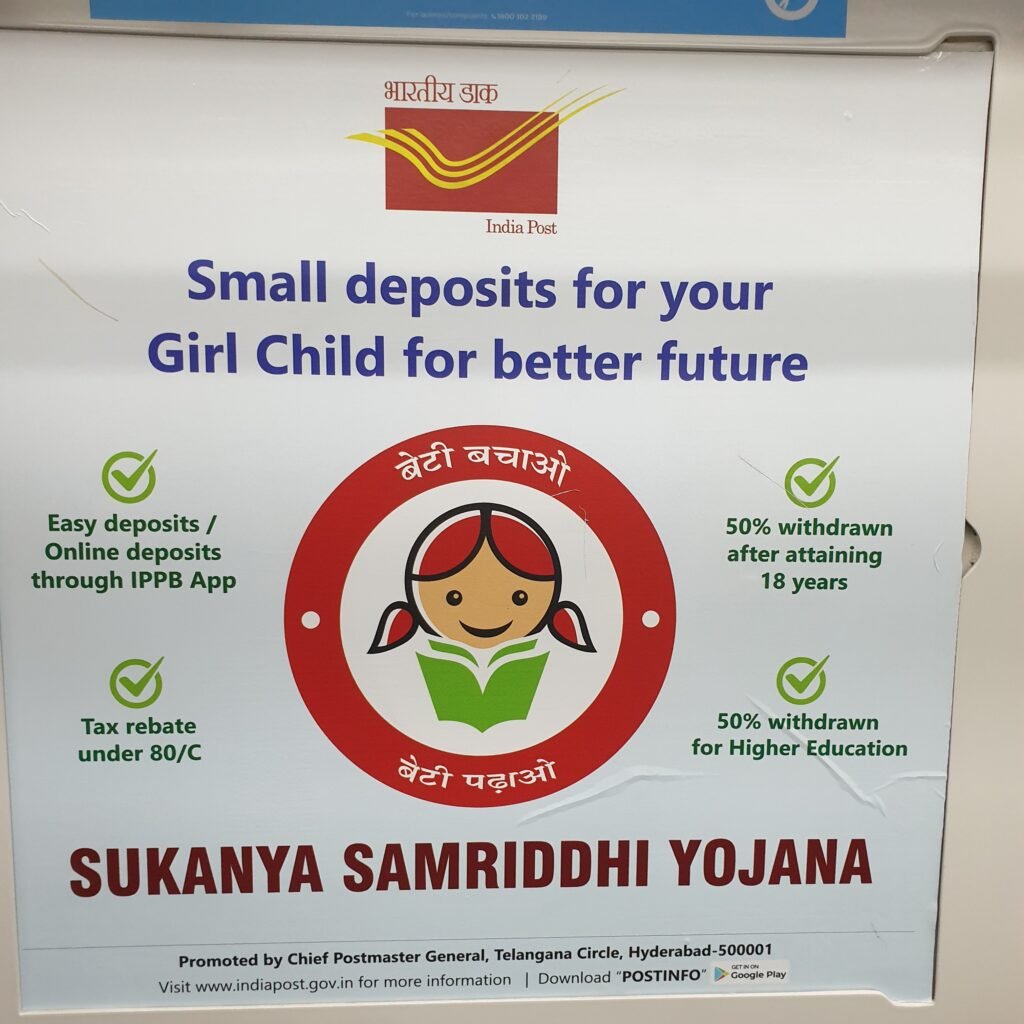
Sukanya Samriddhi Yojana age limit 2026 is for a girl child who is below 10 years of age on the date the account is opened. The account is opened by a natural or legal guardian in the girl child’s name. The important point is that the age test is applied on the actual account-opening date, so a child who has already turned 10 is outside the normal opening rule.
This guide explains the DOB cutoff in practical terms, shows examples for children close to the 10-year boundary, and covers the other rules that matter when opening and maintaining a Sukanya Samriddhi Account in 2026.
Table of Contents
Sukanya Samriddhi Yojana Age Limit 2026 at a Glance
Sukanya Samriddhi Account (SSA) is a Government of India small-savings scheme for the girl child. India Post states that a guardian can open an account for a girl who is below 10 years of age. The account can be opened at a post office, and the scheme is also available through eligible banks. The date of birth is important because the age condition is tested when the account is opened.
| Eligibility point | Current rule for 2026 |
|---|---|
| Eligible child | Girl child below 10 years of age |
| Who opens the account | Natural or legal guardian |
| Age test | Child must not have attained age 10 on the account-opening date |
| Birth proof | Birth certificate is required for the account-opening process |
| Accounts per girl child | One account in the name of a girl child |
| Normal family limit | Accounts for up to two girl children, subject to scheme exceptions |
| Annual deposit range | Minimum ₹250 and maximum ₹1.50 lakh in a financial year |
| Account maturity | 21 years from the date of opening, subject to the scheme rules |
| Current interest rate | 8.2% per annum for July–September 2026 |
India Post’s customer information says all girls below age 10 are eligible, while the Department of Economic Affairs maintains the official small-savings framework and quarterly interest-rate notifications. For July–September 2026, the government kept small-savings rates unchanged; the Sukanya Samriddhi rate is 8.2% per annum for that quarter.
What Is the Sukanya Samriddhi Age Limit?
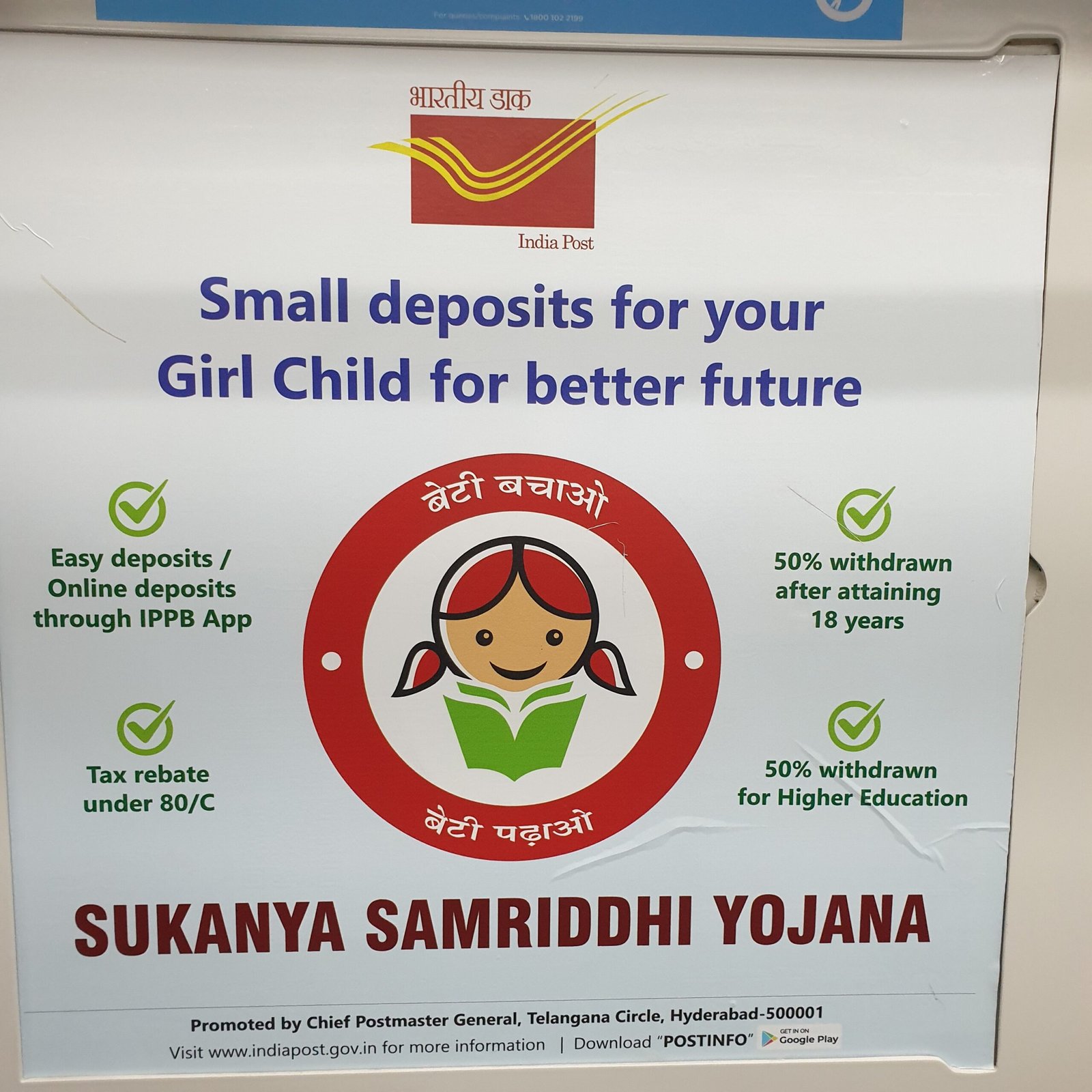
The normal opening-age rule is simple: the girl child must be under 10 years old on the date of opening the account. India Post’s current customer material uses the same “below the age of 10” wording. The guardian opens the account in the child’s name; the child is the account holder.
This is different from saying that a child can open an account any time before her 10th birthday has ended. The safest way to check the boundary is to compare the child’s date of birth with the exact date on which the account is opened. If the child has already completed 10 years on that date, the normal eligibility condition is not met.
Can a girl child aged exactly 10 years open an SSY account?
No, not under the normal opening rule. The scheme says the girl child must not have attained 10 years of age on the date the account is opened. Therefore, the account-opening date must fall before the child reaches the 10th birthday.
Can an account be opened just before the 10th birthday?
Yes, if the child has not yet attained 10 on the actual account-opening date and all other requirements are satisfied. For a boundary case, do not rely on a rounded age displayed by a general age calculator. Check the exact DOB and account-opening date.
Sukanya Samriddhi DOB Cutoff: How to Check It
The cleanest way to check eligibility is to work from the date of birth rather than from a rough statement such as “under 10.” Follow these steps:
- Write down the girl child’s exact date of birth.
- Identify the actual date on which the SSA account will be opened.
- Find the child’s 10th birthday.
- Check whether the account-opening date is before that 10th birthday.
- Confirm the required birth and guardian documents.
- Then check the family-account and deposit rules.
Our Age Calculator can help calculate the child’s exact age on a selected date. For Sukanya Samriddhi eligibility, however, the decisive point is the birthday boundary itself: the child must not have attained age 10 when the account is opened.
Example 1: Child is 9 years and 11 months old
If the child is 9 years and 11 months old on the account-opening date, the normal age condition is satisfied because she has not yet attained 10 years. The guardian can proceed with the remaining account-opening requirements.
Example 2: Child turns 10 on the proposed opening date
If the child’s 10th birthday is the same date on which the account would be opened, the child has attained age 10 on that date. The normal below-10 opening condition is therefore not satisfied.
Example 3: Child is already 10 years and 1 day old
If the child is already one day past her 10th birthday, the normal age condition for opening a new Sukanya Samriddhi Account is no longer met. This is why families should not wait until the final days before the birthday if they intend to open the account.
Who Can Open a Sukanya Samriddhi Account?
A natural or legal guardian opens the account in the name of the eligible girl child. The account is a minor account operated through the guardian under the scheme rules. India Post’s POSB manual also states that a guardian can open one account in the name of one girl child, subject to the applicable family limit.
A birth certificate is an important document for the opening process. India Post’s guidance states that the birth certificate of the girl child is required, along with the applicable identity and residence documentation of the depositor or guardian.
How Many Sukanya Samriddhi Accounts Can a Family Have?
The normal rule allows accounts for two girl children in one family. The scheme contains specific exceptions for certain multiple births, including situations involving twins or triplets, when the prescribed supporting documentation is produced. The existence of these exceptions does not mean that a family can freely open unlimited accounts.
There is also an important individual-level rule: only one account can be opened in the name of a particular girl child. The same girl cannot have duplicate Sukanya Samriddhi accounts opened by different guardians. India Post’s POSB manual expressly describes this restriction.
Sukanya Samriddhi Deposit Rules in 2026
India Post currently describes a minimum deposit of ₹250 for a financial year and a maximum annual deposit of ₹1.50 lakh. Deposits can be made during the contribution period under the scheme rules, and monthly deposits are not compulsory. The annual limit is important because depositing above the permitted ceiling does not create an extra tax-saving allowance or a larger eligible SSY contribution.
| Deposit point | Rule |
|---|---|
| Minimum annual deposit | ₹250 |
| Maximum annual deposit | ₹1,50,000 |
| Monthly deposit compulsory? | No |
| Deposit period | As prescribed by the scheme; India Post states deposits are required for the duration of the contribution period |
| Account maturity | 21 years from opening, subject to the scheme rules |
Because the government reviews small-savings interest rates periodically, do not copy an old interest figure from an older article. For the July–September 2026 quarter, the SSY rate is 8.2% per annum and the Department of Economic Affairs says the rates remained unchanged from the previous quarter.
When Does Sukanya Samriddhi Account Mature?
India Post states that the account normally matures after 21 years from the date of opening. This is different from the child’s age at opening. For example, an account opened when a child is 8 years old does not simply mature when she turns 18; the maturity period is linked to the account-opening date.
This distinction is useful when planning for education or other long-term goals. The opening-age rule determines whether the account can be started, while the account-opening date determines the normal 21-year maturity timeline.
Can Money Be Withdrawn Before Maturity?
The scheme permits a partial withdrawal under specified conditions. India Post’s customer material states that withdrawal of up to 50% may be available after the girl child attains age 18 or has passed the 10th standard, subject to the applicable scheme conditions and documentation. The withdrawal provision is not the same as unrestricted access to the full account balance.
India Post also states that the account holder can close the account after attaining age 18 at the time of marriage, subject to the rules. Because premature closure and withdrawal conditions are rule-based, check the latest post-office or bank instructions before making a request.
Sukanya Samriddhi Interest Rate 2026
For July to September 2026, the Sukanya Samriddhi Account interest rate is 8.2% per annum. The Department of Economic Affairs published the small-savings rate revision notification on 30 June 2026 and stated that the rates for the second quarter of FY 2026–27 would remain unchanged from the first quarter. Current reporting of the notification lists SSY at 8.2%.
The rate is not permanently fixed for the entire life of an account. Small-savings rates are reviewed periodically by the government. Therefore, an article published in a later quarter should be checked for a newer rate before using it in a calculation.
Sukanya Samriddhi Tax Benefits
India Post states that Sukanya Samriddhi Account is eligible for tax benefits under Section 80C of the Income-tax Act. The annual contribution limit remains important when considering the amount that can actually be deposited into the scheme. Tax treatment can depend on the taxpayer’s circumstances and the tax law applicable to the relevant financial year, so this article should not be treated as personal tax advice.
Sukanya Samriddhi Age Limit vs. Age 18 Rules
Two ages are commonly confused when researching SSY:
| Age or date | What it means |
|---|---|
| Before 10th birthday | Normal opening window for a new Sukanya Samriddhi Account |
| 10th birthday | Normal new-account age cutoff has been reached |
| Age 18 | Important age for withdrawal and account-control/closure provisions under the scheme rules |
| 21 years from opening | Normal maturity point of the account |
So, the fact that some SSY provisions use age 18 does not mean a new account can be opened until age 18. The opening rule is specifically linked to the girl child being below 10 when the account is opened.
Common Mistakes When Checking SSY Eligibility
- Using only the child’s displayed age: a rounded “9” or “10” is less useful than comparing the exact DOB with the opening date.
- Waiting until after the 10th birthday: the normal opening window closes when the child attains 10.
- Ignoring the birth certificate: date-of-birth documentation is part of the account-opening process.
- Assuming every family can open unlimited accounts: the normal family limit is two girl children, with specific exceptions.
- Confusing age 18 with opening eligibility: age 18 is relevant to other provisions, not the initial below-10 opening rule.
- Using an outdated interest rate: small-savings rates are reviewed quarterly.
- Ignoring the annual deposit ceiling: the maximum annual deposit is ₹1.50 lakh under the current customer guidance.
Sukanya Samriddhi Eligibility Checklist for 2026
- Confirm that the girl child has not attained age 10 on the proposed opening date.
- Check the exact date of birth rather than relying on a rounded age.
- Keep the girl child’s birth certificate and required KYC documents ready.
- Confirm that the person opening the account is the eligible natural or legal guardian.
- Check whether the family already has the maximum number of ordinary SSY accounts.
- Plan deposits within the ₹250 minimum and ₹1.50 lakh annual maximum.
- Check the latest government-notified interest rate for the quarter in which you are planning or evaluating the account.
- Keep the account’s 21-year maturity period in mind when planning long-term goals.
Where to Verify the Latest Sukanya Samriddhi Rules
The safest sources are the Department of Posts / India Post and the Department of Economic Affairs. India Post publishes scheme information and operational guidance, while the Department of Economic Affairs publishes the government’s small-savings notifications and rate revisions.
Sukanya Samriddhi Yojana Age Limit 2026: FAQs
What is the Sukanya Samriddhi Yojana age limit in 2026?
The girl child must be below 10 years of age on the date the Sukanya Samriddhi Account is opened.
Can I open SSY on my daughter’s 10th birthday?
No, not under the normal below-10 opening rule. The child has attained age 10 on that date.
Can I open an SSY account for a 9-year-old girl?
Yes, provided she has not attained age 10 on the opening date and the other scheme requirements are satisfied.
Who opens the Sukanya Samriddhi Account?
A natural or legal guardian opens the account in the eligible girl child’s name.
How many SSY accounts can one girl have?
Only one account can be opened in the name of a particular girl child.
What is the maximum annual SSY deposit?
The current maximum annual deposit is ₹1.50 lakh, while the minimum annual deposit is ₹250.
What is the SSY interest rate in July–September 2026?
The Sukanya Samriddhi Account interest rate is 8.2% per annum for July–September 2026. Small-savings rates are reviewed periodically, so check the latest notification for a future quarter.
When does Sukanya Samriddhi mature?
The account normally matures after 21 years from the date of opening, subject to the scheme rules.
Can I calculate the age cutoff from the child’s DOB?
Yes. Compare the child’s date of birth with the exact account-opening date and confirm that the 10th birthday has not been reached. Our Age Calculator can help with the date calculation.
Final Takeaway
The Sukanya Samriddhi Yojana age limit 2026 is straightforward but date-sensitive: the girl child must be below 10 years of age when the account is opened. The guardian should therefore compare the exact DOB with the actual opening date rather than relying only on a rounded age.
Beyond the age cutoff, check the birth-certificate requirement, family-account limit, annual deposit range and the current quarterly interest rate. For July–September 2026, SSY continues at 8.2% per annum. Always verify the latest rules with India Post or the Department of Economic Affairs before making an account-opening or investment decision.
Official references: India Post – Post Office Saving Schemes and Department of Economic Affairs – Sukanya Samriddhi Account.


