The UPSC Engineering Services Examination (ESE) 2027 notification is out, and the application window is open from 16 September 2026 to 6 October 2026 at 6:00 PM. The Union Public Service Commission (UPSC) has stated an expected 480 vacancies, including 19 vacancies for Persons with Benchmark Disabilities (PwBD). The Preliminary Examination is scheduled for 31 January 2027, while the Main Examination is scheduled for 18 June 2027.
This guide focuses on the current 2027 notification rather than an expected schedule. It brings the application process, age limit, educational qualification, fee, vacancy position, exam pattern and document checks together so you can verify the important details before submitting the form.
UPSC Engineering Services 2027: Quick Overview
| Item | Current 2027 detail |
|---|---|
| Exam | Engineering Services Examination (ESE), 2027 |
| Conducting body | Union Public Service Commission (UPSC) |
| Notification date | 16 September 2026 |
| Application window | 16 September 2026 to 6 October 2026, up to 6:00 PM |
| Expected vacancies | Approximately 480, including 19 PwBD vacancies |
| Preliminary Examination | 31 January 2027 |
| Main Examination | 18 June 2027 |
| Standard age band | 21 to 30 years on 1 January 2027 |
| General examination fee | ₹200 |
| Application portal | UPSC Online at upsconline.nic.in |
The vacancy figure is an estimate, not a final guaranteed number. UPSC states that the number of vacancies is liable to alteration. Candidates should therefore use the current notice as the controlling source and recheck the official page for any later update.
Table of Contents
UPSC Engineering Services 2027 Important Dates
The notification gives a clear calendar for the main stages of the examination. The application period starts on the notification date and closes at 6:00 PM on 6 October 2026.
| Event | Date | What to remember |
|---|---|---|
| Notification | 16 September 2026 | Current ESE 2027 Examination Notice was issued. |
| Online application opens | 16 September 2026 | Application can be started through the UPSC Online portal. |
| Application closes | 6 October 2026, 6:00 PM | The portal window closes after the stated time. |
| Preliminary Examination | 31 January 2027 | Stage-I objective examination. |
| Main Examination | 18 June 2027 | Stage-II conventional papers. |
Do not rely on an older article or a coaching-calendar date for the application deadline. The live UPSC notification is the safer reference because it specifies the date and exact closing time. The same notice says the eligible candidates’ e-Admit Cards will be made available through the online portal and will not be sent by post.
Vacancies and Engineering Disciplines
UPSC expects approximately 480 vacancies in the Engineering Services Examination 2027. The notice explicitly says that this number is liable to alteration, so it should be treated as a planning figure rather than a final appointment count.
| Category | Engineering discipline | Examples of services/posts named in the notice |
|---|---|---|
| Category I | Civil Engineering | Central Engineering Service, Survey of India Group ‘A’, Central Water Engineering and other listed civil services/posts. |
| Category II | Mechanical Engineering | Services/posts including AEE in GSI Engineering Service and Indian Naval Material Management Service (Mechanical Engineering Posts). |
| Category III | Electrical Engineering | Electrical engineering services/posts listed in the examination notice. |
| Category IV | Electronics & Telecommunication Engineering | Electronics and telecommunication services/posts listed in the examination notice. |
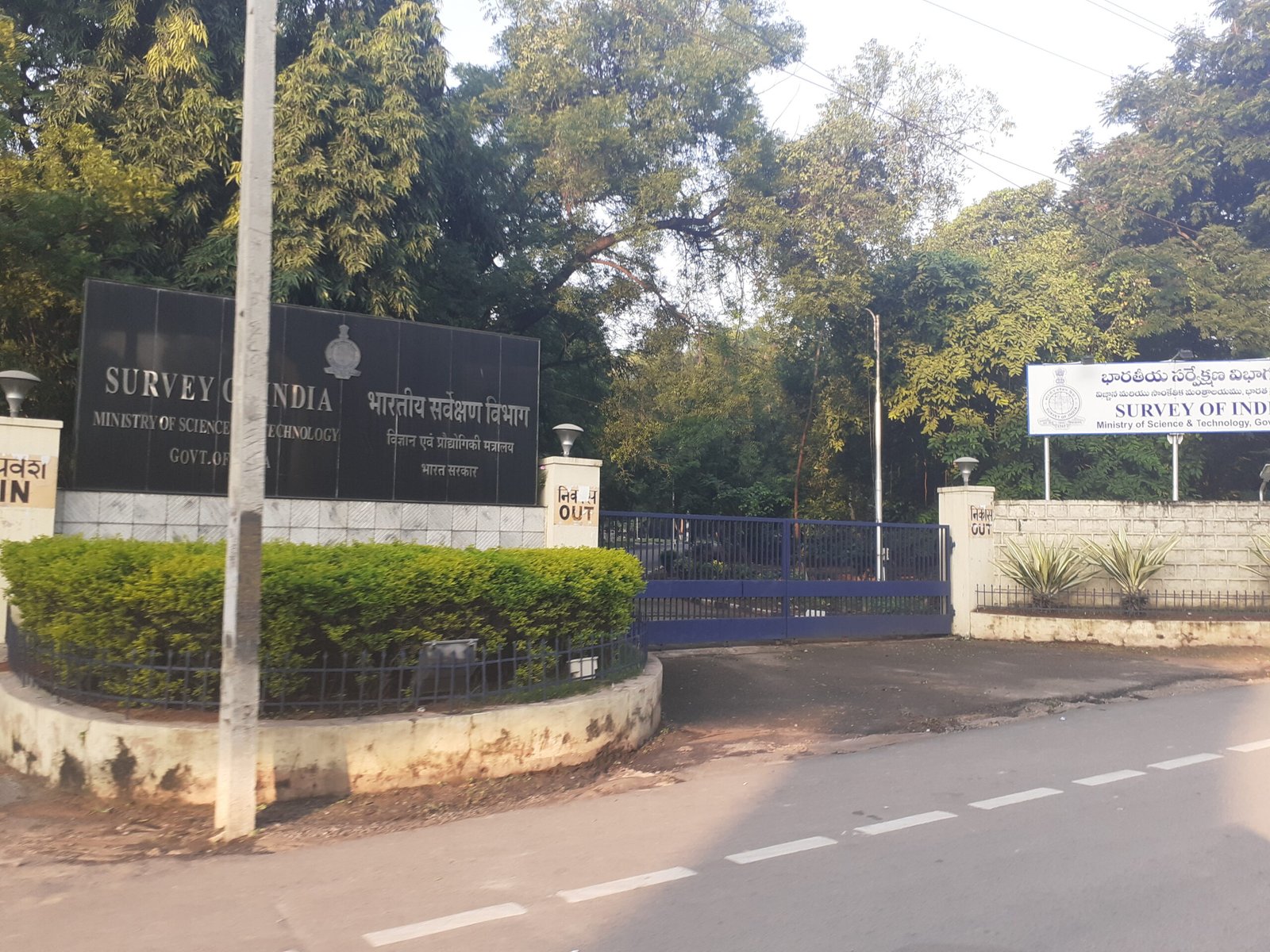
The four discipline categories are important because ESE eligibility and the discipline-specific papers are tied to the engineering category you apply under. The notification’s participating-services section also shows why candidates should read the post/service details rather than assume that every engineering graduate is eligible for every service under the examination.
UPSC Engineering Services 2027 Eligibility
Eligibility has several parts. A candidate needs to satisfy the nationality provisions, age rule, educational qualification and the other conditions of the notified services/posts. Admission is provisional, and UPSC states that the issue of an e-Admit Card does not by itself mean that final eligibility has been cleared.
| Eligibility check | What the 2027 notice says |
|---|---|
| Nationality | The notice permits Indian citizens and specified categories such as subjects of Nepal or Bhutan and certain other persons, subject to the conditions and certificate-of-eligibility provisions stated by UPSC. |
| Age | 21 years completed and not 30 years on 1 January 2027 under the standard rule. |
| Educational qualification | A qualifying engineering degree or another qualification expressly recognized in the notice for the examination/services. |
| Physical fitness | Candidates must meet the applicable physical standards for admission to the Engineering Services Examination. |
| Service/post eligibility | Some services/posts have their own qualification or functional/medical conditions, so the participating-services and rules sections also matter. |
A useful practical rule is to check the exact service or post you are interested in, not just the broad label “ESE eligible.” The examination has four engineering categories and several participating services/posts, and the notice contains additional conditions for individual routes.
Age Limit and DOB Rules
For the standard ESE 2027 age rule, the candidate must have attained 21 years and must not have attained 30 years on 1 January 2027. UPSC translates that into a date-of-birth window: the candidate must have been born not earlier than 2 January 1997 and not later than 1 January 2006.
| Check | 2027 rule |
|---|---|
| Minimum age on 1 January 2027 | 21 years |
| Maximum age under the standard rule on 1 January 2027 | 30 years not attained |
| Earliest DOB under the standard rule | 2 January 1997 |
| Latest DOB under the standard rule | 1 January 2006 |
| Specified government-servant relaxation | The notice provides an upper-age relaxation up to 35 years for eligible government servants who satisfy the detailed conditions in the notification. |
The DOB check is especially important because UPSC says the accepted date of birth is the one recorded in the Matriculation or Secondary School Leaving Certificate or another certificate recognized under the notice. It specifically warns against substituting documents such as a horoscope, affidavit or a municipal birth extract where the prescribed certificate is required.
The application instructions also say that once the date of birth has been submitted and entered in the Commission’s records for the examination, a later change is not allowed. This is why it is worth checking your DOB against the original qualifying document before you submit the form.
For a separate explanation of document-based DOB checking in government recruitment, see our Date of Birth Proof for Government Jobs in India guide. For date-entry mistakes in online forms, our Age Calculator for Forms guide is also useful.
Educational Qualification
The minimum educational qualification is not simply “any graduation.” For the standard rule, a candidate must have obtained a degree in Engineering from a qualifying Indian university or institution, or satisfy one of the alternative engineering qualifications specifically listed by UPSC.
- A degree in Engineering from a university or institution recognized under the conditions set out in the notice.
- Sections A and B of the Institution Examinations of the Institution of Engineers (India), subject to the notice’s conditions.
- Certain recognized foreign engineering degrees or diplomas, under the conditions stated by the Government.
- Specified membership examinations of the Institution of Electronics and Telecommunication Engineers (India), the Aeronautical Society of India, or the Institution of Electronics and Radio Engineers, subject to the eligibility restrictions stated in the notification.
- For certain specified services/posts, the notice also provides special M.Sc. qualification routes in subjects such as physics, radio communication, electronics or telecommunication.
There is an important date-related qualification warning in the 2027 notice: it states that certain degrees or certificates obtained from particular institutions by candidates who took admission after 31 May 2013 are not admissible, and other institutional-qualification cases are subject to the specific conditions stated by UPSC. Candidates using a non-standard qualification should therefore read the relevant clause rather than assuming an old equivalency rule still applies.
Application Fee
The prescribed examination fee is ₹200, payable through the modes specified by UPSC. The notice states that female candidates and candidates belonging to SC, ST and PwBD categories are exempt from the fee.
| Candidate category | Fee position |
|---|---|
| General category | ₹200 |
| OBC | ₹200 |
| EWS | ₹200 |
| Female candidates | Exempt |
| SC candidates | Exempt |
| ST candidates | Exempt |
| PwBD candidates | Exempt |
UPSC says the fee can be paid through net banking or the prescribed card/UPI methods listed in the notice. Payment through an unsupported method can lead to rejection, so use the options displayed by the official portal.
How to Fill the UPSC ESE 2027 Application Form
The current application system uses a common online structure rather than a simple one-page form. UPSC describes four modules/cards: account creation, Universal Registration, Common Application Form and the examination-specific module.
- Create or access your UPSC Online account. Start at upsconline.nic.in and follow the portal’s current instructions.
- Generate your Universal Registration Number (URN). UPSC says the URN is common to examinations and is generated after registration. Keep it securely with the application details.
- Complete the Common Application Form (CAF). Enter your personal details, date of birth, educational information and other requested data carefully.
- Upload the required photograph and signature. The 2027 notice requires both an uploaded photograph and a live photograph capture while filling the CAF. It also says the signature should be made three times on plain white paper using black ink and uploaded clearly.
- Complete the Engineering Services examination-specific module. This is where the examination-specific choices, fee and centre details are handled according to the portal’s instructions.
- Provide the required supporting information. UPSC may require evidence for DOB, educational qualification, category, age or fee concession and other claims.
- Review everything before final submission. The notice states that the application cannot be withdrawn after submission and no correction or modification in application fields is allowed after submission.
- Retain the Application Number and URN. The Application Number is examination-specific; the URN remains the common registration reference.
There is a useful distinction between the URN profile and an already submitted examination application. UPSC provides a one-time facility to update or modify the URN profile, but the notice makes clear that changes to the profile do not flow back into applications that have already been submitted. The updated profile applies to later applications after the profile has been successfully re-locked.
Documents and Details to Keep Ready
Preparing the documents before opening the application can reduce last-minute errors. The notification and its application instructions identify several categories of supporting information.
- Matriculation/Secondary certificate: keep the document that establishes the accepted date of birth and make sure the name and DOB you enter match it.
- Engineering qualification: keep the relevant degree, certificate or other accepted qualification evidence.
- Category documents: where applicable, keep SC/ST/OBC/EWS/PwBD or other supporting certificates in the prescribed form and within the notification’s dates.
- Photo ID: the notice lists Aadhaar, Voter Card (EPIC), PAN Card, Passport, Driving Licence or another government-issued photo ID as examples.
- Photograph and signature: follow the current portal instructions for size, clarity and upload requirements rather than using a file prepared for an older recruitment form.
- Active email address: UPSC says an active email ID should be provided because the Commission may use electronic communication during different stages of the examination.
For reserved-category or concession claims, do not wait until after submission to discover that a supporting certificate does not meet the notification’s conditions. The 2027 notice includes specific date and validity requirements for some certificates, including OBC-NCL and EWS documents.
ESE 2027 Exam Pattern and Marks
The examination is conducted in three stages. Stage-I is the Preliminary Examination, Stage-II is the Main Examination and Stage-III is the Personality Test/Interview. The marks at the Main and Personality Test stages contribute to the final result under the rules described by UPSC.
| Stage | Paper | Duration | Marks |
|---|---|---|---|
| Stage-I: Preliminary | Paper-I: General Studies and Engineering Aptitude | 2 hours | 200 |
| Stage-I: Preliminary | Paper-II: Engineering discipline paper | 3 hours | 300 |
| Stage-II: Main | Paper-I: Engineering discipline | 3 hours | 300 |
| Stage-II: Main | Paper-II: Engineering discipline | 3 hours | 300 |
| Stage-III | Personality Test/Interview | — | 200 |
That gives Stage-I a total of 500 marks and Stage-II a total of 600 marks, followed by a 200-mark Personality Test/Interview. UPSC also specifies negative marking for wrong answers in the objective papers: one-third of the marks assigned to the question is deducted for a wrong answer. Leaving a question blank does not attract that penalty.
Common Application Mistakes to Avoid
- Using an expected 2027 date instead of the current notification. The official notification is already available and gives the application and examination dates.
- Calculating age by birth year alone. ESE uses the age position on 1 January 2027 and gives an exact DOB window.
- Entering a DOB that differs from your accepted certificate. UPSC places particular importance on the recorded date of birth and does not permit a later change to it.
- Choosing the wrong engineering category. The four categories are Civil, Mechanical, Electrical, and Electronics & Telecommunication Engineering.
- Assuming every engineering qualification is automatically accepted. The notice contains specific qualification routes and restrictions for some institutional credentials.
- Waiting until the final hour to upload the photograph or signature. The current process includes live photograph capture and a specific signature format.
- Assuming a submitted application can be edited later. UPSC states that no addition, deletion or modification is allowed in the submitted examination application.
- Confusing an e-Admit Card with final eligibility clearance. UPSC says admission is provisional and final document verification occurs later in the process.
FAQs
What is the UPSC Engineering Services 2027 application last date?
The current notification says applications can be submitted until 6 October 2026 at 6:00 PM. After that time, the online application link is disabled.
How many vacancies are there in ESE 2027?
UPSC expects approximately 480 vacancies, including 19 vacancies for PwBD candidates. The Commission also states that the number of vacancies is liable to alteration.
What is the age limit for ESE 2027?
Under the standard rule, a candidate must be 21 years old and must not have attained 30 years on 1 January 2027. The corresponding standard DOB range is 2 January 1997 to 1 January 2006.
What qualification is required for Engineering Services Examination 2027?
The standard educational qualification is a qualifying engineering degree, with additional alternative qualifications and service-specific routes listed in the UPSC notification. Candidates with non-standard or institutional qualifications should check the exact clause that applies to them.
What is the ESE 2027 application fee?
The prescribed fee is ₹200. Female candidates and SC, ST and PwBD candidates are exempt under the notification. OBC and EWS candidates are not exempt and must pay the prescribed fee.
Can I correct my ESE application after submitting it?
No. The notification states that the submitted Engineering Services application cannot be withdrawn and that no addition, deletion or modification is allowed after submission. UPSC does provide a one-time edit facility for the URN profile, but changes to that profile do not update an application that has already been submitted.
Where should I apply for ESE 2027?
Use the official UPSC Online portal at upsconline.nic.in. The UPSC notification says candidates must apply online using that portal and should read the portal’s instructions before completing the modules.
Official Sources
- UPSC — Engineering Services (Preliminary) Examination, 2027
- UPSC — Examination Notice No. 02/2027-ENGG, dated 16 September 2026
- UPSC Online — application portal
- Related guide: Date of Birth Proof for Government Jobs in India
- Related guide: Age Calculator for Forms
The official notification should be treated as the controlling source for ESE 2027 eligibility, dates, fees and application instructions. Details can change through an official corrigendum or later notice, so check UPSC again before making a final submission.
Final Takeaway
UPSC Engineering Services 2027 is now a live examination cycle, with applications open from 16 September to 6 October 2026. The current notification sets the Preliminary Examination for 31 January 2027 and the Main Examination for 18 June 2027, and places the expected vacancy count at approximately 480.
The most important checks before submitting the form are your engineering qualification, the exact 21–30 age rule and DOB window, the correct engineering category, any applicable concession documents, and the accuracy of your personal information. The online process uses account creation, URN, CAF and an examination-specific module, with photograph and live-photo requirements plus a specific signature upload process.
Because UPSC does not allow post-submission corrections to the examination application, a careful document check before final submission is more useful than trying to fix a mistake afterward. Use the official notification and UPSC Online portal for the final application.
Disclaimer: This article is general informational content, not recruitment or legal advice. Eligibility, vacancies, dates and application procedures are governed by the latest UPSC notice and any official corrigendum or subsequent update.