PM-DAKSH age limit 2026 is 18 to 45 years. The Ministry of Social Justice and Empowerment says the Pradhan Mantri Dakshta Aur Kushalta Sampann Hitgrahi (PM-DAKSH) Yojana is for eligible Indian applicants in the 18–45 age group. But age is only one part of eligibility: the scheme also uses target-group, income, Aadhaar, bank-account and registration requirements.
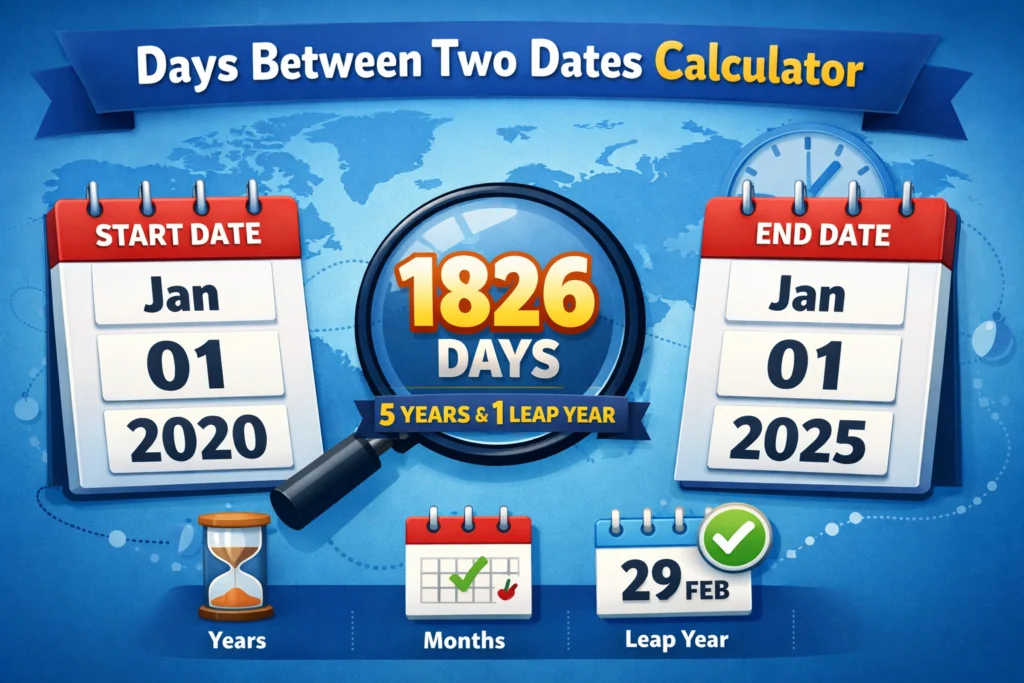
If you are checking eligibility because of your date of birth, first calculate your exact age on the relevant date rather than relying only on your birth year. Our Age Calculator can help you work out completed years, months and days.
PM-DAKSH Age Limit 2026 at a Glance
The current Department of Social Justice and Empowerment scheme page lists an age criterion of 18–45 years. The official MyScheme listing likewise states that an applicant must be aged between 18 and 45 years. This means a person below 18 or above 45 does not meet the stated age criterion for PM-DAKSH skill-development training.
| Eligibility point | PM-DAKSH 2026 rule |
|---|---|
| Minimum age | 18 years |
| Maximum age | 45 years |
| Nationality | Indian national |
| Target groups | SC, OBC, EWS, DNT, Safai Mitras/Safai Karamcharis including waste pickers and eligible dependants as applicable |
| OBC/EWS income | Annual family income below ₹3 lakh |
| SC/DNT/Safai Mitra groups | No income limit stated on the current scheme page |
| Training cost | Free of cost to eligible trainees |
| Registration | Skill India Digital Hub (SIDH), as stated by MyScheme |
What Is the Minimum Age for PM-DAKSH?
The minimum age for PM-DAKSH is 18 years. The Department of Social Justice and Empowerment currently publishes 18–45 years as the age criterion. The Ministry’s FAQ also states that the applicable age group is 18–45 years.
So, a person who has not yet completed 18 years should not treat PM-DAKSH as an eligible training option merely because they will turn 18 later in the year. The safest approach is to check the age requirement against the date used for assessment, certification or registration under the particular training process.
What Is the Maximum Age for PM-DAKSH?
The maximum age criterion is 45 years. The official scheme page does not describe PM-DAKSH as having an open-ended upper-age window; instead, it expressly gives the eligible age group as 18–45 years.
This is important because PM-DAKSH is different from schemes that have a minimum age but no general maximum age. If your age is above 45, you should not assume that a different benefit rule or a training institute’s own course age range automatically makes you eligible for PM-DAKSH.
PM-DAKSH DOB Rule: How to Check Your Age
PM-DAKSH is an age-based eligibility scheme, so the date of birth on your documents matters. A practical check is:
- Enter your date of birth exactly as shown on your accepted identity or supporting document.
- Determine your completed age on the date relevant to assessment, certification or registration.
- Confirm that the result is at least 18 and not more than 45 years.
- Keep the same date-of-birth information across the registration and supporting documents.
For example, someone who is 17 years and 11 months old is still below the stated minimum. Likewise, someone who has already crossed the 45-year upper limit should not count themselves eligible simply because they entered the application process before their birthday. Where a portal or training notice gives a specific cutoff date, use that date and follow the notice.
Who Is Eligible for PM-DAKSH in 2026?
Age alone does not make an applicant eligible. The current Department of Social Justice and Empowerment page and the MyScheme listing describe PM-DAKSH as a targeted skill-development programme. Eligible applicants must fall within the scheme’s specified beneficiary groups and meet the applicable documentation and income conditions.
| Group | Main eligibility point |
|---|---|
| Scheduled Castes (SC) | Eligible target group; current scheme page states no income limit. |
| Other Backward Classes (OBC) | Eligible target group; annual family income must be below ₹3 lakh. |
| Economically Weaker Sections (EWS) | Eligible target group; annual family income must be below ₹3 lakh. |
| De-notified, Nomadic and Semi-Nomadic Tribes (DNT) | Eligible target group; current scheme page states no income limit. |
| Safai Mitras / Safai Karamcharis, including waste pickers | Covered target group; current scheme page states no income limit. |
| Transgender community | The Department page includes a specific minimum-age-at-assessment/certification condition and identity documentation requirements. |
PM-DAKSH Income Limit 2026
The income test depends on the beneficiary category. For OBC and EWS applicants, the current MyScheme listing says annual family income must be below ₹3,00,000. The current Department of Social Justice and Empowerment page states no income limit for SCs, DNTs and Safai Karamcharis including waste pickers.
Do not apply one income rule to every PM-DAKSH beneficiary. Your category determines which financial condition applies. Applicants should also use the document standards specified by the scheme or registration portal rather than relying on an informal declaration that does not meet the required format.
PM-DAKSH Documents and Proofs
The exact document set can vary by beneficiary category. The current Department page gives examples of the evidence used to establish eligibility. These can include caste or category certificates, income proof for groups where an income ceiling applies, occupation certificates for Safai Karamcharis/waste pickers, and identity or registration documents for particular groups.
- Age/date of birth: keep valid proof of date of birth available.
- Category: SC, OBC, EWS or other relevant category proof may be required.
- Income: OBC and EWS applicants should be ready with the prescribed proof showing family income below ₹3 lakh.
- Safai Mitra/waste picker status: an occupation certificate may be required.
- Aadhaar: MyScheme lists a valid Aadhaar card, with an exemption for candidates from states that have not implemented Aadhaar completely.
- Bank account: MyScheme states that an Aadhaar-linked bank account is required.
- Registration: eligible applicants are directed to register on the Skill India Digital Hub.
Is PM-DAKSH Training Free?
Yes. The Department of Social Justice and Empowerment describes PM-DAKSH training as free of cost for trainees, with training funded through government grants. MyScheme also lists training as free of cost.
Depending on the training type and beneficiary category, trainees may also receive financial support such as stipends. MyScheme currently lists non-residential stipend rates of ₹1,500 per month for SC candidates, ₹1,000 for OBC/EWS/DNT candidates and ₹1,500 for sanitation workers including waste pickers and their dependants, subject to the programme’s conditions. Residential programmes have separate boarding and lodging provisions, so applicants should check the current course terms rather than assuming every trainee receives the same payment.
What Training Does PM-DAKSH Provide?
PM-DAKSH is designed around skill development and employability rather than a single occupation. The current MyScheme description lists upskilling, reskilling, short-term training and entrepreneurship development programmes. Training is aligned with the National Skill Qualification Framework where applicable and is intended to improve wage-employment or self-employment opportunities.
| Training type | Purpose |
|---|---|
| Up-skilling / Re-skilling | Improve or update skills, including suitable prior-learning pathways for specified groups. |
| Short-Term Training (STT) | Prepare beneficiaries for wage or self-employment in demand-oriented sectors. |
| Entrepreneurship Development Programme (EDP) | Develop entrepreneurial capabilities for eligible participants. |
PM-DAKSH Registration: Where to Apply
The current MyScheme page says eligible individuals must register on the Skill India Digital Hub (SIDH). The Ministry’s FAQ also explains that applications are submitted online through the indicated PM-DAKSH portal. Because government portals and registration workflows can change, use the current official scheme information before submitting personal documents.
Before registering, prepare your date-of-birth proof, category or income documentation as applicable, Aadhaar and bank details, and any occupation-specific certificate required for your beneficiary group. A clean document set reduces the risk of a mismatch during verification.
PM-DAKSH Eligibility Checklist for 2026
| Check | What to confirm |
|---|---|
| 1. Age | You are between 18 and 45 years. |
| 2. Nationality | You are an Indian national with acceptable proof. |
| 3. Target group | You belong to an eligible PM-DAKSH beneficiary category. |
| 4. Income | If you are OBC or EWS, family income is below ₹3 lakh per year. |
| 5. Identity | You have the required identity and Aadhaar documentation, subject to stated exemptions. |
| 6. Bank account | Your bank account meets the Aadhaar-linking requirement where applicable. |
| 7. Registration | You complete registration through the currently designated government platform. |
PM-DAKSH Age Limit Compared With Other Schemes
Age rules differ sharply between government schemes. For example, the PM-SYM article on this website covers an 18–40 entry-age rule for that separate pension scheme. PM-DAKSH instead uses an 18–45 age criterion for its skill-development programme. Do not transfer the age limit of one scheme to another.
- PM-SYM Age Limit 2026 — a separate pension scheme with its own eligibility conditions.
- PM Kisan Age Limit 2026 — a different agricultural income-support scheme with a different eligibility structure.
- PMEGP Age Limit 2026 — a credit-linked self-employment programme with its own project and applicant conditions.
Common PM-DAKSH Eligibility Mistakes
Mistake 1: Checking only age. Being 18–45 is necessary but does not by itself prove eligibility. Target-group and other conditions also matter.
Mistake 2: Using the wrong income rule. The ₹3 lakh annual family-income ceiling applies to OBC and EWS applicants under the current MyScheme description. It should not automatically be imposed on SC, DNT or Safai Mitra applicants, for whom the current Department page states no income limit.
Mistake 3: Treating a course as automatically eligible. PM-DAKSH has different training categories and programme conditions. A private training course is not automatically a PM-DAKSH course simply because it teaches a skill.
Mistake 4: Ignoring document consistency. A date-of-birth or category mismatch between documents can create verification problems. Use accurate information and follow the current portal’s document instructions.
Mistake 5: Assuming every trainee receives the same stipend. Financial support varies by training type and beneficiary group. Check the current course terms before relying on a particular amount.
What If I Turn 18 or 45 During the Application Process?
The published scheme criterion is 18–45 years, but the precise point at which age is tested can depend on the registration, assessment, certification or course notice. The Department page specifically mentions age at assessment/certification for the transgender-community condition, while the general scheme page gives the overall 18–45 range. Therefore, if your birthday falls close to a registration or assessment date, use the date specified by the active government instructions instead of assuming that the application date alone controls.
Frequently Asked Questions About PM-DAKSH Age Limit 2026
What is the PM-DAKSH age limit in 2026?
The current Department of Social Justice and Empowerment and MyScheme listings state that the age criterion is 18 to 45 years.
Can a person above 45 apply for PM-DAKSH?
The current scheme page states an eligible age group of 18–45 years, so applicants above 45 do not meet the published general age criterion.
What is the PM-DAKSH income limit for OBC and EWS applicants?
The current MyScheme listing says OBC and EWS applicants must have annual family income below ₹3 lakh.
Is PM-DAKSH training free?
Yes. The Department of Social Justice and Empowerment describes the training as free of cost for eligible trainees.
Where do eligible applicants register for PM-DAKSH?
The current MyScheme listing says eligible individuals must register on the Skill India Digital Hub (SIDH).
How to Check PM-DAKSH Age Eligibility Step by Step
A simple age check can prevent an otherwise eligible applicant from spending time on the wrong registration route. Use this sequence when reviewing your PM-DAKSH eligibility:
- Start with your date of birth. Use the date shown on your valid supporting document rather than estimating your age from your birth year.
- Calculate completed age. Check the age on the date that matters for the active assessment, certification, registration or training instructions.
- Check the 18–45 range. If you are below 18 or above 45 on the relevant date, the published general age criterion is not satisfied.
- Identify your beneficiary category. Decide whether you qualify through SC, OBC, EWS, DNT, Safai Mitra/Safai Karamchari or another group expressly covered by the current scheme.
- Apply the correct income test. OBC and EWS applicants should check the ₹3 lakh family-income condition; do not apply that ceiling automatically to groups for which the Department says there is no income limit.
- Prepare documents and register. Keep identity, category, income, occupation and bank documents ready as applicable before completing the government registration process.
PM-DAKSH Age Examples
| Applicant’s completed age | Age criterion result | What to do next |
|---|---|---|
| 17 years 11 months | Below minimum | Does not satisfy the published 18-year minimum. |
| 18 years exactly | Within range | Continue checking target-group and other eligibility rules. |
| 25 years | Within range | Check category, income and documents. |
| 45 years exactly | Within the stated range | Check the specific active registration or assessment instructions for the relevant date. |
| 45 years and 1 day beyond the applicable upper-age point | Outside general range | Do not assume eligibility without an official rule covering your circumstances. |
These examples illustrate the published age range, not a substitute for the live registration rules. When a government notice specifies a particular cutoff or assessment date, that notice controls the operational calculation.
PM-DAKSH Training Duration and Attendance
PM-DAKSH includes different training formats, so there is no single duration for every course. The current MyScheme information says upskilling programmes are approximately 35 hours, while short-term courses can extend to 1,200 hours. This difference matters when comparing courses: the age limit is a common eligibility criterion, but the course structure, duration and support can vary.
MyScheme also states that candidates need at least 70% attendance to be eligible to appear in assessments and that a re-assessment opportunity is available. Applicants should therefore treat attendance as part of successful participation, not merely an optional condition after admission.
Can You Take PM-DAKSH Training More Than Once?
The current MyScheme FAQ states that a person is eligible to undergo training under the skill-development programme only once. It also says a person cannot participate in more than one skill-development programme simultaneously. These conditions are separate from the age rule, so meeting the 18–45 criterion does not mean an applicant can repeatedly enrol in PM-DAKSH courses.
Why the PM-DAKSH Age Rule Matters
The age criterion helps define the beneficiary population for a programme focused on employability, skills and sustainable livelihoods. PM-DAKSH is not a general-purpose training voucher for every age group. Its current design targets specified socially, educationally and economically disadvantaged groups and connects training with wage-employment, self-employment and entrepreneurship outcomes.
For that reason, a complete eligibility check should always answer three questions together: Am I in the 18–45 age range? Am I in an eligible PM-DAKSH target group? Do I satisfy the category-specific income and document conditions? If any answer is uncertain, check the current government listing before submitting the application.
Official PM-DAKSH Sources to Check
The Department of Social Justice and Empowerment is the primary government source for the scheme description and current eligibility summary. MyScheme provides a consolidated government scheme listing with eligibility, benefits, registration and FAQ information. The Ministry also publishes PM-DAKSH FAQs and guidelines, while PIB releases provide official programme updates. Use these sources when a training notice, portal message or older article appears to conflict with the current rules.
- Department of Social Justice and Empowerment — PM-DAKSH Yojana
- MyScheme — PM-DAKSH eligibility and benefits
- Ministry of Social Justice and Empowerment — PM-DAKSH FAQ
Bottom Line
PM-DAKSH age limit 2026 is 18 to 45 years. However, the age test is only the starting point. You also need to fall within an eligible beneficiary group and satisfy the applicable income, identity, bank-account and registration requirements. OBC and EWS applicants have a family-income ceiling of below ₹3 lakh under the current MyScheme listing, while the Department’s current scheme page states no income limit for SC, DNT and Safai Karamchari/waste-picker groups. Training is free for eligible trainees, and the current registration guidance points applicants to the Skill India Digital Hub.
Official sources: Department of Social Justice and Empowerment — PM-DAKSH and MyScheme — PM-DAKSH. Check the current government instructions before submitting an application because individual training programmes can have additional operational requirements.