
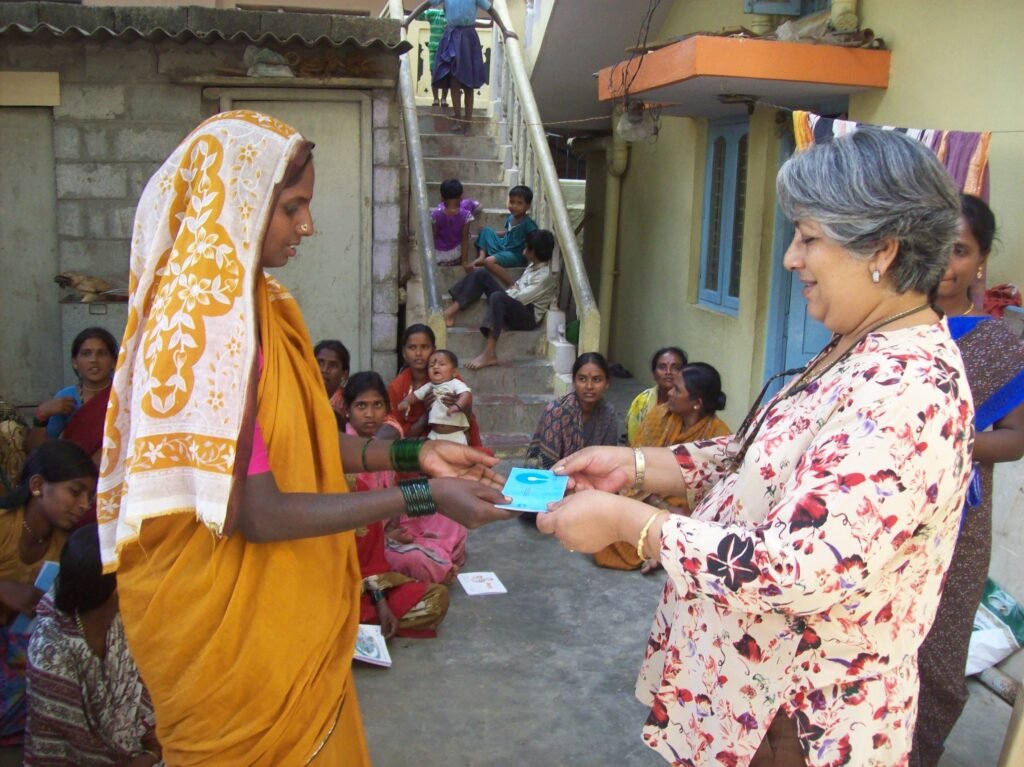
If you are searching for the bank account age limit in India 2026, the key point is that a child does not have to wait until adulthood to have a bank account. Under the Reserve Bank of India’s revised instructions for minor deposit accounts, a minor of any age may be allowed to open and operate a savings or term deposit account through a natural or legal guardian. Banks may also allow a minor to operate savings or term deposit accounts independently once the bank’s own minimum age threshold is met; that threshold cannot be below 10 years. The bank can set transaction and operational limits.
That means there is no single rule saying “you must be 18 to open a bank account.” The more useful question is who can operate the account, what facilities the chosen bank provides, and what changes when the child reaches majority.
The RBI revised these instructions through circular RBI/2025-26/26 dated April 21, 2025. The revised framework also requires banks to follow applicable KYC and customer-due-diligence rules, keep minor accounts from being overdrawn, and obtain fresh operating instructions when the account holder reaches majority.
This guide explains the bank account age limit in India 2026 in practical terms, including newborn accounts, the 10-year independent-operation rule, documents, bank-specific limits, date-of-birth examples, and what happens at adulthood.

What Is the Bank Account Age Limit in India in 2026?
There is no single minimum age for a minor to have a savings or term deposit account through a guardian. The RBI’s 2025 instructions allow minors of any age to open and operate savings and term deposit accounts through a natural or legal guardian.
Independent operation is different. Banks may allow minors to independently operate savings or term deposit accounts from an age threshold that is not lower than 10 years. The bank decides the applicable age, amount limits, and other terms under its risk-management policy.
| Age or stage | What may be possible | Who normally operates the account? |
|---|---|---|
| Any age | Savings or term deposit account may be opened for a minor | Natural or legal guardian, subject to the bank’s process |
| Bank’s independent-operation threshold, not below 10 | Minor may be allowed to open and operate a savings or term deposit account independently | Minor, subject to the bank’s limits and terms |
| Majority | Account moves into adult operating status | Account holder, after required fresh operating instructions and signature formalities |
The word “may” matters. RBI provides the regulatory framework, but it does not require every bank to offer exactly the same minor-account product or identical transaction limits.
Can a Newborn Baby Have a Bank Account?
Yes. A minor does not have to be 10 or 18 years old to have a deposit account through a guardian.
For a newborn, the account is normally opened in the child’s name and operated through the natural or legally appointed guardian, following the bank’s KYC and account-opening procedure. Parents should not assume that every feature available on an adult savings account will automatically be available to a newborn’s account.
The practical focus at this age is usually account ownership, safe deposits, and proper records rather than independent operation. Digital banking, debit cards, cheque books, or other facilities depend on the bank’s product and risk controls.
A newborn account can be useful for parents who want to build a savings habit for education, long-term goals, gifts, or regular family contributions. The account’s terms should be checked carefully before opening it, especially because different banks can design different minor-account products.
Can a Child Below 10 Have a Bank Account?
Yes. A child below 10 can have a bank account through a natural or legal guardian.
This is one of the most important points to understand when searching for the bank account age limit in India. The age of 10 is not a universal minimum age for holding a bank account. Instead, the RBI’s revised 2025 framework uses 10 years as the floor below which a bank cannot set the independent-operation threshold.
- Can a 5-year-old have a bank account? Yes, through a guardian, subject to the bank’s account-opening procedure.
- Can a 5-year-old independently operate the account? Independent operation is subject to the bank’s policy, and the policy threshold cannot be below 10.
Parents should therefore avoid rejecting a minor-account application simply because the child is younger than 10. The correct check is whether the bank offers a guardian-operated minor account and what documents it requires.
What Does the RBI 2025 Rule Say About Age 10?
The revised RBI instructions are important because they make the distinction between having an account and operating an account independently much clearer.
The circular dated April 21, 2025 says minors of any age may be allowed to open and operate savings and term deposit accounts through a natural or legal guardian. It then permits banks to allow minors to independently open and operate such accounts from an age limit that is not less than 10 years, subject to the amount and other terms fixed by the bank.
In simple language, the 2025 framework means:
- Any-age minor accounts can exist through guardians.
- A bank can allow independent operation starting at 10 or a higher age.
- The bank can set transaction limits and other safeguards.
- The applicable conditions should be communicated to the minor account holder.
- Extra facilities such as internet banking, ATM/debit cards, and cheque books may be offered according to bank policy.
- Minor accounts must not be allowed to become overdrawn and should remain in credit.
This is why a headline such as “bank account minimum age is 10” can be misleading. Ten is better understood as the minimum age threshold a bank may use for independent operation under the 2025 framework, not a universal minimum age for having a guardian-operated minor bank account.
Who Operates a Minor Bank Account?
The answer depends on the account structure.
In a guardian-operated account, the natural or legal guardian handles operations for the minor according to the bank’s rules. This is the model that makes it possible for a very young child to have a bank account.
In an independently operated minor account, the child can use the account under the conditions set by the bank. The bank can define a minimum age at or above 10 years, transaction ceilings, permissible channels, and documentation requirements.
The bank’s written terms matter because two banks can follow the same RBI framework but offer different products. One bank may allow more digital facilities to a 10-year-old, while another may set a higher operational age or a more restrictive transaction limit.
Parents and children should therefore treat RBI eligibility and bank product availability as related but separate checks.

Can a Minor Get ATM, Debit Card or Internet Banking Facilities?
The RBI’s revised instructions allow banks to offer additional facilities to minor account holders, including internet banking, ATM/debit card and cheque book facilities. These facilities are not an automatic entitlement with identical features across every bank.
The bank may decide what it offers, at what age, with what limits, and subject to what risk controls. A debit card for a minor may therefore have different transaction controls from an adult account. Digital banking may also be limited by the bank’s security settings.
A practical list of questions to ask the bank is:
- At what age can the child use the debit card?
- Is internet or mobile banking available?
- Can the minor make cash withdrawals independently?
- What transaction limits apply?
- Does the guardian need to approve particular transactions?
- What happens to the account when the minor becomes a major?
Do not assume that a facility offered by one bank is available on the same terms at another bank.
Documents Needed for a Minor Bank Account
There is no one universal document list for every bank and every minor-account product. The RBI framework requires banks to follow applicable KYC and customer-due-diligence rules, while the bank decides the operational documents and product requirements.
Depending on the situation, the bank may ask for information or documents relating to:
- The child’s identity and date of birth.
- The child’s address, where applicable.
- The guardian’s identity and KYC.
- Proof of the guardian’s relationship or authority.
- Photographs or other identification information where required.
- Account-opening forms and declarations.
- Additional documents under the bank’s product policy.
The exact list should be confirmed with the bank before visiting the branch or starting an online application. This is especially important where the guardian is a legally appointed guardian rather than a natural guardian, or where the child and guardian have different addresses.
A date-of-birth document can be especially important because the bank may use the child’s DOB to determine whether the account is still within minor status and whether an independent-operation threshold applies.
Bank Account Age Limit by Practical Age Examples
Age examples can make the rule easier to understand because the phrase “minimum age” is often used too loosely.
Example 1: Newborn child
A newborn can have a savings or term deposit account through a natural or legal guardian, subject to the bank’s procedures. The child does not need to be 10 years old to hold the account.
Example 2: 5-year-old child
A 5-year-old can have a guardian-operated minor account. The child would not be independently operating the account merely because the account exists.
Example 3: 9-year-old child
A 9-year-old can still have a minor account through a guardian. The independent-operation threshold cannot be set below 10 under the RBI’s 2025 framework.
Example 4: 10-year-old child
A 10-year-old may be able to open and operate a savings or term deposit account independently, but only if the bank’s policy permits independent operation at that age. The bank can impose limits.
Example 5: 12-year-old child
A 12-year-old may qualify for independent operation at banks whose threshold is 10 or 12, but the exact product rules still matter. Another bank could set a higher age threshold.
Example 6: 16-year-old child
A 16-year-old can remain a minor while using a minor-account product. Where the bank allows independent operation, the child must continue to follow the bank’s limits until the account transitions to adult status at majority.
Example 7: Account holder reaching majority
When the account holder reaches the age of majority, the bank should obtain the fresh operating instructions and specimen signature required for the now-adult account. If the account had been operated by the guardian, balance confirmation and related formalities are also part of the RBI framework.
Why Your Date of Birth Matters
For an age-focused website, the useful lesson is simple: a child’s DOB is not only an identity field; it can affect the operating status of the account.
Suppose a child was born on August 20, 2015. A bank that permits independent operation from age 10 could consider the child eligible for that mode once the child reaches the bank’s applicable age threshold, subject to the product terms.
Now consider a child born on November 25, 2016. Even if the child is attending the same class as an older child, the bank’s age calculation is tied to the actual date of birth and the bank’s stated policy.
This is why parents should use the exact date of birth shown on the documents that will be submitted to the bank. When the DOB in one record differs from another, resolve the discrepancy before the account-opening process reaches a verification stage.
You can use the site’s Age Calculator to check a child’s exact age from the date of birth before reviewing the bank’s policy.
Minor Bank Account vs Adult Bank Account
| Feature | Minor account | Adult account |
|---|---|---|
| Account holder | Minor | Adult |
| Guardian involvement | May be required, especially for younger children | Normally no guardian |
| Independent operation | Depends on bank policy and age threshold; threshold cannot be below 10 | Normally available subject to standard account rules |
| Debit/ATM facilities | May be offered with limits | Standard adult product terms apply |
| Internet/mobile banking | May be offered with controls | Standard product terms apply |
| Overdraft | Minor accounts should not be allowed to overdraw | Depends on the adult product and separate credit facility |
| On reaching majority | Fresh operating instructions and signature formalities | No minor-to-major transition |
This table shows why “minor account” should not be treated as a single standardized product. The underlying RBI framework is common, but the bank’s account design determines the exact experience.
What Happens When the Minor Becomes a Major?
Reaching majority is an important transition point.
The RBI’s revised instructions require banks to obtain fresh operating instructions and the specimen signature of the account holder after the minor becomes a major. Where the guardian had been operating the account, the bank must also obtain confirmation of the balance and take advance action to complete the required formalities.
This does not necessarily mean the money disappears, a new account must always be opened, or the account balance is reset. The key issue is that the bank must update the operating status and records for an adult account holder.
Parents should therefore watch the child’s birthday and the bank’s communications rather than waiting until a transaction fails. The bank may send a notice or ask the account holder to visit or complete an update.
Can a Minor Open a Fixed Deposit?
Yes. The RBI’s 2025 framework covers term deposit accounts as well as savings accounts. A minor can be allowed to open and operate a term deposit through a natural or legal guardian. Independent operation may also be permitted for minors above the bank’s policy threshold, which cannot be lower than 10, subject to applicable limits and terms.
The exact fixed-deposit product can still vary by bank. Tenure, premature-closure rules, interest payout options, nomination provisions, and documentation are product-specific questions.
For a young child, the guardian-operated model is the more straightforward route. For an older minor, the bank should explain whether the child can independently open or manage the term deposit and what limits apply.
Is a Minor Bank Account the Same as NPS Vatsalya?
No. Both can involve minors, but they are different financial arrangements.
A normal minor savings or term deposit account is a banking deposit product governed by the bank’s account terms and the RBI framework on minor deposit accounts.
NPS Vatsalya is a separate pension-related scheme for eligible minors, with its own eligibility and transition rules. The site’s NPS Vatsalya age-limit guide covers that scheme separately.
Likewise, a PAN card is an identification document rather than a bank account. A minor can have a PAN under the applicable rules, but PAN eligibility and bank-account operation are separate questions. See the site’s PAN Card Age Limit in India 2026 guide for that topic.
Common Mistakes When Checking the Bank Account Age Limit
Mistake 1: “A bank account requires age 18.”
This is incorrect for minor deposit accounts. A minor can have a savings or term deposit account through a guardian.
Mistake 2: “Ten is the minimum age for any bank account.”
Ten is relevant to independent operation under the RBI’s 2025 framework. It is not a universal minimum age for holding a guardian-operated account.
Mistake 3: “Every bank lets 10-year-olds operate independently.”
The RBI permits banks to allow independent operation from an age threshold not below 10. The bank decides the actual age and limits.
Mistake 4: “A minor automatically gets every adult banking facility.”
Debit cards, internet banking and cheque books may be offered, but the bank can impose controls and limits.
Mistake 5: “The guardian can ignore the account after the child becomes an adult.”
The account needs an adult-status update, including fresh operating instructions and specimen-signature formalities as required.
Mistake 6: “The child’s school age is enough to prove eligibility.”
Banks rely on the account-opening and KYC documentation they accept. Use the exact DOB on the relevant records.
Mistake 7: “A minor account can be overdrawn like an adult credit facility.”
The RBI says minor accounts should not be allowed to be overdrawn and should remain in credit.
How to Choose a Minor Bank Account
When comparing bank options, do not focus only on the headline age number. Ask for the full account rules.
First, confirm whether the bank offers guardian-operated accounts from the child’s current age. Second, ask the earliest age for independent operation. Third, check transaction limits and channel restrictions. Fourth, ask what facilities are available, such as debit cards and digital banking. Fifth, confirm the documents for the child and guardian. Finally, ask how the bank handles the transition at majority.
For a family, the best minor account is not necessarily the one that advertises the lowest operating age. A clear process, sensible limits, accessible service, and a smooth majority transition can be more useful over several years.
What Parents Should Check Before Opening the Account
Before submitting an application, verify:
- The child’s name and date of birth match the documents.
- The guardian’s KYC information is current.
- The bank accepts the chosen guardian arrangement.
- The account type is suitable for the child’s age.
- Independent-operation rules are written clearly.
- Debit card and digital-banking availability is understood.
- Transaction limits are known.
- The bank’s rules for reaching majority are understood.
- Any tax, nomination, or other account-specific terms are read before signing.
This small checklist can prevent avoidable branch visits and confusion later.
Frequently Asked Questions
Can a baby have a bank account in India?
Yes. A minor of any age may be allowed to have a savings or term deposit account through a natural or legal guardian under the RBI’s revised framework, subject to the bank’s account-opening process.
What is the minimum age to open a minor bank account?
There is no single minimum age for a guardian-operated savings or term deposit account for a minor. The RBI’s 2025 framework allows minors of any age to use such accounts through a guardian.
Can a 10-year-old open a bank account?
A 10-year-old may be allowed to independently open and operate a savings or term deposit account if the bank’s policy permits independent operation at that age. The bank can set higher age thresholds and transaction limits.
Can a 15-year-old have a savings account?
Yes. A 15-year-old can have a minor savings account. Whether the child can operate it independently depends on the bank’s rules.
Can a minor get a debit card?
Yes, banks may offer ATM or debit-card facilities to minor account holders. The exact availability and limits are bank-specific.
Can a minor use internet banking?
Banks may provide internet banking or mobile banking to minors subject to their policy, security controls, and the account structure.
Can a minor open a fixed deposit?
Yes. The RBI’s revised 2025 framework covers term deposits for minors, including accounts opened through a natural or legal guardian.
What happens to a minor bank account at majority?
When the account holder reaches majority, the bank should obtain fresh operating instructions and the specimen signature required for the adult account. Where the account was guardian-operated, balance confirmation is also part of the required process.
Can a parent be the guardian for a minor bank account?
A minor’s account can be opened through a natural or legally appointed guardian under the RBI framework. The bank will apply its own KYC and documentation requirements.
Can a minor have more than one bank account?
The RBI minor-account framework does not create one universal “one-account-only” rule for all minors. However, the chosen banks’ account products, customer-due-diligence procedures, and other applicable rules still apply.
Final Answer: Bank Account Age Limit in India 2026
The bank account age limit in India 2026 is best understood as a two-part rule. A minor of any age may be allowed to have a savings or term deposit account through a natural or legal guardian. Independent operation is separate: a bank may allow it from an age threshold that cannot be below 10 years, while also setting transaction limits and other conditions.
So, a baby can have a guardian-operated account. A child below 10 can have a bank account through a guardian. A child aged 10 or above may be able to operate an account independently, but only when the bank’s policy allows it. On reaching majority, the bank must update the account’s operating records and obtain the required fresh instructions and signature.
Because bank products differ, always confirm the chosen bank’s latest minor-account rules before applying. The RBI framework provides the regulatory floor, while the individual bank determines the exact account features and operational limits.