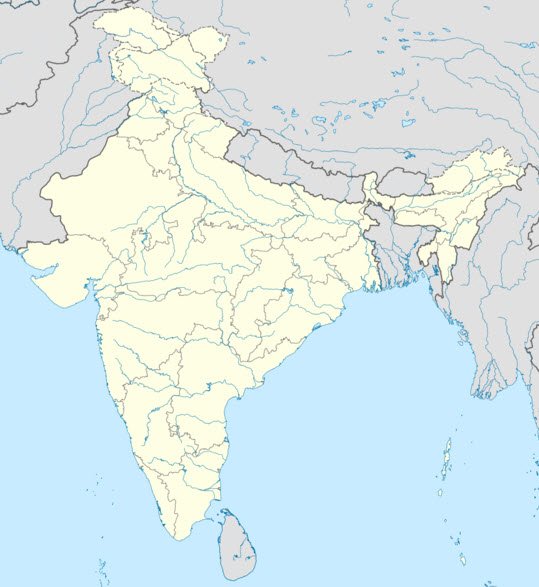
If you are searching for the alcohol age limit in India 2026, there is one important point to understand first: India does not have one single minimum drinking age that applies everywhere. Alcohol is regulated mainly through state and Union Territory excise and prohibition laws, so the legal age can be 18, 21, 23 or 25 depending on the jurisdiction, while some states have prohibition frameworks that restrict ordinary alcohol sales altogether. A nationwide reference report lists these different thresholds, and current state excise rules should always be checked before relying on an age number. Read the state-wise reference table.
That also means the phrase “legal drinking age” can be misleading if it is treated as one universal rule. In some places, the relevant rule is expressed through the age at which liquor can be sold to a person; in others, the excise framework and permits create additional conditions. For anyone checking eligibility by date of birth, the safest approach is to identify the state or Union Territory first and then verify the current local rule.
Alcohol Age Limit in India 2026: Quick Answer
| Common threshold | Examples from the current reference table | Important note |
|---|---|---|
| 18 years | Goa, Himachal Pradesh, Meghalaya, Rajasthan, Sikkim | The threshold is jurisdiction-specific and should be checked against the applicable excise rule. |
| 21 years | Andhra Pradesh, Assam, Jharkhand, Karnataka, Madhya Pradesh, Odisha, Tamil Nadu, Telangana, Uttar Pradesh, West Bengal | Assam’s current excise guidance expressly says sale to persons below 21 is prohibited. |
| 23 years | Kerala | The reference table lists a higher threshold than the 18- or 21-year jurisdictions. |
| 25 years | Haryana, Punjab, Chandigarh | Punjab licensing conditions have required that liquor not be sold to a person below 25. |
| Product-specific split | Maharashtra | The reference table lists 21 for beer/wine and 25 for hard liquor. |
| Prohibition / special regime | Bihar, Gujarat, Manipur, Mizoram, Nagaland | Do not treat these jurisdictions as ordinary “18/21/25” markets; prohibition and permit rules can change what is legally possible. |
This table is a practical reference, not a substitute for the latest state notification. The national reference source is useful for understanding the broad pattern, but alcohol rules can be amended by state authorities. Where a current local excise page or notification differs, the current primary source should control.
Why Is There No Single Legal Drinking Age in India?
Alcohol regulation in India is closely tied to state excise administration. That is why two people of the same age can face different rules depending on where they are buying or consuming alcohol. A 19-year-old, for example, may meet the commonly cited age threshold in one state but still be below the legal sale threshold in another.
The differences are not limited to the number itself. A state can also impose dry days, licensing restrictions, location-based conditions, permit requirements, or product-specific rules. Assam’s Excise Department, for example, states that alcohol cannot be sold to a person below 21 and separately publishes permitted sale hours and dry-day rules. See Assam Excise Department guidance.
For that reason, an age calculator can tell you whether a person has completed 18, 21, 23 or 25 years, but the calculation alone does not decide whether alcohol can legally be sold or supplied. The legal rule has to be matched to the correct jurisdiction and, where relevant, the type of alcohol and permit regime.
What Are the Most Common Alcohol Age Thresholds?
The easiest way to understand the Indian system is to think in thresholds rather than one nationwide rule. A current India alcohol market report prepared for the U.S. Department of Agriculture’s Foreign Agricultural Service lists state and Union Territory legal drinking ages ranging from 18 to 25, alongside jurisdictions with alcohol-sales bans. It also identifies Maharashtra as a product-specific example where the listed threshold differs for beer/wine and hard liquor. View the full reference report.
- 18 years: examples in the reference table include Goa, Himachal Pradesh, Meghalaya, Rajasthan and Sikkim.
- 21 years: many states use 21 as the listed threshold, including Assam, Karnataka, Jharkhand, Madhya Pradesh, Odisha and Tamil Nadu.
- 23 years: Kerala is listed at 23.
- 25 years: Haryana, Punjab and Chandigarh are listed at 25.
- Product-specific rules: Maharashtra is listed with a different threshold for beer/wine and hard liquor.
These examples show why simply memorising “18 is the legal drinking age in India” is unsafe. Eighteen is the threshold used in some jurisdictions, not a universal national answer.
What Happens in States With Prohibition or Special Permit Rules?
Bihar
Bihar is a particularly clear example of why the ordinary age-limit table is not enough. The Bihar Prohibition Excise & Registration Department states that complete prohibition was declared in the state and describes its role as enforcing, implementing and promoting complete prohibition under the Bihar Prohibition and Excise Act, 2016. In that setting, asking only “what is the drinking age?” misses the more important point: ordinary alcohol availability is governed by a prohibition framework rather than a normal 18-, 21- or 25-year retail model. Check the Bihar Prohibition and Excise Department.
Gujarat
Gujarat also operates under a prohibition framework, but it is important not to oversimplify that framework into “alcohol can never be legally served anywhere.” Gujarat’s official rules include licensed and permit-based arrangements in specified circumstances. For example, the government’s GIFT City order provides for an F.L.-III licence for serving liquor in an approved wine-and-dine area and defines the associated permit arrangements. See the Gujarat GIFT City order.
So, a person in Gujarat should not rely on an ordinary nationwide “legal drinking age” number as though the state followed a standard retail liquor model. The applicable permit, location and licensing conditions matter.
Other prohibition jurisdictions
The current reference table also identifies Manipur, Mizoram and Nagaland as alcohol-sales-ban jurisdictions. Because prohibition rules are especially sensitive to amendments, court decisions, exemptions and licensing changes, verify the current state excise position before treating a historic prohibition statement as a current rule.
Is the Alcohol Age Limit the Same as the Age of Majority?
No. The general age of majority in India is not a shortcut for every age-based legal rule. Reaching 18 changes many legal relationships, but different statutes and regulatory systems can set different age thresholds for particular activities.
This distinction is useful when people search for an “18+ rule” and assume it automatically means they can buy alcohol everywhere. It does not. Our Age of Majority in India guide explains the broader 18-year milestone separately from topic-specific age rules.
Does “Drinking Age” Mean Drinking, Buying or Selling?
These phrases are often used interchangeably online, but they can describe different legal questions. A state excise rule may expressly prohibit sale to someone below a stated age. Another rule may regulate possession, serving, licensing or consumption in a different way. A permit can create another layer of conditions.
- Buying: whether a licensed seller may legally sell the product to the customer.
- Selling: whether the seller is complying with the licence and excise conditions.
- Possession: whether possession is lawful under the applicable state prohibition or excise law.
- Consumption: whether the act of drinking is itself restricted in the relevant jurisdiction.
- Serving: whether a hotel, restaurant, club or other licensed venue may legally serve the drink under its licence and local rules.
Because these are not always identical legal questions, an article or social-media post that gives one age number without explaining the jurisdiction can be incomplete.
What Is the Rule for a Person Under 18?
There is an additional child-protection rule that should not be confused with state excise drinking-age tables. Section 77 of the Juvenile Justice (Care and Protection of Children) Act, 2015 addresses giving or causing to be given intoxicating liquor, narcotic drugs, psychotropic substances or tobacco products to a child, except on the order of a duly qualified medical practitioner. The statutory punishment can extend to seven years of rigorous imprisonment and a fine up to ₹1 lakh. The Government of India reiterated this provision in a 2025 Ministry of Health and Family Welfare reply. See the PIB explanation and read the India Code text.
This is important because it is not accurate to treat alcohol law as simply “18 years and above everywhere.” Even when a state uses a higher purchase age such as 21 or 25, the central child-protection framework separately treats giving intoxicating liquor to a child under 18 as an offence, subject to the statutory medical exception.
How Do I Check My Alcohol Eligibility by Date of Birth?
If your question is “Can I legally buy alcohol in my state on a specific date?”, you can break the problem into a few simple steps. The calculation is straightforward; the legal source is the part that needs care.
- Identify the exact state or Union Territory where the purchase or service will happen.
- Check the current excise, prohibition or licensing rule for that jurisdiction.
- Confirm whether the rule applies to the particular product you intend to buy.
- Calculate your completed age on the relevant date, not just your birth year.
- Check for permits, dry days, venue restrictions or other conditions.
- Where the wording is unclear, rely on the current official department or notification rather than an old blog post.
For an exact age calculation, you can use the site’s Exact Age Calculator by Date of Birth. It can help answer the arithmetic question, such as whether someone has completed 21 or 25 years on a given date. It does not replace the applicable state excise rule.
Examples: How the Age Calculation Works
| Date of birth | Reference date | Completed age | What the calculation tells you |
|---|---|---|---|
| 1 October 2008 | 1 October 2026 | 18 years | The person has completed 18 years on that date. |
| 2 October 2008 | 1 October 2026 | 17 years | The person has not yet completed 18 years. |
| 15 August 2005 | 1 October 2026 | 21 years, 1 month, 16 days | The person has completed 21 years, but the state’s legal rule still needs to be checked. |
| 20 December 2001 | 1 October 2026 | 24 years, 9 months, 11 days | The person has not yet completed 25 years. |
These examples show why an exact date matters. A person born in late December can still be below a 25-year threshold in October of the year they are approaching 25. For age-restricted products, a difference of a few weeks can change the result.
Common Mistakes People Make About Alcohol Age Limits
- Assuming India has one national drinking age: state and Union Territory rules differ.
- Using age 18 for every state: many jurisdictions listed in the current reference table use 21, 23 or 25.
- Ignoring prohibition laws: some jurisdictions have a prohibition or special permit framework instead of an ordinary retail model.
- Confusing drinking with buying: sale, possession, service and consumption can be regulated through different provisions.
- Checking only the birth year: exact date of birth is needed near the threshold.
- Relying on an old article: state excise rules can be amended, so a current official source is safer.
Frequently Asked Questions
Is the legal drinking age 18 in India?
No. Eighteen is the threshold listed for some jurisdictions, but many states use 21, 23 or 25, and some operate under prohibition or special permit systems. There is no single nationwide number that answers the question for every state.
Can a 19-year-old legally buy alcohol in India?
It depends on the jurisdiction and the applicable product and licensing rule. A 19-year-old may be above the listed threshold in a state using 18, but below the threshold in a state using 21, 23 or 25. The place where the purchase occurs matters.
Can a 21-year-old buy alcohol everywhere in India?
No. A 21-year-old is not automatically eligible everywhere. Haryana, Punjab and Chandigarh are listed at 25 in the current reference table, Kerala at 23, and prohibition jurisdictions have a different legal framework altogether.
What is the alcohol age limit in Assam?
Assam’s Excise Department states that sale of alcohol to persons below 21 years of age is prohibited. The department also publishes other excise rules such as sale hours and dry days, so the age rule should be read together with the wider state framework.
What is the alcohol age limit in Punjab?
The current reference table lists Punjab at 25 years, and a Punjab government Gazette licensing condition states that no liquor is to be sold to a person below 25 years of age. Because licensing terms can be amended, verify the latest Punjab Excise notification before relying on the rule for a current transaction.
Is alcohol legal in Gujarat?
Gujarat operates under a prohibition framework with permit and licensing arrangements. The state has also created a specific GIFT City regime for approved liquor service under licence. That means the general prohibition framework and the specific permit or venue rules both matter.
What is the rule in Bihar?
Bihar’s official Prohibition and Excise Department describes complete prohibition and enforcement under the Bihar Prohibition and Excise Act, 2016. It is therefore not appropriate to reduce Bihar to a normal “drinking age” number.
Does turning 18 automatically make alcohol legal?
No. Turning 18 means a person has completed the general age of majority, but alcohol eligibility depends on the jurisdiction and the applicable alcohol law. Separate child-protection provisions also apply to persons under 18.
Related Age Rules on Age Calculators
- Age of Majority in India 2026 — understand the broader legal milestone at 18.
- Tobacco Age Limit in India 2026 — see how a separate nationwide sale restriction works under COTPA.
- Exact Age Calculator by Date of Birth — calculate completed age on a specific date.
- Gujarat Driving Licence Age Limit 2026 — another example of a state-specific age rule.
Official and Primary References
- APEDA-hosted Alcoholic Beverages: India report — reference table for state and Union Territory legal drinking ages.
- Assam Commissionerate of Excise — current state excise information and the below-21 sale rule.
- Bihar Prohibition Excise & Registration Department — official prohibition framework.
- Gujarat GIFT City liquor licensing order — official example of the state’s special permit/licensing regime.
- Punjab government Gazette — licensing condition covering sale below 25.
- India Code: Juvenile Justice Act, 2015 — Section 77 child-protection provision.
Why the Exact Location Matters
Alcohol eligibility is tied to the place where the transaction or service is taking place, not simply to the applicant’s permanent address. A traveller can therefore encounter a different age threshold after crossing a state border. This is another reason a generic “India drinking age” answer can be incomplete. The practical question should be: What rule applies at this location, for this product, on this date?
Venue rules can add another layer. A licensed hotel, restaurant, club or other establishment may have conditions attached to its excise licence, and a prohibition jurisdiction may use a permit system rather than ordinary retail sale. Dry days and temporary government notifications can also affect availability even when the customer is old enough under the usual age threshold.
How to Read an Age-Limit Notification Correctly
When you find an official notification, look for the exact words used by the authority. Terms such as “sale,” “purchase,” “possession,” “consumption,” “serving,” “licensee,” and “permit” can point to different legal duties. Also check the effective date and whether a later amendment or government order changes the rule.
This is especially important near an age boundary. If your date of birth is close to the cutoff, calculate your completed age on the relevant transaction date. Do not round up because your next birthday is only a few days or weeks away. The date calculation and the legal source are two separate checks, and both need to be correct.
Final Takeaway
The alcohol age limit in India 2026 is not one nationwide number. Current reference material shows jurisdictions using 18, 21, 23 and 25, while Bihar and several other jurisdictions operate under prohibition or special regimes. Assam’s official excise guidance confirms a below-21 sale restriction, Punjab government licensing conditions use 25, and Gujarat has a prohibition framework with specific permit arrangements such as the GIFT City rules.
So the right way to check eligibility is simple: identify the state or Union Territory, confirm the current excise or prohibition rule, check whether the product has a separate threshold, and calculate your exact completed age from your date of birth. When the law or licensing condition is unclear, use the latest official notification rather than relying on a generic “drinking age in India” number.
Information checked against the cited government and primary-source material for this guide. Alcohol laws can change; this article is educational information and not a substitute for the latest state excise notification or legal advice.