
The Government’s apprenticeship system is intended to combine classroom or basic training with practical workplace learning. The current DGT portal and Skill India ecosystem provide links and information for ITI and apprenticeship-related services. The central apprenticeship portal is also used by candidates to search for opportunities and apply to participating establishments.
Apprenticeship vs Government Job: Why the Age Rule Is Different
An apprenticeship is not the same thing as a regular permanent government job. The apprenticeship framework is designed around structured training and workplace exposure, and the candidate enters an apprenticeship arrangement with an establishment. That is why the central age framework can look different from a recruitment examination with a fixed upper age ceiling.
For comparison, a government recruitment notification may set an upper age such as 27, 30 or 35 years, along with category-specific relaxations. Those recruitment rules should not automatically be applied to apprenticeship training. The exact apprenticeship notice remains important because an establishment can specify conditions for its own opportunity.
Apprenticeship Age Limit: Common Mistakes to Avoid
- Assuming every apprenticeship starts at 18: the general minimum is 14, with 18 for hazardous trades.
- Assuming there is no upper-age restriction anywhere: the central framework has no general upper age, but individual opportunities can have additional conditions.
- Checking only age: education, technical qualification and physical fitness also matter.
- Confusing apprenticeship with a regular job: the two have different legal and recruitment structures.
- Ignoring the exact trade: hazardous status and qualification requirements can change the applicable eligibility conditions.
- Using a random website’s cutoff: use the current official apprenticeship notice or portal for the opportunity you are applying to.
Official Sources for Apprenticeship Age Rules
For the most reliable 2026 information, start with the official government apprenticeship resources:
- DGT Apprenticeship Training — central overview of apprenticeship categories, trade training and the 14-year minimum for trade apprentices.
- DGT Apprenticeship FAQ — current FAQ material on eligibility, including the 14-year rule.
- Apprenticeship India — candidate registration and apprenticeship opportunities.
- Bharat Skills — DGT’s learning and skills resource for ITI students and trainers.
- Ministry of Skill Development and Entrepreneurship — ministry-level information on apprenticeship and skill-development programmes.
Frequently Asked Questions
What is the minimum age for apprenticeship in India in 2026?
The general minimum age is 14 years completed. Certain hazardous occupations or trades require the apprentice to be at least 18 years old.
What is the maximum age for apprenticeship in India?
The central apprenticeship framework does not specify a general upper age limit. Individual establishments, trades or apprenticeship notices can still impose additional eligibility conditions.
Can a 14-year-old become an apprentice?
A 14-year-old can meet the general minimum-age requirement, but must also satisfy the qualification, physical-fitness and trade-specific conditions. Hazardous trades require 18 years.
Is apprenticeship available after age 30?
The central framework does not prescribe a general upper age limit, so age 30 by itself is not a universal disqualification. The candidate must check the specific apprenticeship opportunity and its qualification and establishment-level conditions.
Is there an age limit for graduate apprentices?
The central framework does not prescribe a general upper age limit for graduate apprentices. The relevant degree, subject, establishment and opportunity-specific conditions still apply.
Where can I check apprenticeship vacancies?
Use the official Apprenticeship India portal and the relevant government or establishment notice. Do not rely on a general age article when the individual vacancy has its own conditions.
How the 14-Year Rule Works in Practice
The phrase 14 years completed is important. It is not the same as being in your 14th year. A candidate who is 13 years and 11 months old has not completed 14 years. A candidate who has reached the 14th birthday has crossed the general minimum, provided the particular apprenticeship does not require a higher threshold.
For example, a candidate born on 5 October 2012 completes 14 years on 5 October 2026. If an apprenticeship opportunity uses a date on or after that birthday for its age test, the candidate can satisfy the general minimum. If the opportunity has a different cutoff date or a higher trade-specific minimum, that wording controls the application.
What Documents Should Apprentices Keep Ready?
Age verification is normally only one part of the application. Depending on the establishment and apprenticeship category, candidates may need documents showing date of birth, education, technical qualification, identity and other eligibility details. ITI candidates may need their relevant trade certificate or marksheets, while diploma and graduate applicants may need the corresponding qualification documents.
- Date-of-birth proof or the document accepted by the opportunity.
- Educational marksheets or certificates.
- ITI, diploma, vocational or degree certificate, where applicable.
- Identity and registration details required by the apprenticeship portal.
- Category, disability or other certificates when claiming a benefit or reservation, where applicable.
- Any additional documents specifically listed by the participating establishment.
Does Apprenticeship Guarantee a Permanent Job?
No. Apprenticeship training is structured practical training and should not automatically be treated as a promise of permanent employment. The purpose is to build workplace skills and provide supervised practical exposure. Some establishments may recruit trained apprentices later, but any such employment depends on the employer’s separate recruitment process and the terms of the particular opportunity.
This distinction is useful when comparing an apprenticeship with a regular recruitment notification. A regular job notice may specify a fixed age range, selection stages and a final appointment. An apprenticeship opportunity focuses on training under the applicable apprenticeship framework, so the eligibility and outcome should be understood on those terms.
What Changed in 2026?
The core age rule remains the key point to remember in 2026: the general minimum is 14 years, with 18 years for hazardous trades. Current DGT information continues to describe apprenticeship as a combination of basic and practical training, and the official FAQ available in September 2026 continues to state that a person aged 14 or above who meets the required physical and educational standards can be eligible.
Because apprenticeship opportunities are published by different establishments and can use different qualifications, candidates should treat the central age rule as the starting point rather than the complete eligibility test. The individual vacancy or apprenticeship listing remains the final place to verify the applicable cutoff, qualification and document requirements.
A Simple Eligibility Checklist Before You Apply
- Step 1: Calculate your completed age from your date of birth.
- Step 2: Check whether the trade has a higher minimum because it is hazardous.
- Step 3: Match your education or technical qualification with the trade.
- Step 4: Check physical-fitness requirements and any other trade conditions.
- Step 5: Read the establishment’s current notice for its own eligibility rules.
- Step 6: Keep original certificates and accepted document copies ready.
- Step 7: Register and apply through the prescribed official portal.
Final Takeaway
The apprenticeship age limit 2026 is best remembered as 14 years for the general minimum and 18 years for hazardous trades. The central framework does not set a general maximum age, but an applicant must still meet the educational, technical, physical and opportunity-specific requirements.
If you are checking eligibility from your date of birth, first identify the exact trade and apprenticeship category, then read the current notice for its cutoff and additional conditions. Age is an important first check, but it is only one part of apprenticeship eligibility.
For related age-based eligibility topics, you can also read our guides on NIOS age limit 2026, DDU-GKY age limit 2026 and age of majority in India.
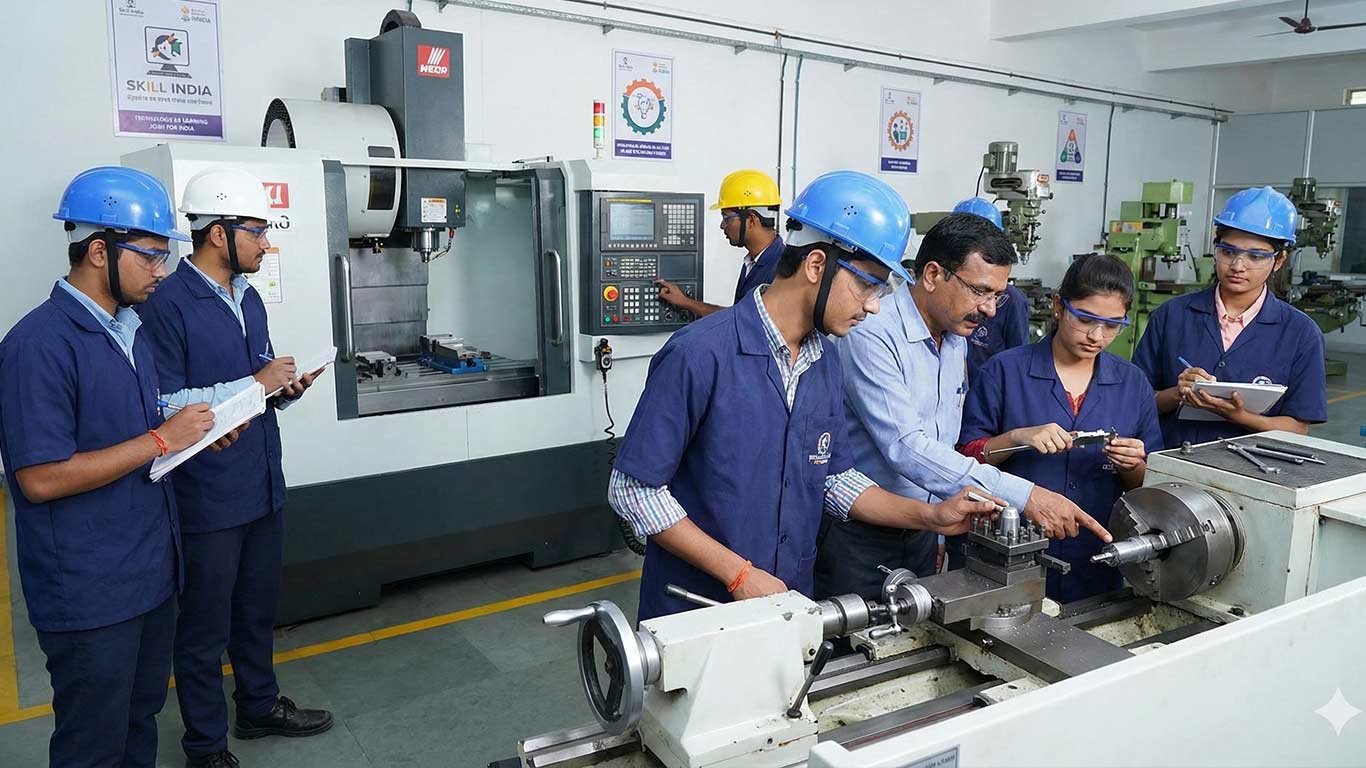
The official DGT description explains that apprenticeship training combines basic training with practical training and related instruction. Depending on the category and trade, the training period can vary substantially. For trade apprentices, DGT lists qualifications ranging from Class VIII to Class XII for different trades, while graduate and technician categories use higher educational qualifications.
How to Check Your Apprenticeship Age From Date of Birth
Age should be checked against the rule used by the particular apprenticeship opportunity. If the general minimum is 14, the candidate must have completed 14 years by the relevant date. For a hazardous trade, the applicable threshold is 18.
For example, suppose a candidate’s date of birth is 20 September 2012. The candidate completes 14 years on 20 September 2026. Before that date, the person has not yet completed the general 14-year minimum. From 20 September 2026 onward, the general age threshold is met, subject to the trade’s educational and other eligibility conditions.
For an 18-year hazardous-trade requirement, a candidate born on 20 September 2008 completes 18 years on 20 September 2026. Again, the exact notice should be checked for how it defines the relevant date or cutoff.
You can also use an age calculator to calculate completed years, months and days from your date of birth. For legal or recruitment applications, however, use the date-of-birth proof and cutoff wording stated in the official notice as the controlling rule.
Does an ITI Student Have to Be 18 for Apprenticeship?
No, not as a general rule. The general apprenticeship minimum is 14 years, and many trade apprenticeships are linked to school or ITI qualifications. An 18-year threshold applies where the particular trade or occupation falls under the hazardous category or where a specific opportunity independently requires 18.
This distinction is important because an individual apprentice recruitment notice can have its own age range even though the broader Apprenticeship Act framework has no general upper age limit. Always separate the central framework rule from the vacancy-specific rule.
How to Apply for Apprenticeship Training in 2026
- Confirm your age from your date-of-birth document.
- Identify the apprenticeship category and trade you want.
- Check the minimum educational or technical qualification.
- Confirm whether the trade is hazardous and therefore subject to the 18-year minimum.
- Register on the applicable apprenticeship portal.
- Complete your candidate profile and required verification details.
- Search for establishments and vacancies that match your qualification.
- Read the individual opportunity notice carefully for age, qualification, reservation and document conditions.
- Apply through the prescribed online route and complete the apprenticeship contract process if selected.
The Government’s apprenticeship system is intended to combine classroom or basic training with practical workplace learning. The current DGT portal and Skill India ecosystem provide links and information for ITI and apprenticeship-related services. The central apprenticeship portal is also used by candidates to search for opportunities and apply to participating establishments.
Apprenticeship vs Government Job: Why the Age Rule Is Different
An apprenticeship is not the same thing as a regular permanent government job. The apprenticeship framework is designed around structured training and workplace exposure, and the candidate enters an apprenticeship arrangement with an establishment. That is why the central age framework can look different from a recruitment examination with a fixed upper age ceiling.
For comparison, a government recruitment notification may set an upper age such as 27, 30 or 35 years, along with category-specific relaxations. Those recruitment rules should not automatically be applied to apprenticeship training. The exact apprenticeship notice remains important because an establishment can specify conditions for its own opportunity.
Apprenticeship Age Limit: Common Mistakes to Avoid
- Assuming every apprenticeship starts at 18: the general minimum is 14, with 18 for hazardous trades.
- Assuming there is no upper-age restriction anywhere: the central framework has no general upper age, but individual opportunities can have additional conditions.
- Checking only age: education, technical qualification and physical fitness also matter.
- Confusing apprenticeship with a regular job: the two have different legal and recruitment structures.
- Ignoring the exact trade: hazardous status and qualification requirements can change the applicable eligibility conditions.
- Using a random website’s cutoff: use the current official apprenticeship notice or portal for the opportunity you are applying to.
Official Sources for Apprenticeship Age Rules
For the most reliable 2026 information, start with the official government apprenticeship resources:
- DGT Apprenticeship Training — central overview of apprenticeship categories, trade training and the 14-year minimum for trade apprentices.
- DGT Apprenticeship FAQ — current FAQ material on eligibility, including the 14-year rule.
- Apprenticeship India — candidate registration and apprenticeship opportunities.
- Bharat Skills — DGT’s learning and skills resource for ITI students and trainers.
- Ministry of Skill Development and Entrepreneurship — ministry-level information on apprenticeship and skill-development programmes.
Frequently Asked Questions
What is the minimum age for apprenticeship in India in 2026?
The general minimum age is 14 years completed. Certain hazardous occupations or trades require the apprentice to be at least 18 years old.
What is the maximum age for apprenticeship in India?
The central apprenticeship framework does not specify a general upper age limit. Individual establishments, trades or apprenticeship notices can still impose additional eligibility conditions.
Can a 14-year-old become an apprentice?
A 14-year-old can meet the general minimum-age requirement, but must also satisfy the qualification, physical-fitness and trade-specific conditions. Hazardous trades require 18 years.
Is apprenticeship available after age 30?
The central framework does not prescribe a general upper age limit, so age 30 by itself is not a universal disqualification. The candidate must check the specific apprenticeship opportunity and its qualification and establishment-level conditions.
Is there an age limit for graduate apprentices?
The central framework does not prescribe a general upper age limit for graduate apprentices. The relevant degree, subject, establishment and opportunity-specific conditions still apply.
Where can I check apprenticeship vacancies?
Use the official Apprenticeship India portal and the relevant government or establishment notice. Do not rely on a general age article when the individual vacancy has its own conditions.
How the 14-Year Rule Works in Practice
The phrase 14 years completed is important. It is not the same as being in your 14th year. A candidate who is 13 years and 11 months old has not completed 14 years. A candidate who has reached the 14th birthday has crossed the general minimum, provided the particular apprenticeship does not require a higher threshold.
For example, a candidate born on 5 October 2012 completes 14 years on 5 October 2026. If an apprenticeship opportunity uses a date on or after that birthday for its age test, the candidate can satisfy the general minimum. If the opportunity has a different cutoff date or a higher trade-specific minimum, that wording controls the application.
What Documents Should Apprentices Keep Ready?
Age verification is normally only one part of the application. Depending on the establishment and apprenticeship category, candidates may need documents showing date of birth, education, technical qualification, identity and other eligibility details. ITI candidates may need their relevant trade certificate or marksheets, while diploma and graduate applicants may need the corresponding qualification documents.
- Date-of-birth proof or the document accepted by the opportunity.
- Educational marksheets or certificates.
- ITI, diploma, vocational or degree certificate, where applicable.
- Identity and registration details required by the apprenticeship portal.
- Category, disability or other certificates when claiming a benefit or reservation, where applicable.
- Any additional documents specifically listed by the participating establishment.
Does Apprenticeship Guarantee a Permanent Job?
No. Apprenticeship training is structured practical training and should not automatically be treated as a promise of permanent employment. The purpose is to build workplace skills and provide supervised practical exposure. Some establishments may recruit trained apprentices later, but any such employment depends on the employer’s separate recruitment process and the terms of the particular opportunity.
This distinction is useful when comparing an apprenticeship with a regular recruitment notification. A regular job notice may specify a fixed age range, selection stages and a final appointment. An apprenticeship opportunity focuses on training under the applicable apprenticeship framework, so the eligibility and outcome should be understood on those terms.
What Changed in 2026?
The core age rule remains the key point to remember in 2026: the general minimum is 14 years, with 18 years for hazardous trades. Current DGT information continues to describe apprenticeship as a combination of basic and practical training, and the official FAQ available in September 2026 continues to state that a person aged 14 or above who meets the required physical and educational standards can be eligible.
Because apprenticeship opportunities are published by different establishments and can use different qualifications, candidates should treat the central age rule as the starting point rather than the complete eligibility test. The individual vacancy or apprenticeship listing remains the final place to verify the applicable cutoff, qualification and document requirements.
A Simple Eligibility Checklist Before You Apply
- Step 1: Calculate your completed age from your date of birth.
- Step 2: Check whether the trade has a higher minimum because it is hazardous.
- Step 3: Match your education or technical qualification with the trade.
- Step 4: Check physical-fitness requirements and any other trade conditions.
- Step 5: Read the establishment’s current notice for its own eligibility rules.
- Step 6: Keep original certificates and accepted document copies ready.
- Step 7: Register and apply through the prescribed official portal.
Final Takeaway
The apprenticeship age limit 2026 is best remembered as 14 years for the general minimum and 18 years for hazardous trades. The central framework does not set a general maximum age, but an applicant must still meet the educational, technical, physical and opportunity-specific requirements.
If you are checking eligibility from your date of birth, first identify the exact trade and apprenticeship category, then read the current notice for its cutoff and additional conditions. Age is an important first check, but it is only one part of apprenticeship eligibility.
For related age-based eligibility topics, you can also read our guides on NIOS age limit 2026, DDU-GKY age limit 2026 and age of majority in India.
DGT identifies five broad categories of apprentices: Trade, Graduate, Technician, Technician (Vocational) and Optional Trade apprentices. The age rule should therefore be read together with the qualification route. A graduate apprentice, for example, cannot qualify merely because the applicant meets an age threshold; the required degree and other conditions still have to be satisfied.
Apprenticeship Eligibility Rules in 2026
- Age: normally 14 years completed; 18 years for hazardous trades or occupations.
- Education: the minimum qualification varies by trade and apprenticeship category.
- Physical fitness: the candidate must meet the applicable physical-fitness requirements.
- Trade requirements: some opportunities require a specific ITI trade, diploma, degree or vocational qualification.
- Portal registration: candidates generally register through the applicable apprenticeship system before applying to opportunities.
- Contract: apprenticeship training is governed by an apprenticeship contract between the apprentice and establishment.
- Opportunity-specific conditions: always read the individual establishment’s vacancy or apprenticeship notice for additional conditions.
The official DGT description explains that apprenticeship training combines basic training with practical training and related instruction. Depending on the category and trade, the training period can vary substantially. For trade apprentices, DGT lists qualifications ranging from Class VIII to Class XII for different trades, while graduate and technician categories use higher educational qualifications.
How to Check Your Apprenticeship Age From Date of Birth
Age should be checked against the rule used by the particular apprenticeship opportunity. If the general minimum is 14, the candidate must have completed 14 years by the relevant date. For a hazardous trade, the applicable threshold is 18.
For example, suppose a candidate’s date of birth is 20 September 2012. The candidate completes 14 years on 20 September 2026. Before that date, the person has not yet completed the general 14-year minimum. From 20 September 2026 onward, the general age threshold is met, subject to the trade’s educational and other eligibility conditions.
For an 18-year hazardous-trade requirement, a candidate born on 20 September 2008 completes 18 years on 20 September 2026. Again, the exact notice should be checked for how it defines the relevant date or cutoff.
You can also use an age calculator to calculate completed years, months and days from your date of birth. For legal or recruitment applications, however, use the date-of-birth proof and cutoff wording stated in the official notice as the controlling rule.
Does an ITI Student Have to Be 18 for Apprenticeship?
No, not as a general rule. The general apprenticeship minimum is 14 years, and many trade apprenticeships are linked to school or ITI qualifications. An 18-year threshold applies where the particular trade or occupation falls under the hazardous category or where a specific opportunity independently requires 18.
This distinction is important because an individual apprentice recruitment notice can have its own age range even though the broader Apprenticeship Act framework has no general upper age limit. Always separate the central framework rule from the vacancy-specific rule.
How to Apply for Apprenticeship Training in 2026
- Confirm your age from your date-of-birth document.
- Identify the apprenticeship category and trade you want.
- Check the minimum educational or technical qualification.
- Confirm whether the trade is hazardous and therefore subject to the 18-year minimum.
- Register on the applicable apprenticeship portal.
- Complete your candidate profile and required verification details.
- Search for establishments and vacancies that match your qualification.
- Read the individual opportunity notice carefully for age, qualification, reservation and document conditions.
- Apply through the prescribed online route and complete the apprenticeship contract process if selected.
The Government’s apprenticeship system is intended to combine classroom or basic training with practical workplace learning. The current DGT portal and Skill India ecosystem provide links and information for ITI and apprenticeship-related services. The central apprenticeship portal is also used by candidates to search for opportunities and apply to participating establishments.
Apprenticeship vs Government Job: Why the Age Rule Is Different
An apprenticeship is not the same thing as a regular permanent government job. The apprenticeship framework is designed around structured training and workplace exposure, and the candidate enters an apprenticeship arrangement with an establishment. That is why the central age framework can look different from a recruitment examination with a fixed upper age ceiling.
For comparison, a government recruitment notification may set an upper age such as 27, 30 or 35 years, along with category-specific relaxations. Those recruitment rules should not automatically be applied to apprenticeship training. The exact apprenticeship notice remains important because an establishment can specify conditions for its own opportunity.
Apprenticeship Age Limit: Common Mistakes to Avoid
- Assuming every apprenticeship starts at 18: the general minimum is 14, with 18 for hazardous trades.
- Assuming there is no upper-age restriction anywhere: the central framework has no general upper age, but individual opportunities can have additional conditions.
- Checking only age: education, technical qualification and physical fitness also matter.
- Confusing apprenticeship with a regular job: the two have different legal and recruitment structures.
- Ignoring the exact trade: hazardous status and qualification requirements can change the applicable eligibility conditions.
- Using a random website’s cutoff: use the current official apprenticeship notice or portal for the opportunity you are applying to.
Official Sources for Apprenticeship Age Rules
For the most reliable 2026 information, start with the official government apprenticeship resources:
- DGT Apprenticeship Training — central overview of apprenticeship categories, trade training and the 14-year minimum for trade apprentices.
- DGT Apprenticeship FAQ — current FAQ material on eligibility, including the 14-year rule.
- Apprenticeship India — candidate registration and apprenticeship opportunities.
- Bharat Skills — DGT’s learning and skills resource for ITI students and trainers.
- Ministry of Skill Development and Entrepreneurship — ministry-level information on apprenticeship and skill-development programmes.
Frequently Asked Questions
What is the minimum age for apprenticeship in India in 2026?
The general minimum age is 14 years completed. Certain hazardous occupations or trades require the apprentice to be at least 18 years old.
What is the maximum age for apprenticeship in India?
The central apprenticeship framework does not specify a general upper age limit. Individual establishments, trades or apprenticeship notices can still impose additional eligibility conditions.
Can a 14-year-old become an apprentice?
A 14-year-old can meet the general minimum-age requirement, but must also satisfy the qualification, physical-fitness and trade-specific conditions. Hazardous trades require 18 years.
Is apprenticeship available after age 30?
The central framework does not prescribe a general upper age limit, so age 30 by itself is not a universal disqualification. The candidate must check the specific apprenticeship opportunity and its qualification and establishment-level conditions.
Is there an age limit for graduate apprentices?
The central framework does not prescribe a general upper age limit for graduate apprentices. The relevant degree, subject, establishment and opportunity-specific conditions still apply.
Where can I check apprenticeship vacancies?
Use the official Apprenticeship India portal and the relevant government or establishment notice. Do not rely on a general age article when the individual vacancy has its own conditions.
How the 14-Year Rule Works in Practice
The phrase 14 years completed is important. It is not the same as being in your 14th year. A candidate who is 13 years and 11 months old has not completed 14 years. A candidate who has reached the 14th birthday has crossed the general minimum, provided the particular apprenticeship does not require a higher threshold.
For example, a candidate born on 5 October 2012 completes 14 years on 5 October 2026. If an apprenticeship opportunity uses a date on or after that birthday for its age test, the candidate can satisfy the general minimum. If the opportunity has a different cutoff date or a higher trade-specific minimum, that wording controls the application.
What Documents Should Apprentices Keep Ready?
Age verification is normally only one part of the application. Depending on the establishment and apprenticeship category, candidates may need documents showing date of birth, education, technical qualification, identity and other eligibility details. ITI candidates may need their relevant trade certificate or marksheets, while diploma and graduate applicants may need the corresponding qualification documents.
- Date-of-birth proof or the document accepted by the opportunity.
- Educational marksheets or certificates.
- ITI, diploma, vocational or degree certificate, where applicable.
- Identity and registration details required by the apprenticeship portal.
- Category, disability or other certificates when claiming a benefit or reservation, where applicable.
- Any additional documents specifically listed by the participating establishment.
Does Apprenticeship Guarantee a Permanent Job?
No. Apprenticeship training is structured practical training and should not automatically be treated as a promise of permanent employment. The purpose is to build workplace skills and provide supervised practical exposure. Some establishments may recruit trained apprentices later, but any such employment depends on the employer’s separate recruitment process and the terms of the particular opportunity.
This distinction is useful when comparing an apprenticeship with a regular recruitment notification. A regular job notice may specify a fixed age range, selection stages and a final appointment. An apprenticeship opportunity focuses on training under the applicable apprenticeship framework, so the eligibility and outcome should be understood on those terms.
What Changed in 2026?
The core age rule remains the key point to remember in 2026: the general minimum is 14 years, with 18 years for hazardous trades. Current DGT information continues to describe apprenticeship as a combination of basic and practical training, and the official FAQ available in September 2026 continues to state that a person aged 14 or above who meets the required physical and educational standards can be eligible.
Because apprenticeship opportunities are published by different establishments and can use different qualifications, candidates should treat the central age rule as the starting point rather than the complete eligibility test. The individual vacancy or apprenticeship listing remains the final place to verify the applicable cutoff, qualification and document requirements.
A Simple Eligibility Checklist Before You Apply
- Step 1: Calculate your completed age from your date of birth.
- Step 2: Check whether the trade has a higher minimum because it is hazardous.
- Step 3: Match your education or technical qualification with the trade.
- Step 4: Check physical-fitness requirements and any other trade conditions.
- Step 5: Read the establishment’s current notice for its own eligibility rules.
- Step 6: Keep original certificates and accepted document copies ready.
- Step 7: Register and apply through the prescribed official portal.
Final Takeaway
The apprenticeship age limit 2026 is best remembered as 14 years for the general minimum and 18 years for hazardous trades. The central framework does not set a general maximum age, but an applicant must still meet the educational, technical, physical and opportunity-specific requirements.
If you are checking eligibility from your date of birth, first identify the exact trade and apprenticeship category, then read the current notice for its cutoff and additional conditions. Age is an important first check, but it is only one part of apprenticeship eligibility.
For related age-based eligibility topics, you can also read our guides on NIOS age limit 2026, DDU-GKY age limit 2026 and age of majority in India.
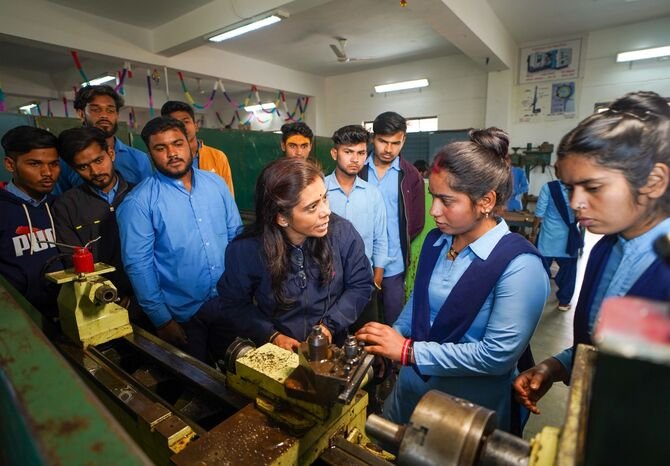
If you are checking the apprenticeship age limit 2026 in India, the central rule is straightforward: an apprentice generally must have completed 14 years of age. For apprenticeships in occupations or trades classified as hazardous under the Apprenticeship Rules, the minimum age is 18 years. Current Directorate General of Training (DGT) guidance also says the basic eligibility includes physical fitness and the minimum educational qualification prescribed for the particular trade.
There is an important point that is often missed in searches for an “apprenticeship maximum age”: the central apprenticeship framework does not specify a general upper age limit. However, that does not mean every apprenticeship vacancy is open to every older applicant. An establishment, trade, recruitment notice or programme can have additional conditions, and the candidate must still satisfy the educational, technical and other requirements for that opportunity.
Apprenticeship Age Limit 2026: Quick Answer
| Rule | Age requirement |
|---|---|
| General minimum age | 14 years completed |
| Hazardous occupations/trades | 18 years completed |
| General central upper age limit | No general upper age specified |
| Education | Depends on the trade or apprenticeship category |
| Physical fitness | Required as prescribed for apprenticeship |
The DGT’s current apprenticeship guidance states that the minimum age for trade apprentices is 14 years. DGT’s FAQ, updated on 10 September 2026, similarly describes an eligible apprentice as a person who is 14 years or above and meets the applicable physical and educational standards. The Ministry of Skill Development and Entrepreneurship has also stated that the Apprenticeship Act framework does not prescribe a general upper age, while certain hazardous trades require an 18-year minimum.
What Is the Minimum Age for Apprenticeship in India?
The normal minimum age is 14 years completed. In other words, a person who has not yet completed 14 cannot ordinarily be engaged as an apprentice under the general rule. Once the candidate has completed 14, age becomes only one part of the eligibility check.
The exact educational requirement depends on the trade. DGT describes trade-apprentice qualifications as varying from Class VIII to Class XII, while other apprenticeship categories are linked to ITI, diploma, vocational or graduate qualifications. Therefore, being 14 years old does not by itself make a candidate eligible for every apprenticeship opportunity.
Why Is the Minimum Age 18 for Hazardous Trades?
The apprenticeship framework makes a distinction for hazardous occupations or trades. The minimum age in those cases is 18 years. This is why a search result or recruitment notice may show 18 even though the general apprenticeship minimum is 14.
The Ministry of Skill Development and Entrepreneurship has described the central rule as follows in its apprenticeship-related material: an apprentice must be at least 14, while certain hazardous trades have an 18-year minimum. State apprenticeship guidance also repeats the 14-year general threshold and the 18-year requirement for hazardous industries.
Is There Any Maximum Age for Apprenticeship?
There is no general upper age limit specified in the central apprenticeship framework. This is different from many government recruitment examinations where the notification gives a fixed upper age such as 27, 30 or 35 years.
However, do not interpret “no general upper age” as “every apprenticeship is available at every age.” Individual opportunities can have their own eligibility conditions. An employer may recruit against a particular curriculum, educational qualification or establishment requirement, and a notification can contain additional restrictions. The safest approach is to check the exact apprenticeship opportunity rather than relying only on the general Act-level age rule.
Apprenticeship Age Limit by Type
| Apprenticeship type | How age works | Typical qualification route |
|---|---|---|
| Trade Apprentice | General minimum 14; 18 for hazardous trades | School qualification, ITI or trade-specific route |
| Graduate Apprentice | Central framework does not prescribe a general upper age | Degree in the relevant field |
| Technician Apprentice | Central framework does not prescribe a general upper age | Diploma or prescribed technical qualification |
| Technician (Vocational) Apprentice | Central framework does not prescribe a general upper age | 10+2 vocational qualification or prescribed equivalent |
| Optional Trade Apprentice | Check the applicable trade and employer conditions | Depends on the curriculum and establishment |
DGT identifies five broad categories of apprentices: Trade, Graduate, Technician, Technician (Vocational) and Optional Trade apprentices. The age rule should therefore be read together with the qualification route. A graduate apprentice, for example, cannot qualify merely because the applicant meets an age threshold; the required degree and other conditions still have to be satisfied.
Apprenticeship Eligibility Rules in 2026
- Age: normally 14 years completed; 18 years for hazardous trades or occupations.
- Education: the minimum qualification varies by trade and apprenticeship category.
- Physical fitness: the candidate must meet the applicable physical-fitness requirements.
- Trade requirements: some opportunities require a specific ITI trade, diploma, degree or vocational qualification.
- Portal registration: candidates generally register through the applicable apprenticeship system before applying to opportunities.
- Contract: apprenticeship training is governed by an apprenticeship contract between the apprentice and establishment.
- Opportunity-specific conditions: always read the individual establishment’s vacancy or apprenticeship notice for additional conditions.
The official DGT description explains that apprenticeship training combines basic training with practical training and related instruction. Depending on the category and trade, the training period can vary substantially. For trade apprentices, DGT lists qualifications ranging from Class VIII to Class XII for different trades, while graduate and technician categories use higher educational qualifications.
How to Check Your Apprenticeship Age From Date of Birth
Age should be checked against the rule used by the particular apprenticeship opportunity. If the general minimum is 14, the candidate must have completed 14 years by the relevant date. For a hazardous trade, the applicable threshold is 18.
For example, suppose a candidate’s date of birth is 20 September 2012. The candidate completes 14 years on 20 September 2026. Before that date, the person has not yet completed the general 14-year minimum. From 20 September 2026 onward, the general age threshold is met, subject to the trade’s educational and other eligibility conditions.
For an 18-year hazardous-trade requirement, a candidate born on 20 September 2008 completes 18 years on 20 September 2026. Again, the exact notice should be checked for how it defines the relevant date or cutoff.
You can also use an age calculator to calculate completed years, months and days from your date of birth. For legal or recruitment applications, however, use the date-of-birth proof and cutoff wording stated in the official notice as the controlling rule.
Does an ITI Student Have to Be 18 for Apprenticeship?
No, not as a general rule. The general apprenticeship minimum is 14 years, and many trade apprenticeships are linked to school or ITI qualifications. An 18-year threshold applies where the particular trade or occupation falls under the hazardous category or where a specific opportunity independently requires 18.
This distinction is important because an individual apprentice recruitment notice can have its own age range even though the broader Apprenticeship Act framework has no general upper age limit. Always separate the central framework rule from the vacancy-specific rule.
How to Apply for Apprenticeship Training in 2026
- Confirm your age from your date-of-birth document.
- Identify the apprenticeship category and trade you want.
- Check the minimum educational or technical qualification.
- Confirm whether the trade is hazardous and therefore subject to the 18-year minimum.
- Register on the applicable apprenticeship portal.
- Complete your candidate profile and required verification details.
- Search for establishments and vacancies that match your qualification.
- Read the individual opportunity notice carefully for age, qualification, reservation and document conditions.
- Apply through the prescribed online route and complete the apprenticeship contract process if selected.
The Government’s apprenticeship system is intended to combine classroom or basic training with practical workplace learning. The current DGT portal and Skill India ecosystem provide links and information for ITI and apprenticeship-related services. The central apprenticeship portal is also used by candidates to search for opportunities and apply to participating establishments.
Apprenticeship vs Government Job: Why the Age Rule Is Different
An apprenticeship is not the same thing as a regular permanent government job. The apprenticeship framework is designed around structured training and workplace exposure, and the candidate enters an apprenticeship arrangement with an establishment. That is why the central age framework can look different from a recruitment examination with a fixed upper age ceiling.
For comparison, a government recruitment notification may set an upper age such as 27, 30 or 35 years, along with category-specific relaxations. Those recruitment rules should not automatically be applied to apprenticeship training. The exact apprenticeship notice remains important because an establishment can specify conditions for its own opportunity.
Apprenticeship Age Limit: Common Mistakes to Avoid
- Assuming every apprenticeship starts at 18: the general minimum is 14, with 18 for hazardous trades.
- Assuming there is no upper-age restriction anywhere: the central framework has no general upper age, but individual opportunities can have additional conditions.
- Checking only age: education, technical qualification and physical fitness also matter.
- Confusing apprenticeship with a regular job: the two have different legal and recruitment structures.
- Ignoring the exact trade: hazardous status and qualification requirements can change the applicable eligibility conditions.
- Using a random website’s cutoff: use the current official apprenticeship notice or portal for the opportunity you are applying to.
Official Sources for Apprenticeship Age Rules
For the most reliable 2026 information, start with the official government apprenticeship resources:
- DGT Apprenticeship Training — central overview of apprenticeship categories, trade training and the 14-year minimum for trade apprentices.
- DGT Apprenticeship FAQ — current FAQ material on eligibility, including the 14-year rule.
- Apprenticeship India — candidate registration and apprenticeship opportunities.
- Bharat Skills — DGT’s learning and skills resource for ITI students and trainers.
- Ministry of Skill Development and Entrepreneurship — ministry-level information on apprenticeship and skill-development programmes.
Frequently Asked Questions
What is the minimum age for apprenticeship in India in 2026?
The general minimum age is 14 years completed. Certain hazardous occupations or trades require the apprentice to be at least 18 years old.
What is the maximum age for apprenticeship in India?
The central apprenticeship framework does not specify a general upper age limit. Individual establishments, trades or apprenticeship notices can still impose additional eligibility conditions.
Can a 14-year-old become an apprentice?
A 14-year-old can meet the general minimum-age requirement, but must also satisfy the qualification, physical-fitness and trade-specific conditions. Hazardous trades require 18 years.
Is apprenticeship available after age 30?
The central framework does not prescribe a general upper age limit, so age 30 by itself is not a universal disqualification. The candidate must check the specific apprenticeship opportunity and its qualification and establishment-level conditions.
Is there an age limit for graduate apprentices?
The central framework does not prescribe a general upper age limit for graduate apprentices. The relevant degree, subject, establishment and opportunity-specific conditions still apply.
Where can I check apprenticeship vacancies?
Use the official Apprenticeship India portal and the relevant government or establishment notice. Do not rely on a general age article when the individual vacancy has its own conditions.
How the 14-Year Rule Works in Practice
The phrase 14 years completed is important. It is not the same as being in your 14th year. A candidate who is 13 years and 11 months old has not completed 14 years. A candidate who has reached the 14th birthday has crossed the general minimum, provided the particular apprenticeship does not require a higher threshold.
For example, a candidate born on 5 October 2012 completes 14 years on 5 October 2026. If an apprenticeship opportunity uses a date on or after that birthday for its age test, the candidate can satisfy the general minimum. If the opportunity has a different cutoff date or a higher trade-specific minimum, that wording controls the application.
What Documents Should Apprentices Keep Ready?
Age verification is normally only one part of the application. Depending on the establishment and apprenticeship category, candidates may need documents showing date of birth, education, technical qualification, identity and other eligibility details. ITI candidates may need their relevant trade certificate or marksheets, while diploma and graduate applicants may need the corresponding qualification documents.
- Date-of-birth proof or the document accepted by the opportunity.
- Educational marksheets or certificates.
- ITI, diploma, vocational or degree certificate, where applicable.
- Identity and registration details required by the apprenticeship portal.
- Category, disability or other certificates when claiming a benefit or reservation, where applicable.
- Any additional documents specifically listed by the participating establishment.
Does Apprenticeship Guarantee a Permanent Job?
No. Apprenticeship training is structured practical training and should not automatically be treated as a promise of permanent employment. The purpose is to build workplace skills and provide supervised practical exposure. Some establishments may recruit trained apprentices later, but any such employment depends on the employer’s separate recruitment process and the terms of the particular opportunity.
This distinction is useful when comparing an apprenticeship with a regular recruitment notification. A regular job notice may specify a fixed age range, selection stages and a final appointment. An apprenticeship opportunity focuses on training under the applicable apprenticeship framework, so the eligibility and outcome should be understood on those terms.
What Changed in 2026?
The core age rule remains the key point to remember in 2026: the general minimum is 14 years, with 18 years for hazardous trades. Current DGT information continues to describe apprenticeship as a combination of basic and practical training, and the official FAQ available in September 2026 continues to state that a person aged 14 or above who meets the required physical and educational standards can be eligible.
Because apprenticeship opportunities are published by different establishments and can use different qualifications, candidates should treat the central age rule as the starting point rather than the complete eligibility test. The individual vacancy or apprenticeship listing remains the final place to verify the applicable cutoff, qualification and document requirements.
A Simple Eligibility Checklist Before You Apply
- Step 1: Calculate your completed age from your date of birth.
- Step 2: Check whether the trade has a higher minimum because it is hazardous.
- Step 3: Match your education or technical qualification with the trade.
- Step 4: Check physical-fitness requirements and any other trade conditions.
- Step 5: Read the establishment’s current notice for its own eligibility rules.
- Step 6: Keep original certificates and accepted document copies ready.
- Step 7: Register and apply through the prescribed official portal.
Final Takeaway
The apprenticeship age limit 2026 is best remembered as 14 years for the general minimum and 18 years for hazardous trades. The central framework does not set a general maximum age, but an applicant must still meet the educational, technical, physical and opportunity-specific requirements.
If you are checking eligibility from your date of birth, first identify the exact trade and apprenticeship category, then read the current notice for its cutoff and additional conditions. Age is an important first check, but it is only one part of apprenticeship eligibility.
For related age-based eligibility topics, you can also read our guides on NIOS age limit 2026, DDU-GKY age limit 2026 and age of majority in India.