If you are searching for the PM Jan Dhan Yojana age limit 2026, there is an important distinction between the age for holding or opening a bank account and the age rules for specific PMJDY benefits such as overdraft. Official PMJDY financial-literacy material says a minor above 10 years can open a savings bank account in a bank. At the same time, the Department of Financial Services says the scheme’s expanded focus is on opening accounts for every unbanked adult. The overdraft facility has its own eligibility conditions and is not available simply because someone has a PMJDY account.
PM Jan Dhan Yojana Age Limit 2026 at a Glance
| Question | 2026 rule |
|---|---|
| Can a minor have a bank account? | Yes. Official PMJDY financial-literacy material says a minor above 10 years can open a savings bank account. |
| Is there a simple 18-year minimum for the PMJDY account itself? | No. The official material supports an account route for minors above 10, so 18 is not the universal account-opening age. |
| Who is the current PMJDY expansion focused on? | Unbanked adults, following the shift from “every household” to “every unbanked adult”. |
| PMJDY overdraft age | The revised overdraft age range is 18–65, subject to the separate eligibility conditions. |
| Minimum balance | There is no minimum-balance requirement for a PMJDY account. |
| RuPay card | A RuPay debit card is provided to PMJDY account holders, subject to the applicable account and card rules. |
The most common mistake is to quote “18 years” as the PMJDY age limit without saying what benefit is being discussed. For the account itself, official PMJDY material records a minor-above-10 route. For overdraft, the government revised the eligible age range to 18–65. Therefore, your exact age should be checked against the particular PMJDY facility you want to use.
What Is the PM Jan Dhan Yojana?
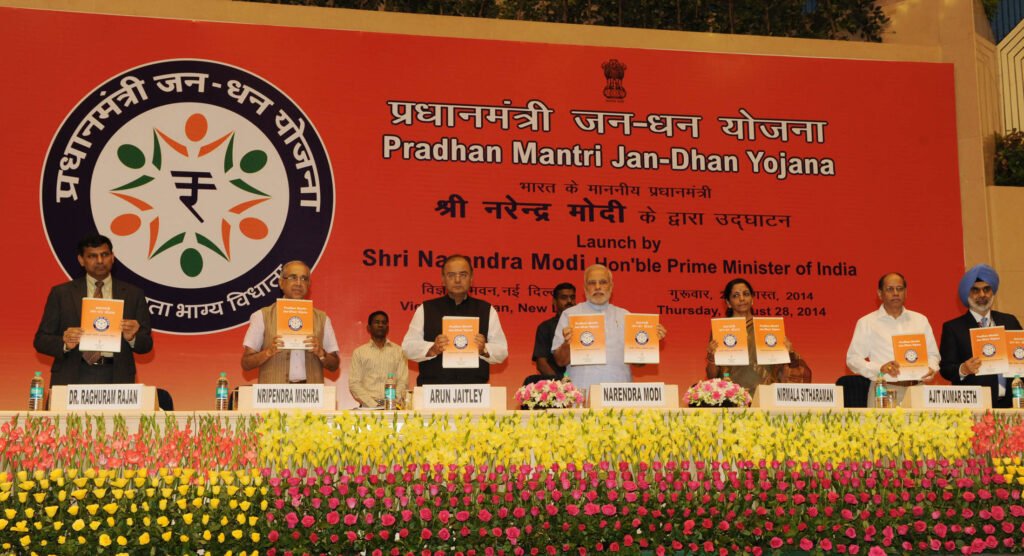
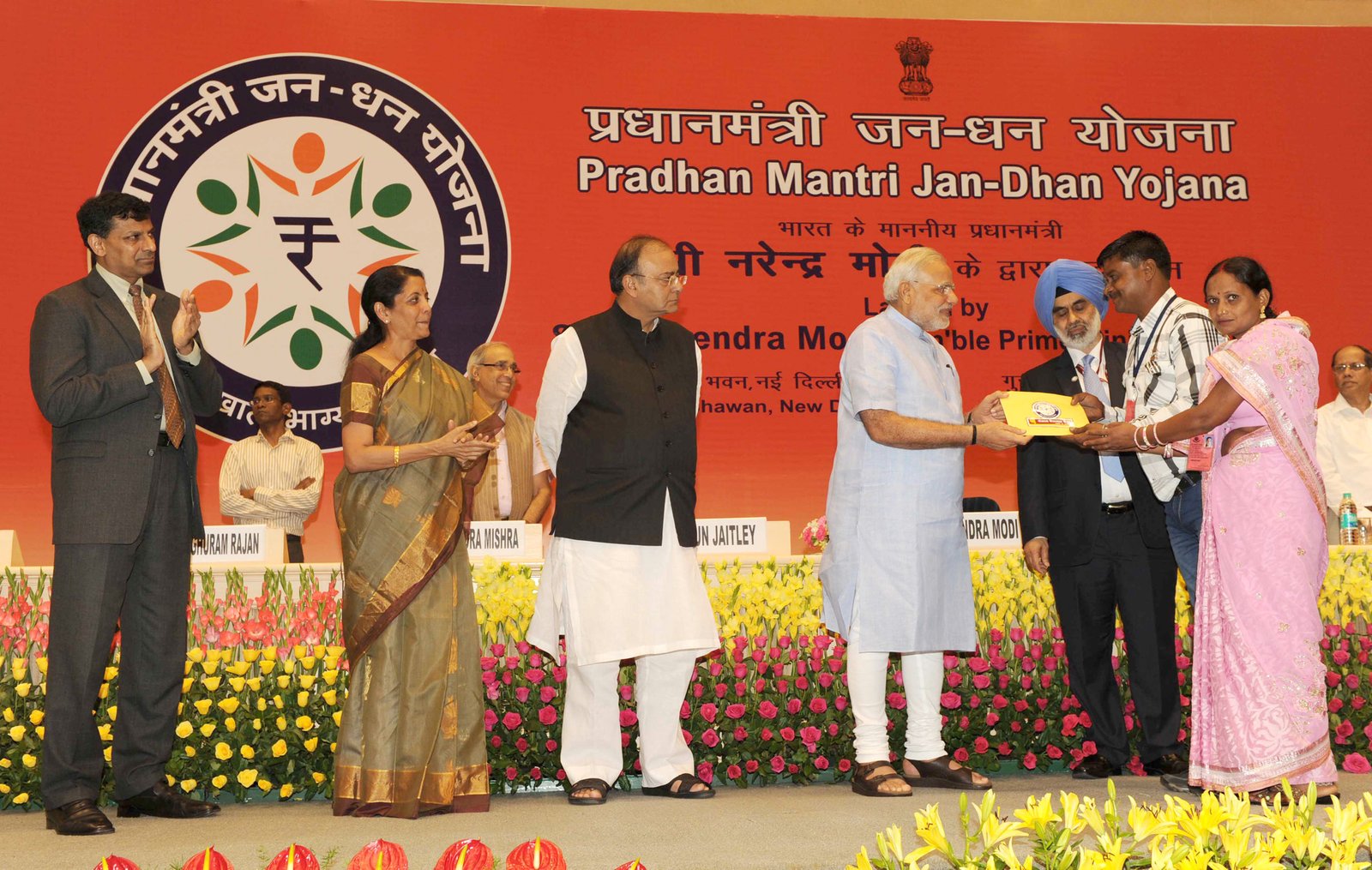
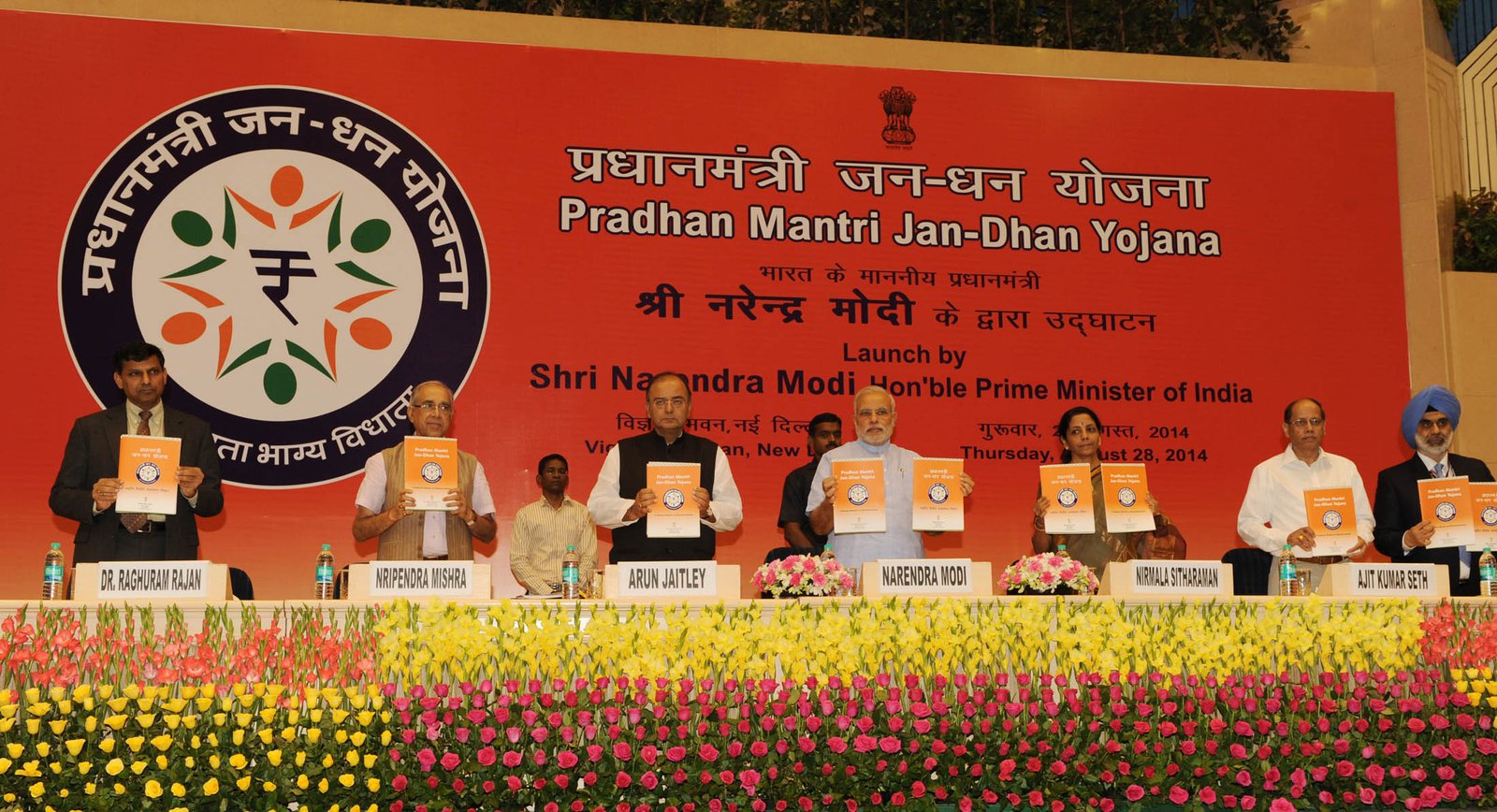
Pradhan Mantri Jan-Dhan Yojana (PMJDY) is the Government of India’s National Mission for Financial Inclusion. Its purpose is to expand access to basic banking and related financial services, including savings and deposit accounts, remittances, credit, insurance and pension services.
The current PMJDY scheme page says a Basic Savings Bank Deposit account can be opened at a bank branch or Business Correspondent (Bank Mitra) outlet by a person who does not have another account. The account does not require a minimum balance. The scheme also provides access to a RuPay debit card and, for eligible account holders, an overdraft facility of up to ₹10,000.
PMJDY Minimum Age: Can a 10-Year-Old Open an Account?
Yes, official PMJDY financial-literacy material says a minor above 10 years can open a savings bank account. This is the key source for the minor-age question. It means a blanket statement that every PMJDY account applicant must be 18 or older is too broad.
However, age is only one part of the account-opening process. The bank will apply its account-opening, KYC and minor-account procedures. A minor’s account operation rules can also differ from those for an adult. Before visiting a branch, it is sensible to ask the bank whether it is opening the account directly in the minor’s name under its current policy or whether a guardian-operated arrangement is required for the particular case.
Why Do Some Sources Say the PMJDY Age Limit Is 18?
The confusion usually comes from mixing the age for the PMJDY account with the age for the overdraft facility. The Government’s continuation document states that the age limit for availing the overdraft facility was revised from 18–60 years to 18–65 years.
So, if a person asks, “Can someone below 18 have a PMJDY-linked bank account?”, the answer can be yes under the official minor-account material. If the question is, “Can a 15-year-old qualify for the PMJDY overdraft?”, the overdraft’s 18-year minimum becomes relevant. These are different questions and should not be combined into one age limit.
PMJDY Overdraft Age Limit: 18 to 65 Years
The revised PMJDY framework places the age range for the overdraft facility at 18 to 65 years, subject to the facility’s other conditions. The continuation document also states that the overdraft limit was raised from ₹5,000 to ₹10,000 and that no conditions are attached for overdraft up to ₹2,000 under the revised framework.
This does not mean every 18–65-year-old account holder automatically receives ₹10,000. The PMJDY scheme page describes the overdraft as available to eligible account holders. Banks can apply the account conduct and other conditions specified for the facility.
PMJDY Eligibility Rules in 2026
Age is not the only eligibility check. The current official PMJDY material describes the scheme around access to a basic bank account for people who are unbanked or do not have another account. The expanded scheme focus is specifically on every unbanked adult, although the official financial-literacy material also records the minor-above-10 account route.
- Banking status: the PMJDY scheme is designed to bring unbanked people into formal banking.
- Account type: the scheme provides a basic savings bank deposit account.
- Minimum balance: there is no minimum-balance requirement for PMJDY accounts.
- Access point: an account can be opened through a participating bank branch or Business Correspondent/Bank Mitra outlet.
- Documents: KYC and officially accepted identity/address documents are used according to the applicable account-opening rules.
- Additional benefits: RuPay debit-card access, DBT connectivity and eligibility for linked social-security schemes are part of the PMJDY framework, subject to each linked scheme’s conditions.
Documents Required for a PMJDY Account
The official PMJDY website’s account-opening information says that where Aadhaar or an Aadhaar number is available, no other document is required under the stated PMJDY document guidance, while a change of address can be handled through self-certification of the current address. Where Aadhaar is not available, the PMJDY material lists officially valid documents such as a voter identity card, driving licence, PAN card, passport or NREGA card, subject to the applicable KYC rules.
For a minor account, the bank may require additional guardian or minor-account documentation depending on how the account is being opened and operated. Therefore, carry the minor’s DOB/identity proof and the guardian’s KYC documents when the bank asks for a guardian-assisted account.
PMJDY Benefits in 2026
A PMJDY account is more than a zero-balance savings account. The current official scheme page lists several financial-inclusion features.
| Feature | Official PMJDY position |
|---|---|
| Basic account | Basic Savings Bank Deposit account for eligible unbanked persons. |
| Minimum balance | No minimum balance requirement. |
| Interest | Interest is earned on deposits according to the bank’s applicable savings-account terms. |
| RuPay debit card | Provided to PMJDY account holders under the scheme. |
| Accident cover | ₹2 lakh for new PMJDY accounts opened after 28 August 2018, with the applicable RuPay-card conditions. |
| Overdraft | Up to ₹10,000 for eligible account holders, with the separate age and account-conduct conditions. |
| DBT | PMJDY accounts can receive eligible Direct Benefit Transfers. |
PMJDY Age Calculation Examples
When age matters, calculate it from the applicant’s date of birth rather than relying only on the birth year. For example, a person who has already crossed the 18th birthday can satisfy the age threshold relevant to the overdraft facility, subject to the other conditions. A minor who is above 10 can fall within the minor savings-account route described in the PMJDY financial-literacy material.
| Applicant age | What the PMJDY rules indicate |
|---|---|
| Below 10 | The cited PMJDY financial-literacy material does not establish the above-10 self-opening route for this age; ask the bank about its minor/guardian account process. |
| 10+ minor | Official PMJDY financial-literacy material says a minor above 10 can open a savings bank account. |
| 18–65 | This is the stated age range for the revised PMJDY overdraft facility, subject to eligibility conditions. |
| Above 65 | The account itself is not described by the cited material as ending at 65; the 65 ceiling discussed here is for the overdraft facility. |
PMJDY and Age 18: What Changes?
Turning 18 is important because the person becomes an adult for many legal and banking purposes, and the PMJDY overdraft’s age range starts at 18. But turning 18 does not mean a person must immediately replace an existing minor account with a PMJDY account. The bank will follow its procedures for updating the customer’s status, KYC and account-operation rights.
For a broader explanation of what changes legally at 18, see our guide to the age of majority in India.
PMJDY vs a Regular Savings Account
PMJDY is a financial-inclusion framework, while an ordinary savings account is a broader banking product category. A person who already has another bank account may not meet the PMJDY account-opening condition described on the official scheme page. The purpose is to bring people who are outside formal banking into a basic account and connect them with other financial services.
If your main question is about the age at which a child can have a bank account generally, our Bank Account Age Limit in India guide covers the wider minor-account rules and the transition at age 18.
How to Open a PMJDY Account
- Check whether you are an unbanked person or otherwise meet the PMJDY account-opening conditions.
- Confirm whether the account is being opened for an adult or a minor and ask the bank about its current minor-account procedure.
- Carry Aadhaar or another accepted officially valid document as applicable.
- Visit a participating bank branch or Business Correspondent/Bank Mitra outlet.
- Complete the account-opening and KYC process.
- Ask the bank about the RuPay card, DBT linkage and other facilities available on the account.
- If you want an overdraft, check the separate eligibility and account-conduct requirements rather than assuming it is automatic.
Common PMJDY Age-Limit Mistakes
- Mistake 1: Saying the minimum age is always 18. Official PMJDY financial-literacy material records an above-10 minor account route.
- Mistake 2: Applying the 18–65 overdraft rule to the account itself. That age range relates to the overdraft facility.
- Mistake 3: Assuming ₹10,000 overdraft is automatic. The official scheme describes it as available to eligible account holders.
- Mistake 4: Ignoring KYC. Age alone does not complete the account-opening process.
- Mistake 5: Treating linked insurance or pension schemes as automatic. PMJDY accounts can provide access to linked schemes, but each scheme has its own eligibility rules.
Frequently Asked Questions
What is the PM Jan Dhan Yojana age limit in 2026?
There is not one single age limit for every PMJDY feature. Official PMJDY financial-literacy material says a minor above 10 years can open a savings bank account, while the overdraft facility has a revised age range of 18–65 years, subject to other conditions.
Can a 10-year-old open a PMJDY account?
The official PMJDY financial-literacy material says a minor above the age of 10 can open a savings bank account. The bank’s current minor-account procedure and KYC requirements still apply.
Is PMJDY only for adults?
No. The official material records a minor-above-10 account route. Separately, the expanded PMJDY mission focuses on opening accounts for every unbanked adult.
What is the PMJDY overdraft age limit?
The revised PMJDY continuation framework changed the overdraft age range to 18–65 years. Other eligibility and account-conduct conditions also apply.
Is there a minimum balance in a PMJDY account?
No. The current official PMJDY scheme page states that there is no requirement to maintain a minimum balance in PMJDY accounts.
Can PMJDY accounts receive government benefits?
Yes. The official scheme page says PMJDY accounts are eligible for Direct Benefit Transfer and can be used for access to linked social-security schemes, subject to each scheme’s own eligibility conditions.
Official PMJDY Sources
- PMJDY official scheme details — Department of Financial Services
- PMJDY financial-literacy workbook — minor above 10 account rule
- PMJDY continuation document — overdraft age and revised benefits
- PMJDY progress report — current account statistics
- Department of Financial Services — PMJDY overview
Current PMJDY Scale in 2026
The PMJDY programme remains a large national financial-inclusion network. The official PMJDY progress report records 59.21 crore beneficiaries as of 2 September 2026, with deposits of about ₹3.17 lakh crore and more than 41 crore RuPay debit cards issued. These figures are programme-wide statistics and do not change the age rules for individual account holders, but they show why the distinction between account eligibility and benefit-specific eligibility matters when checking current information.
PMJDY Account, RuPay Card and Overdraft Are Different Checks
A useful way to understand the age rules is to treat PMJDY as a package of connected banking facilities rather than a single age-restricted product. The first question is whether the person can have the relevant basic bank account. The second is whether the person receives or qualifies for the RuPay card and its applicable insurance conditions. The third is whether the account holder meets the separate conditions for overdraft. The fourth is whether the person qualifies for a linked insurance or pension scheme such as PMJJBY, PMSBY or APY.
These linked benefits can have different age limits. For example, the official PMJDY site says the account can be used to access PMJJBY, PMSBY and APY subject to those schemes’ eligibility conditions. Therefore, having a PMJDY account should not be treated as automatic enrolment in every linked scheme.
DOB Examples for PMJDY Eligibility
If a bank asks you to prove age, use the date of birth on the accepted KYC or identity document and calculate the person’s completed age on the relevant date. A person born on 16 September 2008 turns 18 on 16 September 2026. That person reaches the starting age for the PMJDY overdraft age range on that date, but still has to satisfy the other overdraft conditions.
Similarly, a child born on 17 September 2015 is 10 years old on 17 September 2025 and is above 10 by September 2026. The official financial-literacy material’s above-10 minor account route can therefore be relevant, subject to the bank’s current minor-account process. These examples show why a year-only calculation can give the wrong answer when an age threshold depends on a birthday.
PMJDY Eligibility Checklist Before Visiting the Bank
- Confirm whether the applicant already has another bank account, because PMJDY is aimed at bringing unbanked people into formal banking.
- Write down the applicant’s exact date of birth and check the completed age on the relevant date.
- If the applicant is a minor, ask the bank in advance about its current minor-account and guardian documentation procedure.
- Carry Aadhaar or another accepted officially valid document as applicable.
- Ask whether a RuPay debit card will be issued and what conditions apply to the card’s insurance benefit.
- If overdraft is the goal, separately ask about the 18–65 age rule, account conduct and the bank’s eligibility checks.
- For PMJJBY, PMSBY or APY, verify the separate age and eligibility requirements of that linked scheme.
Final Takeaway
The PM Jan Dhan Yojana age limit 2026 depends on which PMJDY feature you mean. For the account itself, official PMJDY financial-literacy material says a minor above 10 can open a savings bank account. The broader scheme has shifted its expansion focus to every unbanked adult. For the overdraft facility, the revised age range is 18–65 years and separate eligibility conditions apply. So, when checking eligibility, first identify the facility you need, then verify your date of birth, KYC documents and the bank’s current account-opening procedure.