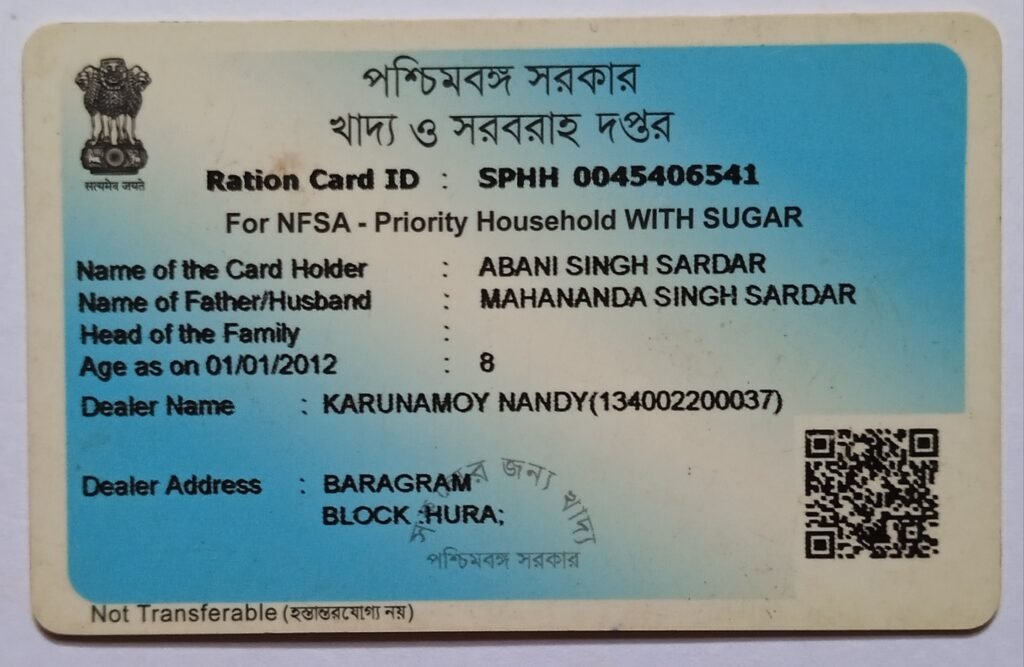
Wondering about the ration card age limit in India? The current central rule is specific: a person cannot hold a separate ration card before completing 18 years of age. That does not mean children cannot be included in a household ration card. In fact, the Public Distribution System (PDS) works around eligible households, and children can be household members even though they cannot hold a separate ration card in their own name before 18.
This distinction matters in 2026 because the Department of Food and Public Distribution amended the Targeted Public Distribution System (Control) Order in July 2025. The amendment added an explicit rule that no member is eligible to hold a separate ration card before completing 18 years. The same amendment also introduced related e-KYC provisions for young children. Read the Department of Food and Public Distribution order.
| Question | 2026 rule / practical position |
|---|---|
| Can a child have a ration card? | A child can be included as a member of an eligible household ration card. |
| Can a person under 18 hold a separate ration card? | No. The 2025 TPDS amendment says no member is eligible for a separate ration card before completing 18. |
| Who is normally the head of household under NFSA? | The eldest woman of the household who is 18 or above is the head for issuing the ration card under the NFSA framework. |
| Are eligibility rules identical in every state? | No. States and Union Territories identify eligible households using their applicable criteria within the national framework. |
| Can a child be added to an existing household card? | Household-member inclusion is different from issuing the child a separate ration card. The applicable state process governs additions and corrections. |
What Is the Ration Card Age Limit in India in 2026?
For a separate ration card, the key age threshold is 18 years. The July 2025 amendment to the TPDS (Control) Order, 2015 states that no member is eligible to hold a separate ration card before completing 18 years of age.
That is different from saying that a minor is excluded from the PDS. A ration card is generally issued for an eligible household, and a child may be recorded as a member of that household. The age rule concerns the minor holding a separate ration card, not the child being listed in the family or household card.
Simple rule: under 18, a person can be a member of an eligible household ration card, but cannot hold a separate ration card under the current central TPDS rule. At 18, the person can become eligible to hold a separate ration card, subject to the applicable state or UT eligibility conditions.
Can a Minor Have a Ration Card?
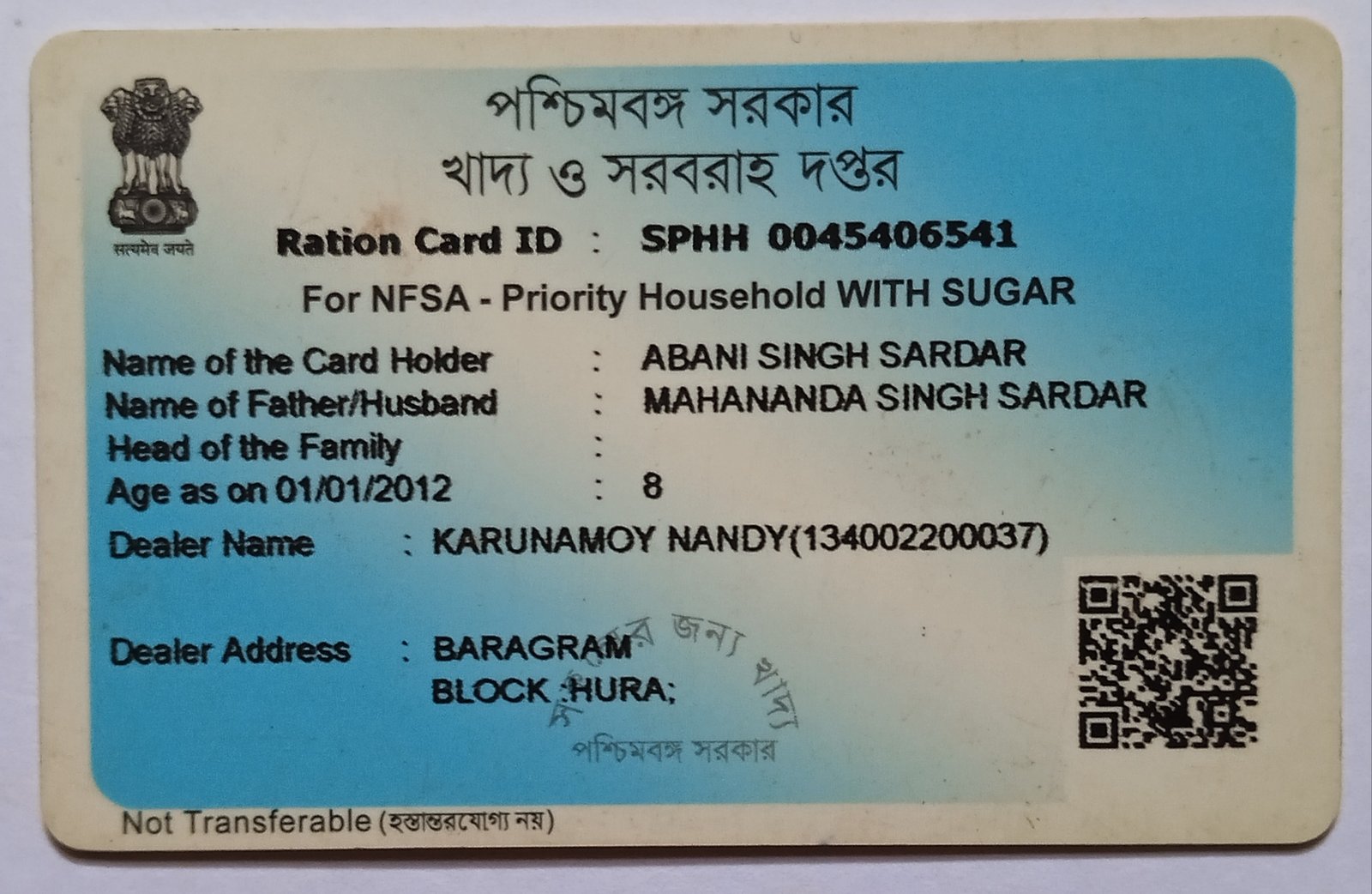
Yes, but the wording matters. A minor can be included on an eligible household ration card, while the minor cannot hold a separate ration card before turning 18 under the current central rule.
For example, suppose a family has two adults and a 12-year-old child and the household qualifies under the applicable PDS criteria. The child can be part of the household’s ration-card record. The family does not need to create a separate ration card in the child’s name simply because the child is a household member.
The National Food Security Act framework is household-oriented. The National Food Security portal explains that identification of eligible households is handled by States and Union Territories, and that the eldest woman of the household who is 18 years or above is the head of the household for issuing ration cards under the Act. See the National Food Security Act overview on NFSA.gov.in.
What Changed With the 2025 Ration Card Age Rule?
The important change came through the Targeted Public Distribution System (Control) Amendment Order, 2025, dated 22 July 2025. The amended order inserted clause 3(13a), which states that no member is eligible to hold a separate ration card before completing 18 years of age.
The amendment also says that State Governments must regularly review the list of eligible households, remove ineligible households where required, include eligible households, and carry out mandatory e-KYC every five years. It separately provides an Aadhaar/e-KYC rule for young children: for children below five, Aadhaar is to be recorded if available, and e-KYC is to be completed within one year after the child turns five.
| Age / status | What the 2025 amendment means |
|---|---|
| Under 5 | Aadhaar is recorded if available; e-KYC is to be completed within one year after the child reaches 5. |
| Under 18 | No separate ration card may be held by the member under the central TPDS rule. |
| 18 or older | The separate-card age restriction no longer applies, but state/UT eligibility conditions still matter. |
| Existing household | Household eligibility and member records remain subject to the State/UT process and applicable PDS rules. |
Who Is the Head of a Ration Card Household?
Under the NFSA framework, the eldest woman of the household who is 18 years or above is designated as the head of the household for the purpose of issuing ration cards. This is a household-head rule, not a rule saying that every household member must be 18.
Therefore, a household can contain adults and minors. The presence of children does not prevent the household from having a ration card if the household otherwise meets the relevant eligibility criteria.
If there is no woman aged 18 or above who fits the applicable household-head provision, the state authority applies the relevant procedure. Do not treat the household-head provision as a universal instruction for every possible family structure without checking the applicable state rules.
Can a Child Be Added to a Ration Card?
Adding a child to an eligible household’s ration-card record is a different question from issuing the child a separate ration card. State and UT food-supply authorities administer the actual household-member addition process, and the documents and online steps can differ.
- Keep the child’s name and date of birth accurate.
- Use the state or UT’s official ration-card service for a member addition or correction.
- Check whether the authority asks for a birth certificate or another approved document.
- Follow the applicable Aadhaar and e-KYC requirements for the child’s age.
- Do not submit a request for a separate ration card for a minor when the central TPDS rule bars that separate-card status.
The exact online workflow should be checked on the relevant State/UT food department portal because the national framework leaves household identification and several operational details to State Governments and Union Territory administrations. For related age-based document rules, see our Aadhaar Age Limit in India 2026 guide, Bank Account Age Limit in India 2026 guide, and PAN Card Age Limit in India 2026 guide.
Does Every State Have the Same Ration Card Eligibility Rules?
No. The national framework establishes important PDS and NFSA rules, but States and Union Territories identify eligible households using the criteria applicable to their jurisdiction. The NFSA portal specifically notes that the State Government is responsible for identifying eligible households within the coverage fixed for the State.
That means the 18-year separate-card rule is not the same thing as saying that every person who turns 18 automatically qualifies for a new ration card. Age removes the central under-18 restriction on holding a separate card; the applicant must still satisfy the relevant state or UT eligibility conditions.
| Issue | National position | State/UT role |
|---|---|---|
| Separate ration card before 18 | Not eligible under the amended central TPDS rule. | State/UT cannot treat a minor as eligible for a separate card contrary to the central rule. |
| Household eligibility | Operates within NFSA/TPDS framework. | State/UT identifies eligible households under its applicable criteria. |
| Adding a family member | Subject to applicable PDS records and requirements. | State/UT authority handles the operational process. |
| Online application steps | National framework does not provide one identical workflow for every state. | Check the relevant food/civil-supplies portal. |
What Happens When a Minor Turns 18?
Turning 18 removes the central age restriction on holding a separate ration card, but it does not automatically create a new ration card. The person still has to meet the applicable eligibility conditions and follow the State/UT procedure.
If the person is already a member of a household ration card, turning 18 does not by itself mean the existing household card becomes invalid. The appropriate action depends on the household’s circumstances and the state or UT’s rules for separate cards, household changes and beneficiary records.
- Before 18: the person may be included in the household record but cannot hold a separate ration card under the central TPDS rule.
- At 18: the separate-card age restriction ends.
- After 18: the person must still satisfy the relevant state/UT criteria if seeking a separate card.
- Existing household card: any change should be handled through the applicable state food-supply process.
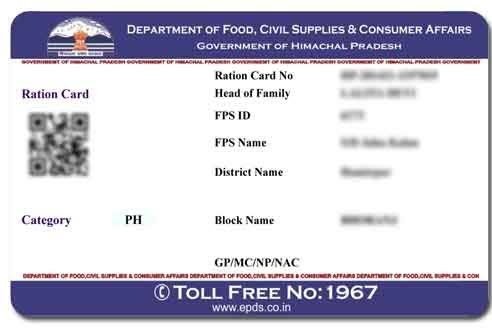
Ration Card Age Limit: Examples
Example 1: A 10-year-old child
A 10-year-old can be recorded as a member of an eligible household ration card. The child cannot hold a separate ration card before completing 18 years under the current central rule.
Example 2: A 17-year-old living independently
Even if a 17-year-old lives separately from parents or other relatives, the central age restriction on a separate ration card still applies. The person’s household circumstances and state-specific rules do not remove the under-18 restriction on holding a separate ration card.
Example 3: A person who has just turned 18
Once the person completes 18, the separate-card age restriction no longer applies. However, the person should not assume that a card is issued automatically. The relevant State/UT eligibility criteria and application process still apply.
Example 4: A family has a newborn child
The newborn may need to be added to the household’s beneficiary or ration-card record according to the applicable state procedure. This is a member-record question, not an application for a separate ration card in the newborn’s name.
Ration Card and Aadhaar e-KYC for Children
The 2025 TPDS amendment also introduced specific provisions concerning Aadhaar and e-KYC for young children. For children below five years, the amendment says the Aadhaar number is to be recorded if available, and e-KYC is to be completed within one year after the child reaches five.
This should not be confused with the separate-card age rule. Aadhaar/e-KYC concerns beneficiary identification and authentication requirements, while the 18-year rule concerns whether a member can hold a separate ration card.
Because authentication procedures can change and state portals may implement them differently, families should follow the latest instructions shown by their State/UT food and civil-supplies authority.
Gujarat Ration Card Age Rules
Gujarat operates its PDS through the State Department of Food, Civil Supplies and Consumer Affairs. The National Food Security portal’s Gujarat page lists the state department, ration-card services and the state’s PDS/grievance systems. See Gujarat’s official NFSA state page.
The central under-18 separate-card rule still applies within the national TPDS framework. For the actual Gujarat application, addition, deletion or correction process, use the state system and current instructions rather than relying on a generic national checklist.
Documents That May Be Relevant for a Child’s Household Record
There is no single nationwide document list that should be presented as mandatory for every state-level member addition. Depending on the service and jurisdiction, authorities may ask for documents such as:
- Birth certificate or another approved proof of date of birth.
- Aadhaar details where applicable.
- Existing ration-card or household details.
- Proof required by the State/UT for the requested change.
- Any declaration or supporting document specified by the local food/civil-supplies authority.
Check the exact state portal before submitting documents. Requirements can differ for a new household, a member addition, a deletion, a correction or a separate-card request after age 18.
Common Mistakes About the Ration Card Age Limit
- Assuming a child cannot be on a ration card. The under-18 rule is about holding a separate card, not automatically excluding a minor from an eligible household record.
- Assuming turning 18 automatically creates a ration card. Age eligibility and household eligibility are separate questions.
- Ignoring State/UT rules. Operational eligibility and application procedures are administered by the relevant authority.
- Confusing household head with household membership. The NFSA household-head rule does not mean every beneficiary must be 18.
- Treating Aadhaar e-KYC and card eligibility as the same rule. They are related administrative requirements but answer different questions.
- Using old articles after the 2025 amendment. The separate-card rule for persons under 18 is now expressly stated in the amended TPDS framework.
How to Check Your State’s Current Ration Card Rules
- Identify the State or Union Territory where the household is registered.
- Open the official food, civil-supplies or PDS portal for that jurisdiction.
- Check the current eligibility criteria for the relevant ration-card category.
- For a child, first determine whether you need a household-member addition rather than a separate-card application.
- For someone who has completed 18, check the separate-card process and current eligibility conditions.
- Use the latest Aadhaar/e-KYC instructions shown by the authority.
The NFSA portal provides state-specific pages and links to State/UT food departments. Its Gujarat page, for example, identifies the Department of Food, Civil Supplies and Consumer Affairs and links to the state’s PDS and grievance systems.
Official Sources for Ration Card Age Rules
For a current filing or household-record change, official sources should take priority over third-party summaries. The main references used for this guide are:
- Department of Food and Public Distribution — Targeted Public Distribution System (Control) Amendment Order, 2025
- National Food Security Act — NFSA overview
- NFSA — Coverage and Entitlements
- NFSA — Gujarat state page
Frequently Asked Questions
What is the minimum age for a ration card in India?
For a separate ration card, the current central TPDS rule requires the member to have completed 18 years. A minor can still be included in an eligible household ration-card record.
Can a 17-year-old get a separate ration card?
No. The July 2025 amendment to the TPDS (Control) Order states that no member is eligible to hold a separate ration card before completing 18 years.
Can a minor be added to a family ration card?
A minor can be a member of an eligible household. The exact member-addition process and documents are handled by the relevant State/UT authority.
Does turning 18 automatically give someone a ration card?
No. Turning 18 removes the central age restriction on holding a separate ration card, but the person still has to meet the applicable state or UT eligibility criteria and follow the relevant process.
Who is the head of a household for NFSA ration cards?
Under the NFSA framework, the eldest woman of the household who is 18 years or above is the head of the household for the purpose of issuing ration cards. This is a household-head provision and does not require all household members to be adults.
Is the ration card age limit the same in every state?
The central rule on a minor holding a separate ration card applies within the TPDS framework, while household identification, eligibility criteria and operational procedures are handled by States and Union Territories. Always check the current state or UT instructions.
Bottom Line
The ration card age limit in India in 2026 is best understood as an age limit for a separate ration card: a member cannot hold one before completing 18 years under the amended central TPDS rule. A minor can still be included in an eligible household’s ration-card record.
After 18, the person may become eligible to hold a separate ration card, but age alone does not guarantee eligibility. The household or applicant must satisfy the applicable State/UT criteria and use the current food and civil-supplies procedure. For any application or correction, verify the latest instructions on the official portal for the relevant jurisdiction.
Information checked against the Department of Food and Public Distribution and National Food Security portal materials available in 2026. This article is general information; state-level eligibility and procedures can vary.