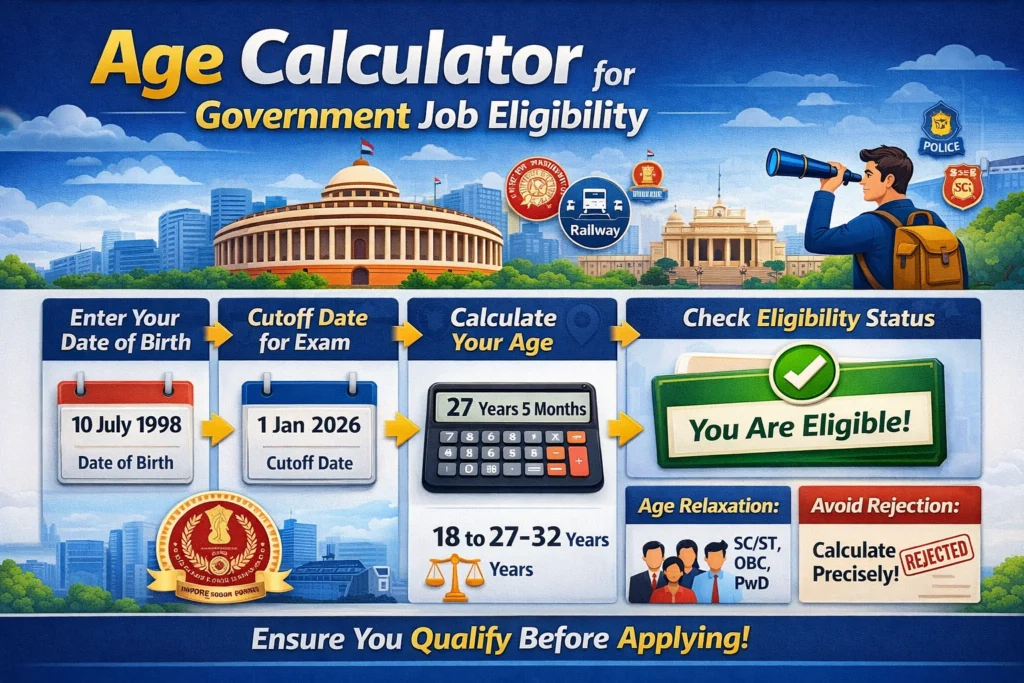
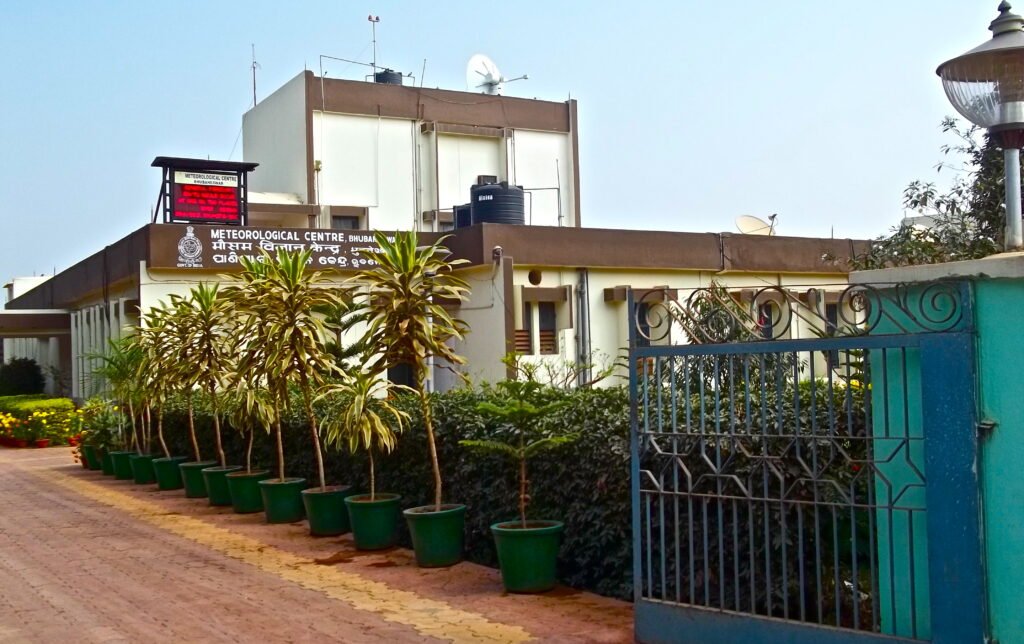
UPSC Scientist-B General Meteorology Age Limit 2026 is a key eligibility check for candidates who applied for the India Meteorological Department (IMD) post under UPSC Advertisement No. 05/2026. For the Scientist-B (General Meteorology) post, the advertised upper age limit was 35 years for UR/EWS candidates, with category-based extensions to 38 years for OBC and 40 years for SC/ST. The application closing date, which was also the date for determining eligibility, was 12 June 2026.
This guide focuses specifically on the General Meteorology post rather than combining it with the separate Scientist-B Instrumentation or Atmospheric Sciences vacancies. UPSC notified 30 General Meteorology vacancies in Advertisement No. 05/2026. The recruitment test for the Scientist-B posts in IMD is scheduled for 11 October 2026, according to UPSC’s latest September 2026 corrigendum.
UPSC Scientist-B General Meteorology Age Limit 2026 at a Glance
| Category | Maximum Age | Age Position on 12 June 2026 | Indicative Earliest DOB |
|---|---|---|---|
| UR / EWS | 35 years | Must not have crossed 35 | 13 June 1990 |
| OBC | 38 years | With applicable OBC relaxation | 13 June 1988 |
| SC / ST | 40 years | With applicable SC/ST relaxation | 13 June 1986 |
| Eligible PwBD candidates | Further relaxation as applicable | Up to 10 additional years stated in the recruitment details | Depends on base category |
Important: the DOB dates in the last column are calculated boundary examples from the stated age limits and the 12 June 2026 eligibility date. They are useful for a quick check, but the candidate’s actual category status and the wording of the UPSC advertisement control the final eligibility decision. The recruitment information lists 35 years for UR/EWS, 38 for OBC and 40 for SC/ST for Scientist-B (General Meteorology), with PwBD relaxation as applicable.
What Is the UPSC Scientist-B General Meteorology Age Limit in 2026?
For the General Meteorology vacancy under Advertisement No. 05/2026, UPSC prescribed a maximum age of 35 years for UR/EWS. The same recruitment details specify 38 years for OBC and 40 years for SC/ST. The General Meteorology post carried 30 vacancies in the Indian Meteorological Department, Ministry of Earth Sciences.
The important date is 12 June 2026. UPSC’s recruitment information states that online applications opened on 23 May 2026 and closed on 12 June 2026, and 12 June 2026 was the date for determining eligibility. Therefore, candidates should not calculate their age using the current date in September 2026; the relevant recruitment cutoff is the date specified in the 2026 advertisement.
UPSC Scientist-B General Meteorology DOB Cutoff 2026
When an advertisement says a candidate must not have crossed a stated maximum age on the eligibility date, the DOB boundary can be worked out from that date. For the General Meteorology post, 12 June 2026 is the relevant date.
| Category | Maximum Age | Boundary DOB Example | How to Read It |
|---|---|---|---|
| UR / EWS | 35 years | 13 June 1990 | Born on 13 June 1990 is exactly 35 on 12 June 2026; born on 12 June 1990 is already 36. |
| OBC | 38 years | 13 June 1988 | The same date arithmetic applies to the 38-year ceiling. |
| SC / ST | 40 years | 13 June 1986 | The same date arithmetic applies to the 40-year ceiling. |
These are mathematical DOB boundaries based on the advertised age ceilings; they are not a substitute for checking the exact category and certificate requirements. In particular, reservation-related age relaxation is available only where the candidate is entitled to the relevant benefit under the applicable rules.
Age Relaxation for UPSC Scientist-B General Meteorology 2026
The recruitment details for Advertisement No. 05/2026 provide category-wise upper-age extensions for the General Meteorology post. The practical limits are summarized below.
| Category / Provision | Upper-Age Position |
|---|---|
| UR / EWS | 35 years |
| OBC | 38 years |
| SC / ST | 40 years |
| PwBD | Further relaxation up to 10 years, subject to applicable rules and the post’s suitability provisions |
| Other special categories | Only where a specific applicable government/UPSC rule permits additional relaxation |
EWS is different from OBC, SC or ST for age relaxation. In the General Meteorology age table, UR and EWS share the 35-year ceiling. An EWS certificate by itself does not change that maximum age.
For PwBD candidates, the recruitment material states that the upper age can be further relaxed by up to 10 years where applicable. Because PwBD is a horizontal reservation framework and the exact benefit depends on the candidate’s base category and the post’s suitability conditions, candidates should verify the certificate and relaxation provisions in the UPSC advertisement rather than simply adding 10 years to every candidate’s age.
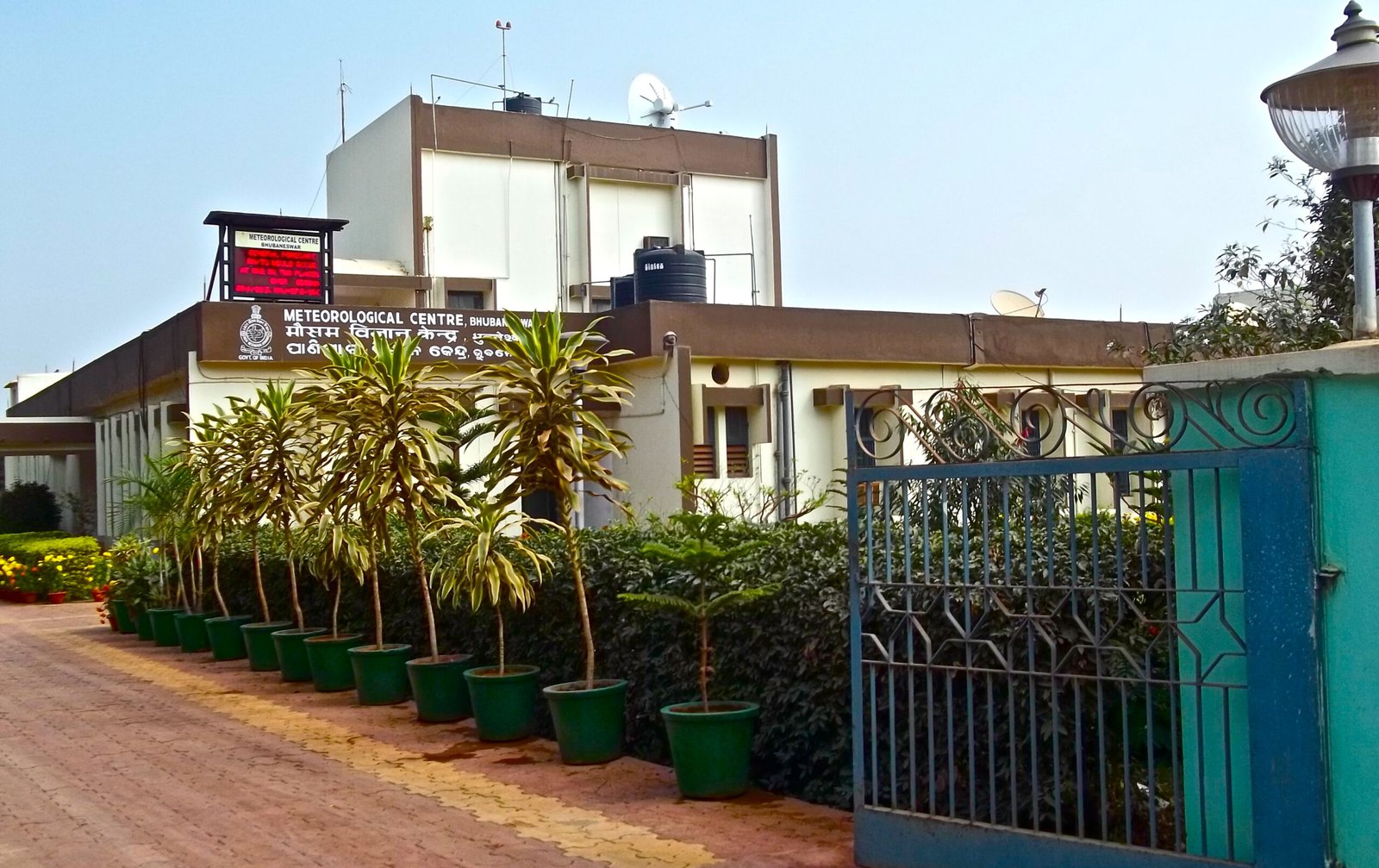
UPSC Scientist-B General Meteorology Educational Qualification
Age eligibility is only one part of the recruitment criteria. For Scientist-B (General Meteorology), the essential qualification was a Master’s Degree in Science from a recognized university or institute in the relevant subject area. The recruitment summary identifies Mathematics, Physics, Atmospheric Science, or Physics with Meteorology among the specified fields. No essential experience was specified for this Scientist-B post.
| Eligibility Item | General Meteorology 2026 |
|---|---|
| Post | Scientist-B (General Meteorology) |
| Department | Indian Meteorological Department, Ministry of Earth Sciences |
| Vacancies | 30 |
| Essential qualification | Master’s Degree in Science in the specified relevant subjects |
| Essential experience | Nil / no essential experience specified |
| Pay level | Level 10 of the 7th CPC Pay Matrix |
| Application closing date | 12 June 2026, 6:00 PM |
How to Check Your Age for Scientist-B General Meteorology
Use the recruitment cutoff date rather than today’s date. A simple check is:
- Write your date of birth exactly as recorded in your accepted educational/DOB document.
- Use 12 June 2026 as the age-reckoning date for this recruitment.
- Calculate your completed age on that date.
- Compare the result with 35 years for UR/EWS, 38 years for eligible OBC candidates, or 40 years for eligible SC/ST candidates.
- If you claim PwBD or another permitted relaxation, verify the relevant rule and certificate before treating the extended limit as applicable.
For a general explanation of how age is checked for recruitment, you can also use the site’s government job age eligibility guide. For a separate UPSC Scientist-B discipline, see the existing UPSC Scientist-B Instrumentation age-limit guide; its age and qualification details should not be mixed with General Meteorology.
Examples of DOB Eligibility
These examples illustrate the date arithmetic for the General Meteorology age ceiling. They do not replace the official recruitment notice.
| Date of Birth | Age on 12 June 2026 | UR/EWS Position |
|---|---|---|
| 13 June 1990 | 35 years, one day short of 36 | Within the 35-year ceiling |
| 12 June 1990 | 36 years | Over the 35-year ceiling |
| 1 January 1991 | 35 years | Within the 35-year ceiling |
| 1 January 1989 | 37 years | Over the UR/EWS ceiling, but category relaxation may matter if otherwise eligible |
UPSC Scientist-B General Meteorology Recruitment Test 2026
The age cutoff is especially relevant now because the application window has already closed and the recruitment has moved to the test stage. UPSC’s revised September 2026 corrigendum says a combined recruitment test for the Scientist-B posts in Atmospheric Sciences, General Meteorology and Instrumentation will be held on 11 October 2026, from 2:00 PM to 4:00 PM, using an offline pen-and-paper format.
| Test Feature | Latest UPSC Position |
|---|---|
| Date | 11 October 2026 |
| Time | 2:00 PM to 4:00 PM |
| Mode | Offline, pen-and-paper based |
| Duration | 2 hours |
| Question type | Objective / multiple-choice |
| Medium | English only |
| Negative marking | One-third of the marks assigned to the question for a wrong answer |
| Weightage | Recruitment Test : Interview = 75 : 25 for candidates shortlisted through the test |
The revised notice also says that only candidates shortlisted in the combined recruitment test who fulfill all eligibility conditions will be called for interview. The test syllabus listed in the notice includes current issues of national and international importance, logical reasoning and analytical ability, mathematics and numerical ability, basics of energy and environment, project management, material science, ICT-based tools and applications, and human values and professional ethics.
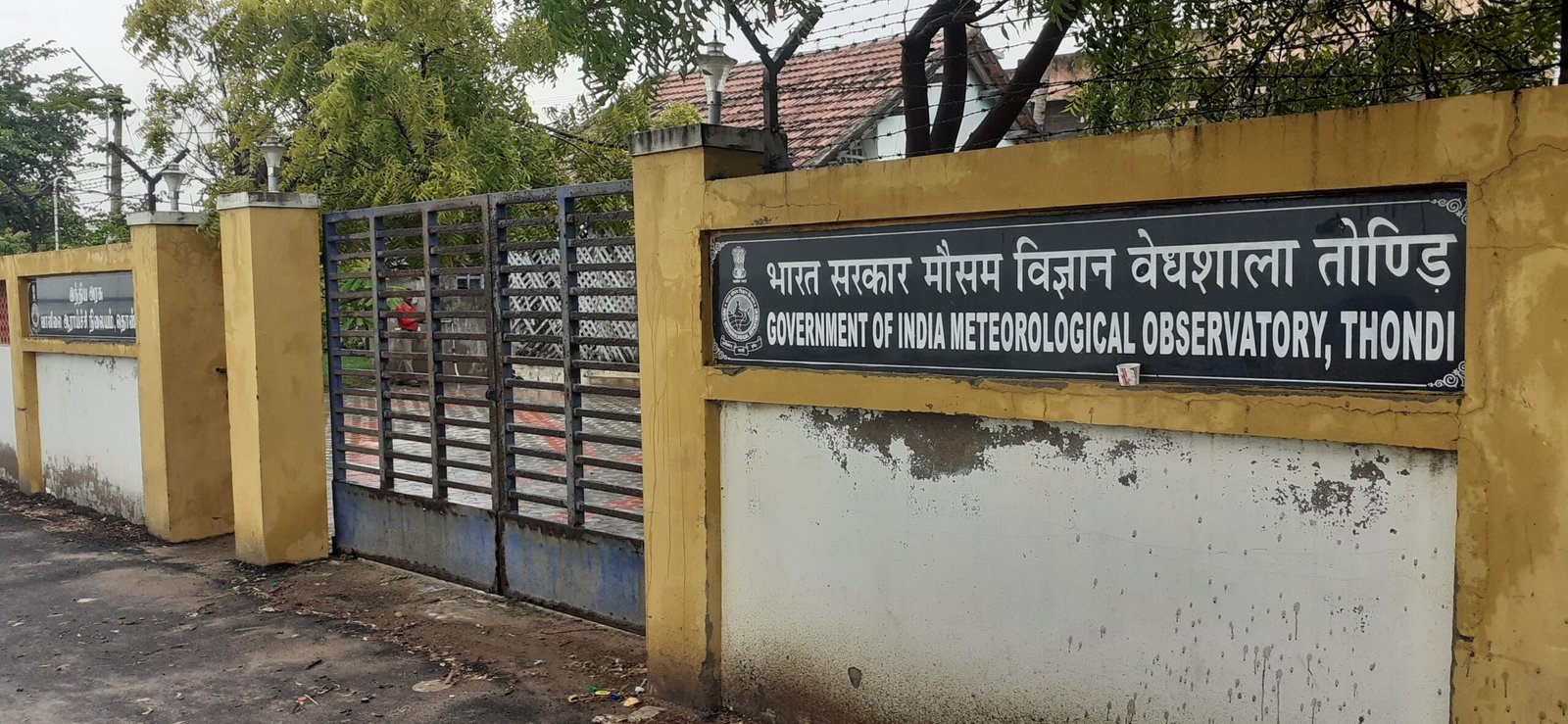
General Meteorology vs Other UPSC Scientist-B Posts
Advertisement No. 05/2026 included three separate Scientist-B vacancies in IMD. They should not be treated as one combined eligibility rule for educational qualification or age.
| Post | Vacancies | Broad Qualification | UR/EWS Maximum Age |
|---|---|---|---|
| Scientist-B (Atmospheric Sciences) | 7 | Relevant Master’s degree in Engineering/Technology | 35 years |
| Scientist-B (General Meteorology) | 30 | Relevant Master’s degree in Science | 35 years |
| Scientist-B (Instrumentation) | 9 | Relevant Bachelor’s degree in Engineering/Technology | 35 years |
The common 35-year UR/EWS ceiling does not mean the educational qualification is common. General Meteorology requires a relevant science master’s degree, while Instrumentation and Atmospheric Sciences have different degree requirements. UPSC’s September 2026 corrigendum confirms that these three Scientist-B posts are being handled through the same combined recruitment test, but they remain separate vacancies with their own eligibility conditions.
Documents to Keep Ready
- Matriculation or equivalent certificate showing date of birth.
- Master’s degree certificate and relevant mark sheets for General Meteorology.
- Category certificate, if claiming OBC, SC or ST relaxation.
- Valid PwBD certificate where applicable.
- Any other document specifically required by UPSC for the recruitment or interview stage.
Do not rely on an age calculation alone. UPSC can require documentary proof of the category, qualification and other eligibility conditions, and the recruitment notice remains the controlling document.
Common Age-Limit Mistakes to Avoid
- Using the current date: the relevant date is 12 June 2026, not September 2026.
- Assuming EWS gets an age relaxation: the advertised General Meteorology limit places EWS with UR at 35 years.
- Adding relaxation automatically: category benefits apply only when the candidate satisfies the applicable conditions.
- Confusing the three Scientist-B disciplines: the posts have different educational requirements.
- Using a rounded age: exact DOB matters when you are close to the cutoff.
- Ignoring the application cutoff: the 12 June 2026 date was also used for determining eligibility.
Frequently Asked Questions
What is the UPSC Scientist-B General Meteorology age limit 2026?
The maximum age was 35 years for UR/EWS candidates. The recruitment details specify 38 years for eligible OBC candidates and 40 years for eligible SC/ST candidates, with applicable further relaxation for PwBD candidates.
What was the age cutoff date for UPSC Scientist-B General Meteorology 2026?
12 June 2026 was the application closing date and the date for determining eligibility for Advertisement No. 05/2026.
What is the DOB cutoff for 35 years on 12 June 2026?
For a 35-year ceiling on 12 June 2026, 13 June 1990 is the corresponding boundary DOB example. A candidate born on 12 June 1990 would already be 36 on the cutoff date.
Does EWS get extra age relaxation for General Meteorology?
The advertised age table places UR and EWS at the same 35-year maximum for this post. EWS status by itself does not add an age relaxation.
What is the qualification for Scientist-B General Meteorology?
The recruitment required a Master’s Degree in Science in the specified relevant subjects, including Mathematics, Physics, Atmospheric Science or Physics with Meteorology, from a recognized university or institute.
When is the UPSC Scientist-B General Meteorology recruitment test?
UPSC’s revised September 2026 notice schedules the combined recruitment test for the Scientist-B IMD posts on 11 October 2026 from 2:00 PM to 4:00 PM.
Final Takeaway
For UPSC Scientist-B General Meteorology 2026, the central age rule is a 35-year maximum for UR/EWS on 12 June 2026. Eligible OBC candidates had a 38-year ceiling and SC/ST candidates a 40-year ceiling, subject to the applicable reservation and certificate rules. The General Meteorology post had 30 vacancies and required a relevant science master’s degree. The application period is over, and UPSC’s latest notice schedules the combined recruitment test for 11 October 2026.
Source note: This article uses UPSC Advertisement No. 05/2026 and the Commission’s revised September 2026 corrigendum as the primary recruitment references, with supporting recruitment summaries used to cross-check the post-wise qualification and age details. Always give priority to the latest UPSC notice if a subsequent corrigendum changes a recruitment condition.
Why the 12 June 2026 Date Matters
Age-limit questions are often confused by the date on which a candidate checks the result. For this recruitment, the application window and the eligibility date are historical facts: the online application opened on 23 May 2026 and closed on 12 June 2026 at 6:00 PM, and the recruitment information identifies 12 June 2026 as the date for determining eligibility. A candidate who is older in September 2026 does not become ineligible retrospectively if the candidate was within the prescribed age on the recruitment’s stated cutoff date. Conversely, someone who crossed the relevant age boundary on 13 June 2026 cannot use the later passage of time to change the cutoff calculation.
This is why exact DOB arithmetic matters. For example, a person born on 13 June 1990 had not completed 36 years on 12 June 2026, while a person born on 12 June 1990 had already completed 36 years. The one-day difference changes the result when the applicable ceiling is 35 years. The same method can be applied to the 38-year OBC and 40-year SC/ST limits, provided the candidate actually qualifies for the relevant category relaxation.
What Happens After the Recruitment Test?
UPSC’s revised notice states that the combined recruitment test is intended to shortlist candidates for interview. Only candidates who are shortlisted in the test and who fulfill all eligibility conditions are to be called for interview. The notice gives the Recruitment Test and Interview a 75:25 weightage for candidates who reach the interview stage. This means age eligibility remains a documentary condition even after the application has been accepted and a candidate reaches the test stage.
For a candidate preparing for the October test, the practical checklist is therefore two-part: first, confirm that the DOB, category and qualification documents support the eligibility claimed in the application; second, prepare according to the latest UPSC test notice. The September 2026 corrigendum says the test will be offline, objective and two hours long, with English as the medium and a one-third penalty for an incorrect answer.
Official Recruitment Sources
For the most authoritative updates, candidates should use the UPSC Recruitment Advertisements section and the Commission’s Recruitment Test Notices page. The latter is particularly important now because UPSC has issued a September 2026 corrigendum changing the test notice and confirming the 11 October 2026 combined recruitment test. Candidates can also refer to the India Meteorological Department (IMD) website for information about the department and meteorological services.
Because recruitment conditions can be modified by corrigenda, an older summary should not override a later UPSC communication. For this reason, this article treats Advertisement No. 05/2026 as the source of the original eligibility conditions and the September 2026 UPSC corrigendum as the latest source for the recruitment-test schedule and scheme.
One final distinction is useful: an age limit is not the same thing as an age-based guarantee of selection. Meeting the 35-year, 38-year or 40-year ceiling only addresses the age condition. Candidates must still satisfy the prescribed educational qualification, category-document requirements and all other conditions in the advertisement. The recruitment-test stage also has its own instructions, and the latest UPSC communication should be checked before appearing for the test.