If you are searching for the Rashtriya Vayoshri Yojana age limit 2026, the safest way to understand the rule is to separate the scheme’s own eligibility language from the general legal meaning of a senior citizen. Current central government material describes RVY as a scheme for eligible senior citizens who have age-related disabilities or infirmities. In India, the main statutory senior-citizen definition starts at 60 years, so 60+ is the practical central age reference. However, age alone does not make a person eligible for RVY.
RVY is a component of the Atal Vayo Abhyudaya Yojana (AVYAY) under the Ministry of Social Justice and Empowerment. It provides physical aids and assisted-living devices to eligible senior citizens with age-related disabilities or infirmities. Current government information also uses an economic criterion: the beneficiary should belong to the BPL category or have monthly income of not more than ₹15,000, subject to the scheme’s other conditions.
Quick answer: The central RVY material describes beneficiaries as senior citizens rather than publishing a separate RVY-only age ceiling. Since the general statutory definition of a senior citizen is 60 years and above, 60+ is the practical age reference. But an applicant must also satisfy the income/BPL and age-related disability or infirmity conditions, plus the beneficiary-identification requirements used for the scheme.
What Is the Rashtriya Vayoshri Yojana Age Limit in 2026?
The key point is that RVY is not normally presented as a simple “minimum age X and maximum age Y” scheme. Current official material refers to eligible senior citizens suffering from age-related disabilities or infirmities. The Maintenance and Welfare of Parents and Senior Citizens Act, 2007 defines a senior citizen as an Indian citizen who has attained the age of 60 years or above.
Therefore, for a general 2026 age-limit answer, a person who has completed 60 years falls within the senior-citizen age framework relevant to RVY. The central sources reviewed do not state a separate general maximum age for RVY. In fact, recent government material specifically discusses beneficiaries aged 80 and above and notes that eligible beneficiaries in that age group can receive devices through doorstep delivery in the scheme’s implementation framework.
| Age / condition | How it relates to RVY |
|---|---|
| Below 60 | Generally outside the central senior-citizen definition used as the age reference for RVY |
| 60 years and above | Falls within the general senior-citizen age framework; other RVY conditions still apply |
| 80 years and above | Still within the senior-citizen group; current material provides for doorstep delivery in the implementation framework |
| No stated general maximum age | Current central RVY material reviewed does not prescribe a separate universal upper age ceiling |
This distinction matters because saying “RVY is exactly 60–80 years” would be misleading. The 60 figure comes from the senior-citizen framework, while 80 is relevant to a particular delivery arrangement described in government material, not as an upper eligibility limit.
Who Is Eligible for Rashtriya Vayoshri Yojana?
Age is only one part of the eligibility picture. Current Ministry and PIB material identifies the main beneficiary profile as a senior citizen who is suffering from an age-related disability or infirmity and meets the economic eligibility condition.
- Senior-citizen status: The beneficiary must fall within the senior-citizen framework; 60+ is the general statutory reference.
- Age-related disability or infirmity: The person must have a qualifying age-related condition for which assistive support is appropriate.
- Economic condition: Current government material refers to senior citizens belonging to the BPL category or having monthly income not more than ₹15,000.
- Identification and assessment: Beneficiaries are identified and assessed through the implementation mechanism, including camps or walk-in centres in current practice.
- Suitable device need: The support is linked to the beneficiary’s functional need and the devices available under the scheme.
The scheme is therefore better understood as an assistive-device support programme for eligible senior citizens, not as a general cash benefit available to everyone after their 60th birthday.
What Is the ₹15,000 Income Rule?
The current central descriptions of RVY use a monthly-income threshold of ₹15,000 alongside the BPL route. The wording matters: the scheme is not simply “for everyone above 60.” A senior citizen can need an age-related assistive device and still have to satisfy the scheme’s economic eligibility requirement.
Recent PIB material published in July and August 2026 continues to describe RVY beneficiaries as senior citizens belonging to the BPL category or having monthly income up to ₹15,000. The July 2026 update reported that more than 9.23 lakh senior citizens had received more than 49.81 lakh assistive devices since the scheme began.
Applicants should not assume that an informal estimate of household income is enough. The exact documents and beneficiary-identification process can depend on the implementing arrangement. If you are being assessed at a camp or through a PM Divyasha-Vayoshri Kendra, follow the document list and instructions given by the implementing authority.
What Assistive Devices Are Provided Under RVY?
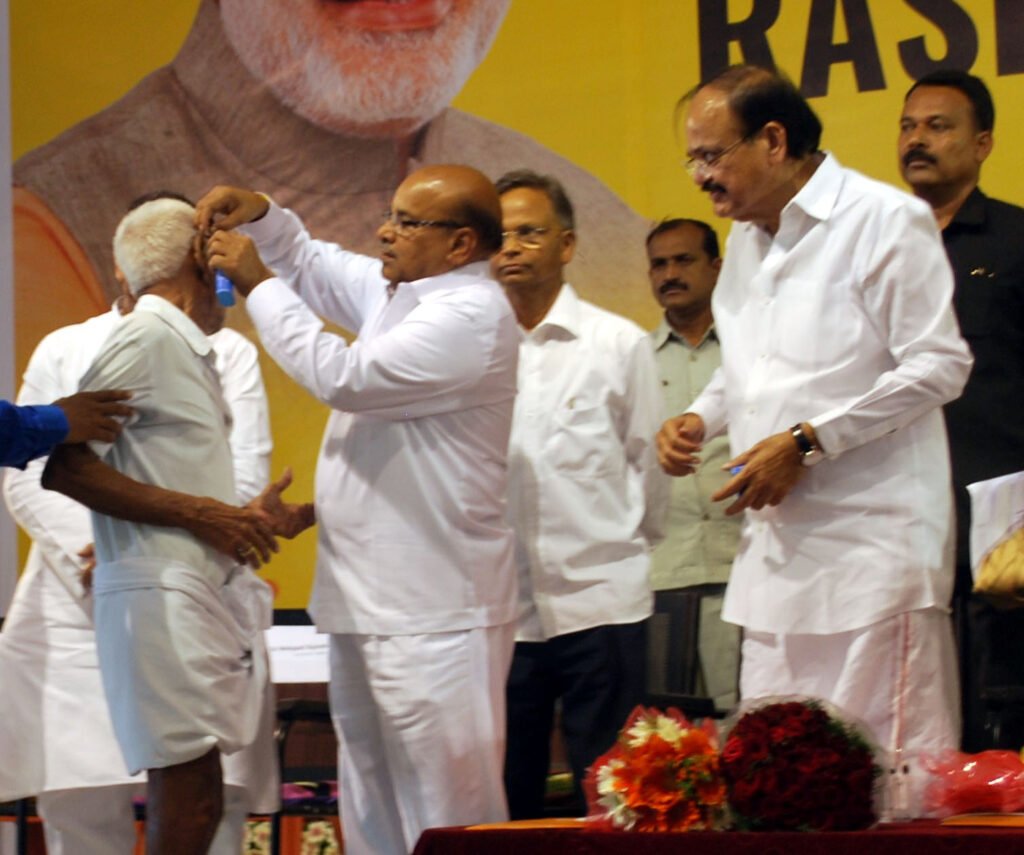
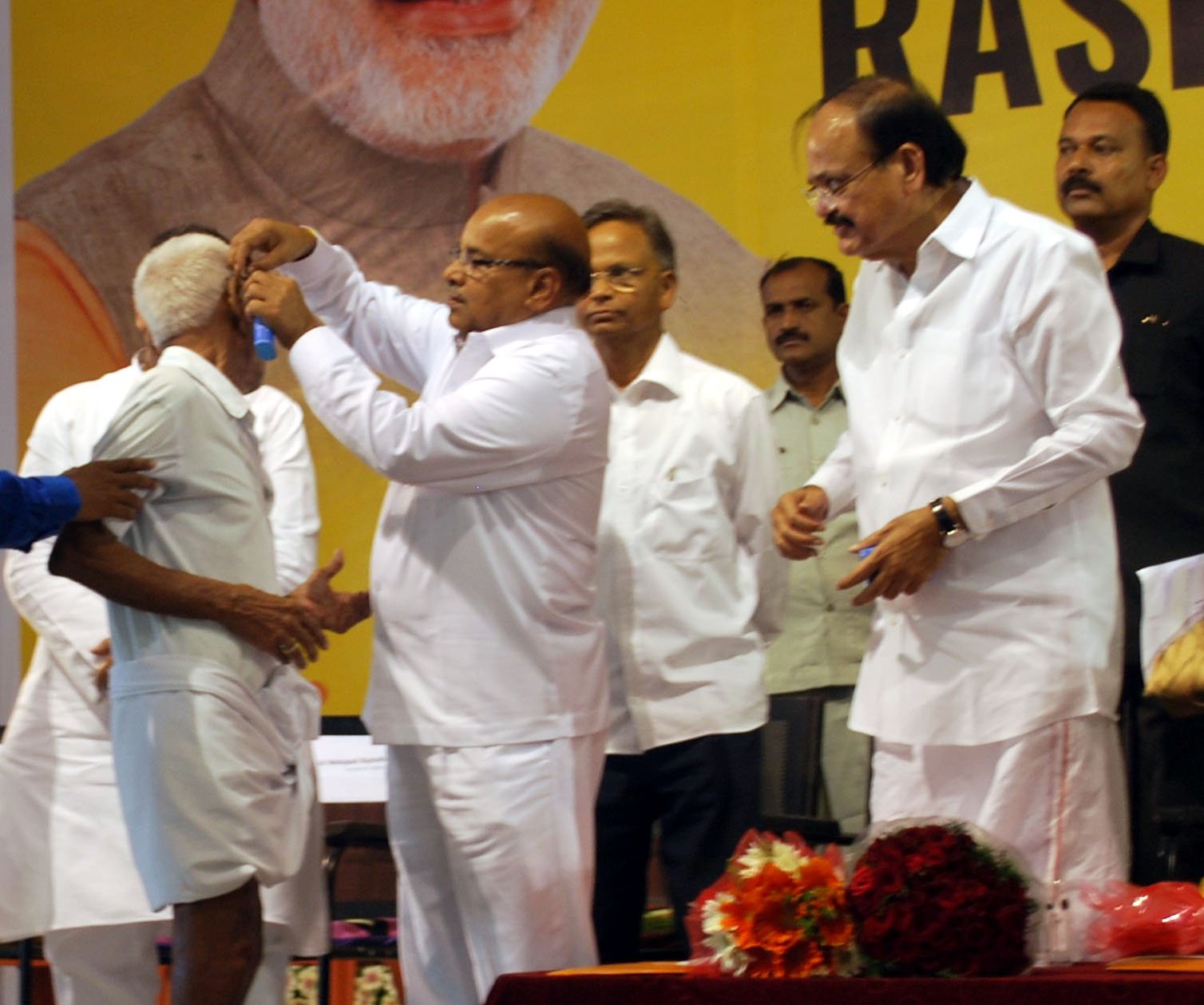
RVY is designed around physical aids and assisted-living devices that can help eligible senior citizens manage age-related functional difficulties. Official descriptions have included devices such as:
- Walking sticks
- Elbow crutches
- Walkers and crutches
- Tripods and quadpods
- Hearing aids
- Wheelchairs
- Artificial dentures
- Assistive spectacles
The exact device is not chosen merely because a person is over 60. It is connected to the beneficiary’s qualifying disability or infirmity and the assessment process. The purpose is to provide appropriate physical support that can help restore near-normal functioning and improve independence.
Is There a Maximum Age Limit for RVY?
No separate universal maximum age is stated in the current central RVY material reviewed. This is an important distinction from schemes that explicitly stop new enrolment at a particular age.
Government material has specifically discussed support for very elderly beneficiaries. A 2025 PIB backgrounder on RVY stated that devices are distributed through camps and that, for senior citizens aged 80 or above, devices can be delivered at their doorstep. That description would not make sense as a general maximum-age rule: 80+ beneficiaries are expressly contemplated within the scheme’s delivery framework.
So if you are 80, 85, 90 or older, do not assume that your age alone disqualifies you. The relevant question is whether you meet the current beneficiary criteria and are identified as eligible for an appropriate device.
Does Turning 60 Automatically Qualify You for RVY?
No. Turning 60 establishes the general senior-citizen age reference, but RVY has additional conditions. The scheme is targeted at senior citizens with age-related disabilities or infirmities who meet the economic eligibility criteria.
This is different from a general senior-citizen classification. For example, the site’s Senior Citizen Age in India 2026 guide explains the broader 60-year definition and why different schemes can still have their own rules.
Similarly, the Annapurna Scheme age-limit guide shows how another senior-citizen welfare programme can use the 60+ framework but add its own pension and household conditions. RVY should be checked in the same way: identify the exact scheme, then verify every eligibility condition.
How Is Age Checked for RVY?
When an age boundary matters, use the beneficiary’s exact date of birth and the documents accepted by the implementing authority. Do not rely only on the birth year.
- Take the date of birth from the accepted identity or age document.
- Calculate whether the person has completed 60 years on the relevant date.
- Check the current RVY beneficiary criteria, not a general senior-citizen article.
- Confirm the economic eligibility route: BPL or the applicable monthly-income ceiling.
- Keep medical or disability-related documents available if requested during assessment.
- Follow the local camp, PM Divyasha-Vayoshri Kendra or implementing-agency instructions for beneficiary identification and distribution.
What Is the Role of ALIMCO?
The Artificial Limbs Manufacturing Corporation of India (ALIMCO), a Central Public Sector Undertaking, is the implementing agency identified in official RVY material. The Ministry uses ALIMCO’s distribution network, including camps and PM Divyasha-Vayoshri Kendras, to support beneficiary assessment and distribution.
Recent government updates show that implementation continues through both camp-mode distribution and walk-in centres. In July 2026, the Ministry reported that 53,776 beneficiaries had been covered with 2,69,747 assistive living devices through camps and walk-in centres at PM Divyasha-Vayoshri Kendras during the reported period.
Current 2026 RVY Coverage and Status
RVY remains an active senior-citizen welfare component in 2026. A Ministry of Social Justice and Empowerment update reported in July 2026 that, since inception, more than 49.81 lakh assistive devices had been distributed among more than 9.23 lakh senior citizens who were BPL or had monthly income up to ₹15,000.
Another July 2026 government update described 53,776 beneficiaries receiving 2,69,747 devices through camps and walk-in centres for the reported period. These figures refer to different reporting contexts and should not be added together. They do, however, confirm that RVY continues to be implemented through active distribution channels in 2026.
In August 2026, the Ministry also published information about a third-party impact evaluation of RVY and the Deendayal Divyangjan Rehabilitation Scheme. The government said the evaluation found RVY aligned with the needs of eligible senior citizens and highlighted its contribution to mobility and functional independence.
What About Senior Citizens in Gujarat?
RVY is a central government scheme implemented across the country, and Gujarat has also hosted RVY distribution activity. In July 2026, PIB Ahmedabad reported a major RVY assistive-device distribution camp in Bhavnagar, where devices worth ₹2.48 crore were distributed to 2,569 beneficiaries and a Pradhan Mantri Divyasha Vayoshri Kendra was inaugurated.
This illustrates an important practical point: the central eligibility rules may be national, but the actual beneficiary identification and distribution can happen through local camps and centres. If you are in Gujarat or another state, check the current local implementation notice rather than relying on an old camp date or an unofficial list.
RVY vs Other Senior-Citizen Schemes
| Scheme / framework | Main age reference | Main purpose |
|---|---|---|
| Rashtriya Vayoshri Yojana | Senior citizen; 60+ is the general age reference | Assistive devices for eligible senior citizens with age-related disabilities/infirmities |
| IGNOAPS | 60+ under the current old-age pension framework | Old-age social assistance for eligible BPL beneficiaries |
| Annapurna | Linked to the senior-citizen / old-age pension framework | Food-grain support for eligible senior citizens not receiving old-age pension |
| SCSS | Generally 60+, with specified retirement-related entry routes | Small-savings investment account for eligible senior citizens |
These schemes should not be mixed together. The fact that several programmes use 60+ does not mean that their income, residence, pension, investment, disability or documentation rules are identical.
Documents You May Need
The exact document list can vary by the implementing channel, so applicants should follow the current notice or camp instructions. Depending on the assessment, documents may include:
- Proof of identity
- Proof of date of birth or age
- Aadhaar or another accepted identity document, where required
- BPL proof or income-related documentation
- Bank or other beneficiary details if requested by the implementing agency
- Medical or disability-related records relevant to the assessment
- Any local certificate or form specified by the organising authority
Do not assume that every document on this list is mandatory in every location. The responsible implementing agency’s current checklist should control.
How to Check RVY Eligibility Before Applying
- Check age: Confirm that the person has reached the general senior-citizen threshold of 60 years.
- Check disability/infirmity: Confirm that the need is related to an age-related disability or infirmity covered by the scheme.
- Check income: Verify BPL status or the applicable monthly-income ceiling of ₹15,000 described in current central material.
- Check the local channel: Look for the latest assessment camp, PM Divyasha-Vayoshri Kendra or ALIMCO implementation information.
- Prepare proof: Keep age, identity, income/BPL and relevant medical documents ready.
- Attend assessment if required: Device selection is linked to the beneficiary’s functional needs.
Common Mistakes About the RVY Age Limit
Mistake 1: Treating 60 as the only eligibility condition
Being 60 or older does not automatically create an RVY benefit. The economic and disability/infirmity conditions are also important.
Mistake 2: Assuming 80 is the maximum age
Current material specifically discusses senior citizens aged 80 and above, including doorstep delivery in the implementation framework. Therefore, 80 should not be treated as a general maximum eligibility age.
Mistake 3: Confusing RVY with a pension scheme
RVY is primarily an assistive-device and assisted-living support scheme. It is not the same as an old-age pension programme such as IGNOAPS.
Mistake 4: Using an old income threshold
Older descriptions can use historical figures or earlier eligibility language. Current 2026 central material continues to refer to BPL senior citizens or senior citizens with monthly income not more than ₹15,000, so the latest official information should be checked.
Frequently Asked Questions
What is the RVY age limit in 2026?
Current central material describes eligible beneficiaries as senior citizens. The general statutory senior-citizen threshold is 60 years, so 60+ is the practical age reference. The current central RVY material reviewed does not state a separate universal maximum age.
Can a person aged 70 apply for Rashtriya Vayoshri Yojana?
A 70-year-old falls within the general senior-citizen age framework, but age alone is not enough. The person must also satisfy the scheme’s economic and age-related disability or infirmity conditions and be identified as eligible through the implementation process.
Can an 80-year-old receive RVY benefits?
Yes, age 80 is not a general disqualification. Government material specifically discusses beneficiaries aged 80 or above and provides for doorstep delivery of devices in that implementation framework.
What is the income limit for RVY?
Current central government descriptions refer to senior citizens belonging to the BPL category or having monthly income not more than ₹15,000, along with the other eligibility conditions.
Does RVY provide cash assistance?
RVY is described as a scheme for providing physical aids and assisted-living devices. It should not be confused with a pension or general cash-transfer scheme.
Who implements Rashtriya Vayoshri Yojana?
Official material identifies the Artificial Limbs Manufacturing Corporation of India (ALIMCO) as the implementing agency, with distribution through camps and PM Divyasha-Vayoshri Kendras in current implementation.
Official Sources for RVY Eligibility in 2026
- PIB, 21 July 2026 — RVY assistive-device distribution and beneficiary figures
- PIB, 28 July 2026 — Senior-citizen welfare under AVYAY and RVY
- PIB, 4 August 2026 — RVY impact evaluation
- PIB, 13 August 2026 — Current senior-citizen welfare measures and RVY
- India Code — Maintenance and Welfare of Parents and Senior Citizens Act, 2007
- Ministry of Social Justice and Empowerment
Final Takeaway
Rashtriya Vayoshri Yojana does not operate as a simple fixed-age-only scheme. Current central material identifies its beneficiaries as eligible senior citizens with age-related disabilities or infirmities. Because the general statutory senior-citizen definition begins at 60 years, 60+ is the practical age reference for RVY in 2026. There is no separate general maximum age stated in the current central material reviewed.
The main additional checks are the age-related disability or infirmity requirement and the economic eligibility condition, currently described as BPL or monthly income not more than ₹15,000. Beneficiary identification, assessment and distribution can take place through camps and PM Divyasha-Vayoshri Kendras, with ALIMCO as the implementing agency.
If you are close to the age boundary, use your exact date of birth rather than your birth year, and verify the latest local implementation instructions before attending an assessment camp or applying for a device.
Disclaimer: This article is for general information and is not legal, medical or financial advice. Government scheme guidelines, beneficiary identification methods and implementation details can change. For an individual application, confirm the latest requirements with the responsible government authority or implementing agency.